High-Performance Materials for Engineering Verification
Precision-engineered filaments engineered for high-rigidity structural prototypes, dimensional stability, and harsh field trials.
Commercial Status & Industrial Demand for ASA in Functional Prototyping
In the contemporary manufacturing matrix, transitioning from digital CAD topologies directly into physically load-bearing assemblies requires polymers that demonstrate balanced structural integrity under fluctuating operating conditions. While conventional standard plastics like standard PLA provide initial visual affirmation, they crumble under ambient thermal stress, UV weathering, and prolonged mechanical loads. As a consequence, ASA 3D printing material for high-rigidity engineering functional prototypes has firmly transitioned from an alternative niche to the industrial benchmark across automotive engineering, aerospace ducting, marine robotics, and exterior smart infrastructure enclosures.
Acrylonitrile Styrene Acrylate (ASA) was synthesized inherently to overcome the historical vulnerabilities of ABS—specifically ABS's susceptibility to photo-oxidation, chalking, and polymer embrittlement caused by ultraviolet light degradation of polybutadiene elastomers. By replacing polybutadiene with an acrylate elastomer matrix, ASA preserves exceptional mechanical stiffness, elevated flexural modulus, and broad solvent resistance while providing near-permanent resistance to solar weathering and outdoor moisture cycles.
High-Rigidity & Modulus
Boasting a flexural modulus exceeding 2,300 MPa, ASA sustains dimensional tolerances under sustained cyclic mechanical stress without excessive creep or brittle crack propagation.
All-Weather UV Inertness
Resistant to solar spectrum radiation, preventing matrix micro-cracks, surface yellowing, and severe tensile degradation over thousands of hours of outdoor field exposure.
Predictable Isotropism
Engineered rheological melt control yields outstanding interlayer adhesion under proper thermal management, producing prototypes that behave consistently under multiaxial stress.
Industrial Shift: The global shift toward decentralized rapid-tooling and low-volume serial manufacturing has accelerated the integration of ASA filaments into direct industrial jigs, active aerodynamic wind-tunnel cowlings, and harsh environmental sensor enclosures.
Comprehensive Technological Trends Transforming ASA Applications
The adoption of additive manufacturing within Industry 4.0 paradigms has triggered crucial developments in ASA chemical modifications and deposition parameters:
1. Carbon-Fiber and Glass-Microfiber Hybridization
To push tensile and flexural rigidity beyond standard monolithic limits, cutting-edge formulation laboratories now compound chopped carbon fiber (CF) or microscopic glass beads directly into the ASA resin. CF-ASA filaments elevate flexural stiffness substantially while lowering the material's isotropic thermal expansion coefficient (CTE). This innovation virtually eliminates corner warping during the deposition of large-footprint functional components, enabling precise mechanical assemblies on enclosed professional FDM platforms.
2. Closed-Chamber Thermal Stabilization & High-Speed Extrusion
Modern high-speed additive platforms utilize active chamber temperature governance (ranging between 60°C and 90°C) coupled with high-flow hotends. ASA filaments tailored with optimized molecular weights display shear-thinning behavior under high extrusion velocities without inducing delamination or stringing, drastically reducing iteration lead times from days to mere hours for heavy-duty engineering functional prototypes.
3. Chemical Vapor Smoothing & Post-Processing Compatibility
ASA functional prototypes exhibit outstanding chemical affinity to acetone vapor smoothing. Controlled exposure seamlessly seals inter-layer boundaries, transforming micro-porous layered geometries into fluid-tight, injection-molded-grade functional models suitable for fluid dynamic chambers, intake manifolds, and hermetically sealed telemetry enclosures.
Material Property Benchmark: Engineering Functional Evaluation
| Performance Characteristic | Standard Additive ASA | Reinforced Structural ASA (CF) | Engineering ABS Benchmark |
|---|---|---|---|
| Tensile Strength (MPa) | 42 – 49 | 58 – 68 | 38 – 44 |
| Flexural Modulus (MPa) | 2,100 – 2,450 | 4,200 – 5,100 | 1,900 – 2,200 |
| Heat Deflection Temp (HDT @ 0.45 MPa) | 95°C – 100°C | 105°C – 112°C | 88°C – 92°C |
| Weathering / UV Stability | Exceptional (Class A) | Exceptional (Class A) | Poor (Prone to Yellowing) |
| Surface Hardness (Rockwell R) | 105 – 110 | 115 – 120 | 102 – 108 |
In-Depth Scenario Analysis: Where High-Rigidity ASA Excels
Rigid functional prototypes fabricated via ASA bridge the critical chasm between virtual computer simulations and physical real-world deployment:
Automotive Exterior Shells & Aerodynamic Ducts: Pre-series functional testing for grille assemblies, side-mirror brackets, bumper snap-fits, and aerodynamic air extractors requires testing in all-weather conditions. ASA avoids the thermal softening associated with direct sunlight and the structural fractures induced by gravel strikes during live track validations.
Industrial Drone Frames & AgTech Telemetry: Autonomous agricultural drones and field monitoring base stations undergo severe exposure to high ultraviolet radiation, humidity, and agrochemicals. ASA structures provide the torsional rigidity necessary to damp out vibration harmonics from high-RPM brushless motors while shielding internal flight control chips.
End-Of-Arm Tooling (EOAT) & Manufacturing Fixtures: Robotic assembly cells operating in proximity to welding, CNC coolants, and radiant heat require lightweight, stiff, and wear-resistant end effectors. ASA replaces heavy milled aluminum brackets for high-payload robotic arms, reducing mechanical inertia and energy consumption.
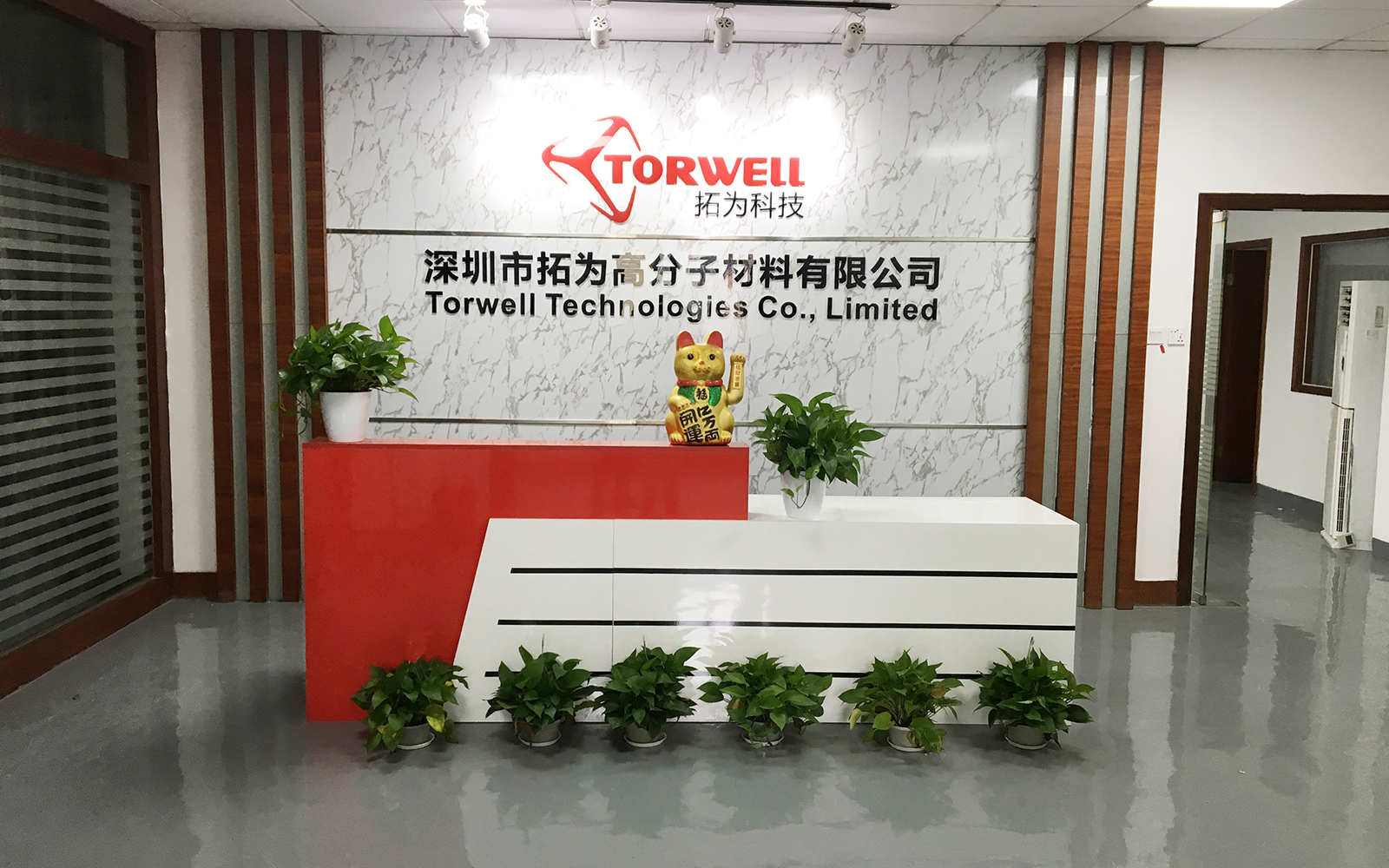
Company Profile & Advanced Polymer R&D
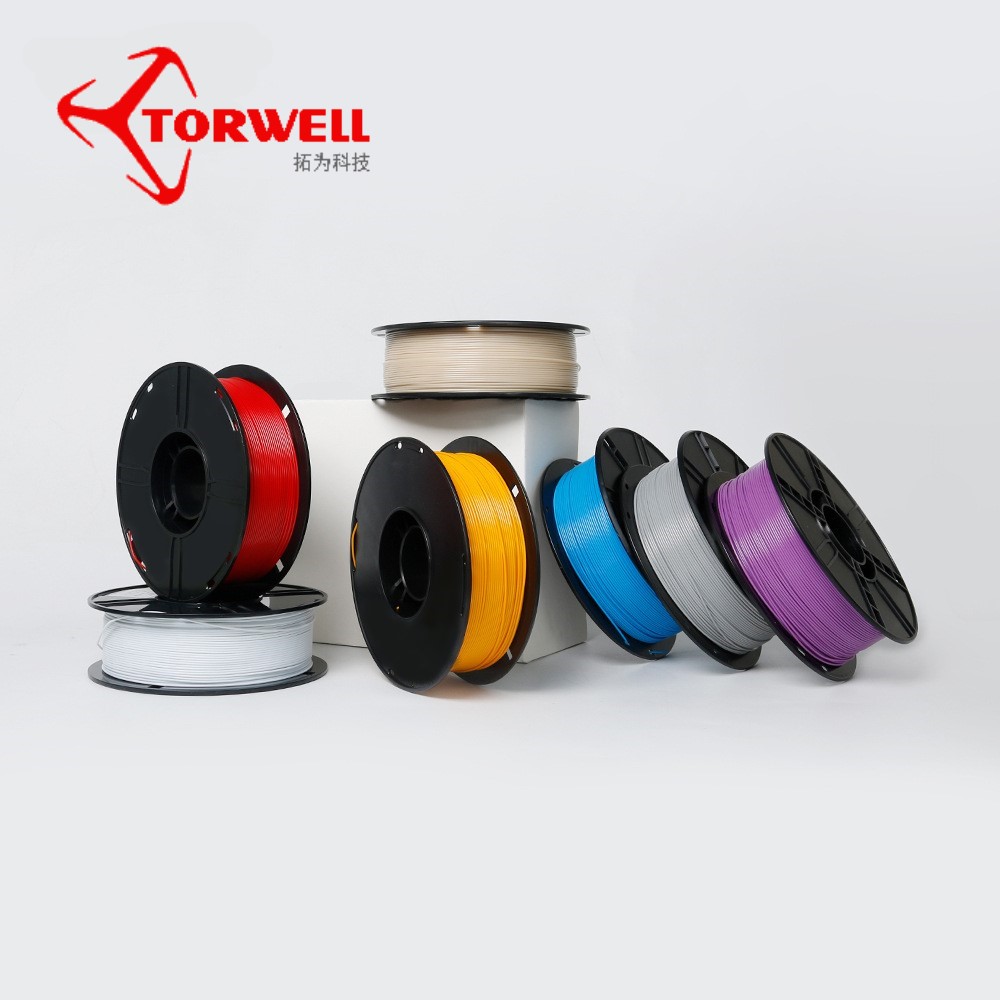
Founded in 2011, Torwell Technologies Co., Ltd. is one of the earliest high-tech enterprises which specializing in high-tech 3D printer filaments research, manufacture and sell, occupies 2,500 square meters modern factory with production capacity of 50,000kgs per month.
With more than 10 years experiences in 3D printing market exploration, cooperated with Institute for High Technology and New Materials in domestic famous universities, and engaging Polymer materials experts as technical adviser, Torwell becomes one of member of Chinese rapid prototyping association and leader enterprise with the most innovative products in 3D printing industry, owns independent intellectual property rights, patents and trademarks (Torwell US, Torwell EU, NovaMaker US, NovaMaker EU).
Torwell passed international quality management system ISO9001, international environment system ISO14001, the advanced manufacturing equipment, test devices and virgin raw materials available are introduced to produce and distribute 3D printer filament of unparalleled quality, to insure all the products of Torwell are compliant with RoHS standard, MSDS, Reach, TUV and SGS test certificated.
Be a reliable and professional 3D printing partner, Torwell has committed to expanding its products to America, Canada, UK, Germany, Netherlands, France, Spain, Sweden, Italy, Russia, Mexico, Australia, New Zealand, Brazil, Argentina, Japan, South Korea, Vietnam, Thailand, Malaysia, India, more than 80 countries and regions.
Engineering Best Practices for 3D Printing High-Rigidity ASA Prototypes
Executing structurally sound functional prototypes with ASA demands rigorous process governance across bed leveling, ambient temperatures, and cooling rates:
Thermal Envelope Regulation: ASA is prone to thermal contraction stress during phase transition from liquidus to glass state (Tg ~ 100°C - 105°C). Maintaining a heated print chamber between 65°C and 85°C prevents internal residual stress buildup, eliminating interlayer shear failures during dynamic impact tests.
Controlled Convective Cooling: Part cooling fans must be kept entirely deactivated or locked at minimal operation (10% - 20%) for bridging operations. Excessive localized airflow freezes the extruded bead before polymeric chains can establish thermodynamic entanglement across adjacent layers, weakening structural rigidity.
Hygroscopic Conditioning: Despite being significantly less moisture-sensitive than Polyamides (Nylon), unsealed ASA absorbs ambient moisture, resulting in surface voids and nozzle sputtering. Torwell suggests pre-drying spools at 70°C for 4 to 6 hours inside a convection dry box immediately prior to functional print cycles.
Comprehensive Engineering Material Catalog
Explore our full line of functional polymers, engineering matrices, and rapid prototyping filaments tested across global enterprises.