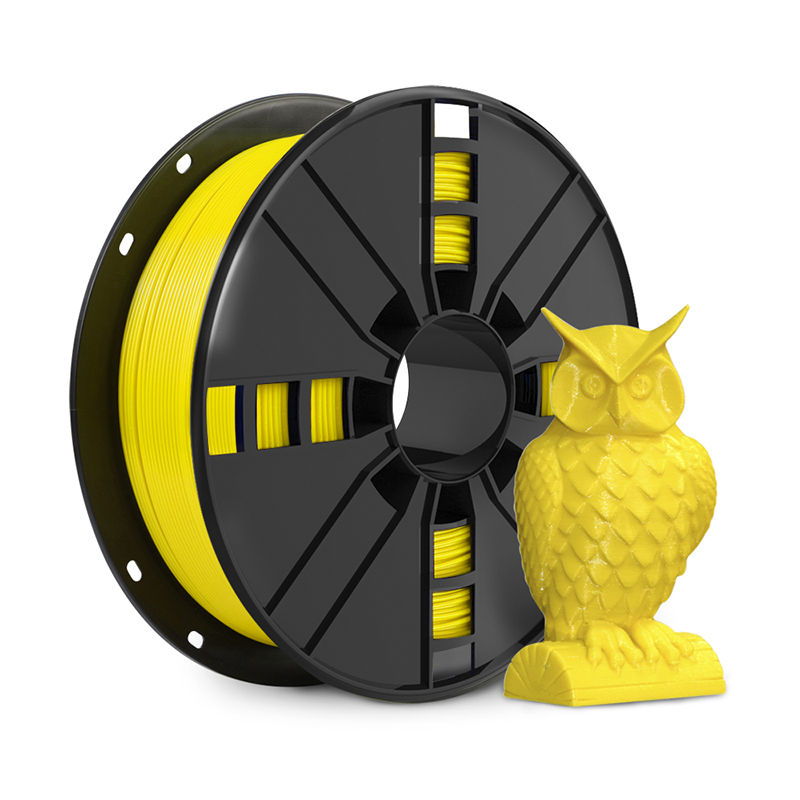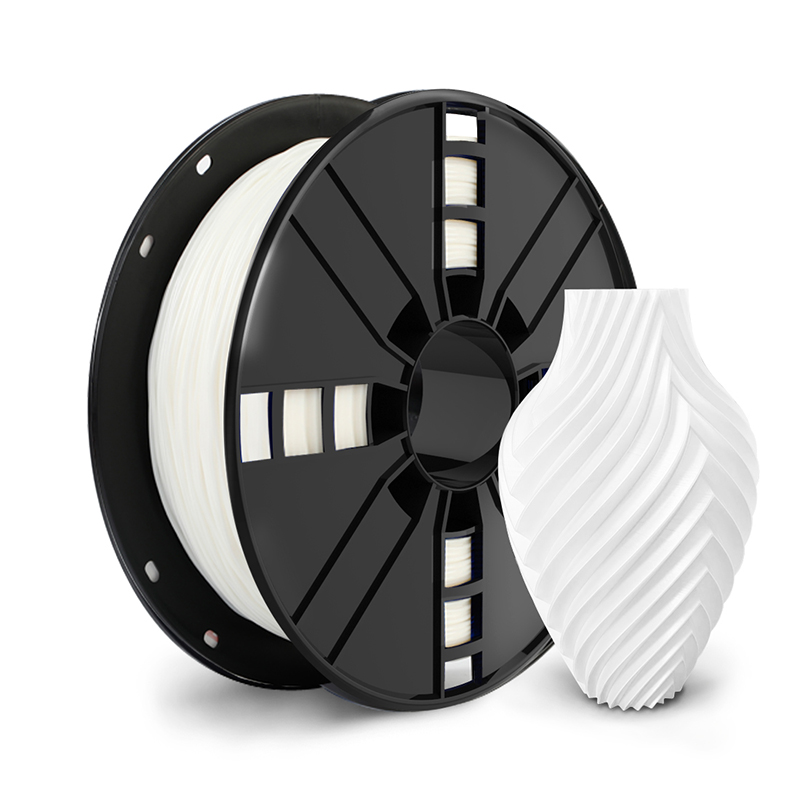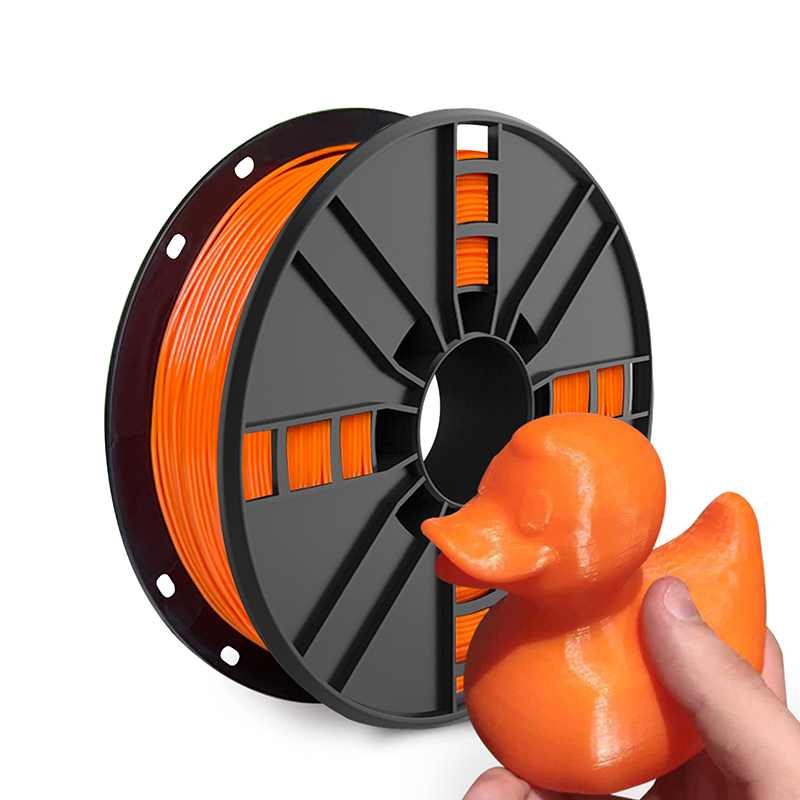
Featured Industrial Materials For Dynamic Mount Prototyping
Explore our precision-extruded polymer grades formulated for industrial resonance management, dynamic load support, and high-frequency vibration absorption.
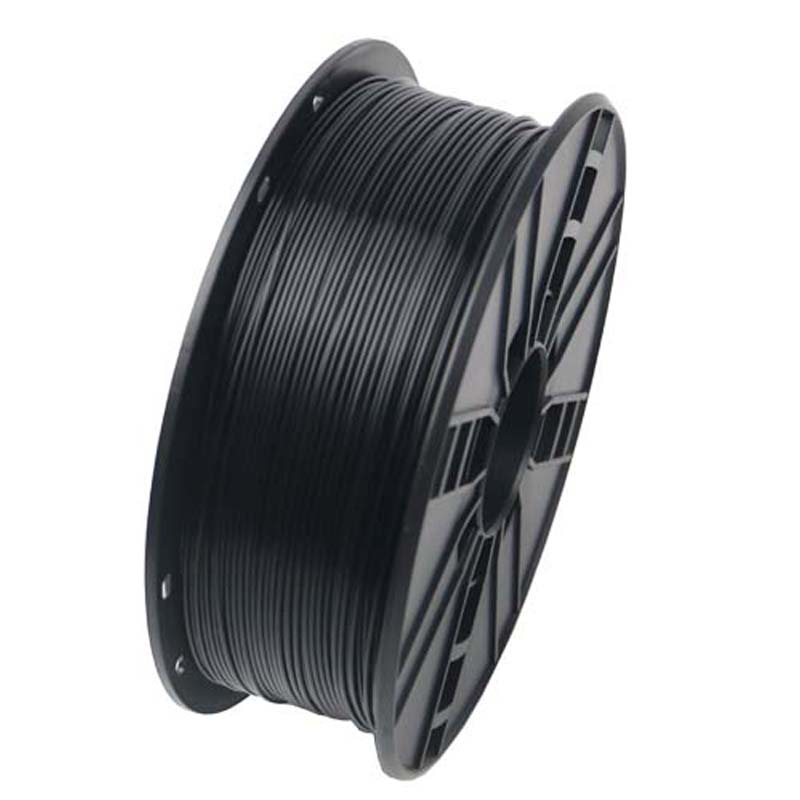
Engineering Black ASA For Industrial Vibration Isolation
In advanced automated manufacturing, powertrain engineering, and precision robotics, mechanical vibration represents a primary cause of premature component fatigue, sensor calibration drift, and acoustic pollution.
Vibration dampening mounts serve as critical structural interfaces designed to dissipate mechanical energy, decouple dynamic resonance frequencies, and protect sensitive electromechanical assemblies. While conventional elastomer mounts often suffer from rapid thermal oxidation, chemical swelling, and creep deformation, Acrylonitrile Styrene Acrylate (ASA) filament engineered in deep black presents a transformative solution for additive-manufactured dampening housings, tuned mass brackets, and hybrid isolator cores.
Black ASA combines the high mechanical rigidity and thermal glass transition temperature ($T_g \approx 105^\circ\text{C}$) of an engineered terpolymer with specialized carbon matrix integration that enhances UV radiation shielding, localized energy dissipation, and cyclic fatigue endurance under continuous oscillation regimes.
Material Science & Harmonic Dissipation Mechanics
Understanding the structural response of Black ASA under alternating cyclical stresses is fundamental to engineering reliable industrial vibration mounts.
Viscoelastic Loss Factor (tan δ)
Black ASA exhibits an optimized loss factor that bridges the gap between hyper-elastic rubber and rigid structural engineering polymers. The acrylate rubber phase embedded in the styrene-acrylonitrile matrix absorbs cyclic harmonic energy and converts micro-strain kinetics into minor thermal dissipation.
Acoustic & Resonance Decoupling
Industrial motors, compressors, and hydraulic pumps generate harmonic frequencies that induce dangerous resonance in surrounding chassis. 3D printed ASA mounts featuring customized lattice infills break up continuous acoustic wave transmission lines, mitigating resonance amplification.
Weather & Chemical Resilience
Unlike ABS which quickly degrades under solar ultraviolet light, the saturated acrylate elastomer backbone of ASA provides exceptional UV stability, oil resistance, and environmental stress cracking resistance (ESCR) when exposed to industrial lubricants and cooling mist.
| Property Indicator | Black ASA (Industrial Grade) | Standard ABS | Structural Nylon (PA6) | Elastomeric TPU (95A) |
|---|---|---|---|---|
| Tensile Modulus (MPa) | 2,150 – 2,350 | 2,100 – 2,300 | 1,600 – 2,800 (Moist/Dry) | 120 – 250 |
| Heat Deflection Temp (0.45 MPa) | 98°C – 102°C | 88°C – 94°C | 70°C – 95°C | 55°C – 65°C |
| UV & Weathering Stability | Superior (Delta E < 2.0 / 5 yrs) | Poor (Chalking & Embrittlement) | Moderate (Oxidation prone) | Moderate to Good |
| Creep Resistance under Static Load | High | Moderate to High | Moderate (Moisture sensitive) | Low (Subject to set) |
| Primary Damping Function | Structural Carrier & Wave Dissipation | Rigid Support (Low Damping) | Impact Absorption | Low Frequency Deflection |
Industrial Implementation & Commercial Deployment
Modern manufacturers are adopting Black ASA filament across four major engineering sectors to replace costly cast aluminum brackets and short-lived polyurethane bushings.
1. Autonomous Mobile Robots (AMR) & AGV Sensor Isolators
In automated warehousing and outdoor agricultural robotics, high-frequency terrain shocks compromise LiDAR calibration and IMU telemetry. Industrial mounts printed from Black ASA provide the exact dimensional stability required to maintain optical alignment, while engineered gyroid infill cores absorb transient shock spikes caused by uneven surfaces.
2. HVAC & Industrial Pump Compressor Dampeners
Centrifugal pumps, chilling units, and blowers continuously emit low-to-mid frequency vibrations that propagate into concrete building slabs and structural trusses. Black ASA damper housings withstand outdoor solar exposure, chemical washdowns, and thermal cycles without losing dimensional preload on securing bolts.
3. CNC & Direct-Drive Robotic End-of-Arm Tooling (EOAT)
High-speed pick-and-place automation induces severe dynamic deceleration inertia. Custom Black ASA mounts engineered with tuned internal resonance chambers attenuate the inertial reverberations transferred into robotic wrist gearboxes, extending servo lifecycle and improving placement accuracy.
4. Commercial Marine & Off-Highway Powertrain Bracing
Harsh marine salt mist and engine bay diesel fumes degrade ordinary thermoplastics rapidly. Black ASA’s non-hydrophilic molecular structure and carbon-matrix UV absorption make it the ideal polymer for bracket dampeners securing wiring harnesses, ECU modules, and auxiliary radiators in marine generators.
Topology Optimization & Multi-Material Damping
Additive manufacturing unlocks design degrees of freedom that traditional injection molding and CNC milling cannot replicate.
When printing vibration dampening mounts with Black ASA filament, engineers can program variable density cellular structures. By deploying Schoen Gyroid or Schwartz Diamond TPMS (Triply Periodic Minimal Surface) infills, vibration damping mounts achieve isotropic stiffness combined with progressive damping curves.
Furthermore, multi-material additive manufacturing pairs Black ASA structural outer shells with flexible TPU elastic cores. In this hybrid design scheme, the rigid ASA outer cage prevents lateral shear rupture and maintains fastener torque, while the internal TPU core dampens high-amplitude low-frequency shocks—delivering an uncompromised dual-rate isolation mount.
Manufacturing Excellence & Stringent Quality Assurance
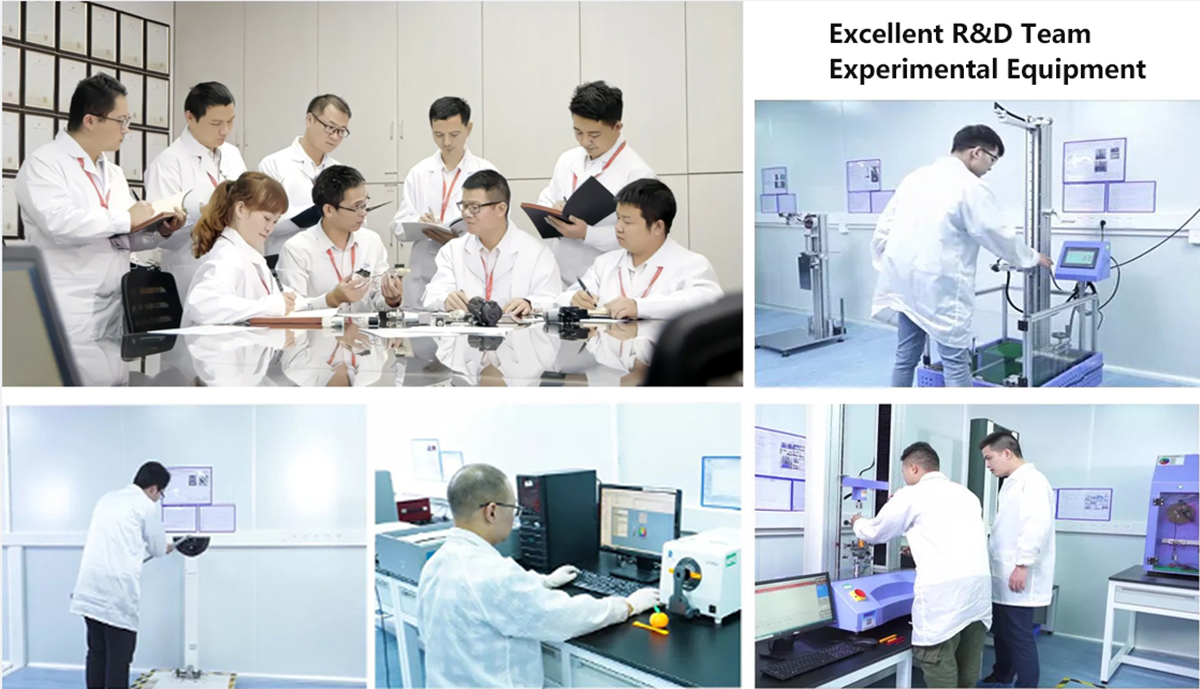
Every spool of Torwell Tech industrial filament is backed by certified occupational management, premium virgin polymers, automated extrusion precision, and rigorous post-production testing.
Quality Control
The factory area has passed ISO45001 occupational health and safety management system certification. Every new employee must be experienced one week of safety production knowledge teaching and two weeks of produce skills training, and master every course in the production process. Who is in the position will be responsible for its duty.
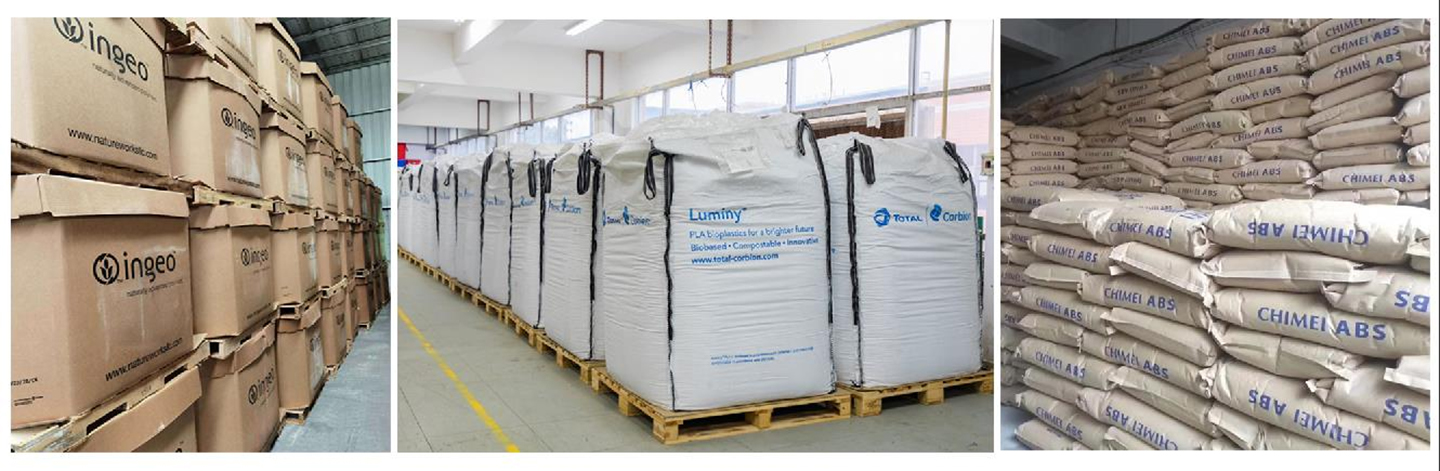
Raw Material
PLA is the most preferred material for 3D printing, Torwell firstly chooses PLA from US NatureWorks, and Total-Corbion is the alternative. ABS from TaiWan ChiMei, PETG from South Korea SK. Each batch of main raw materials comes from the partners who has cooperated more than 5 years to ensure the reliability of the products from the source. Each batch of raw materials will undergo parameters inspection before produce to ensure that raw materials are original and virginal.
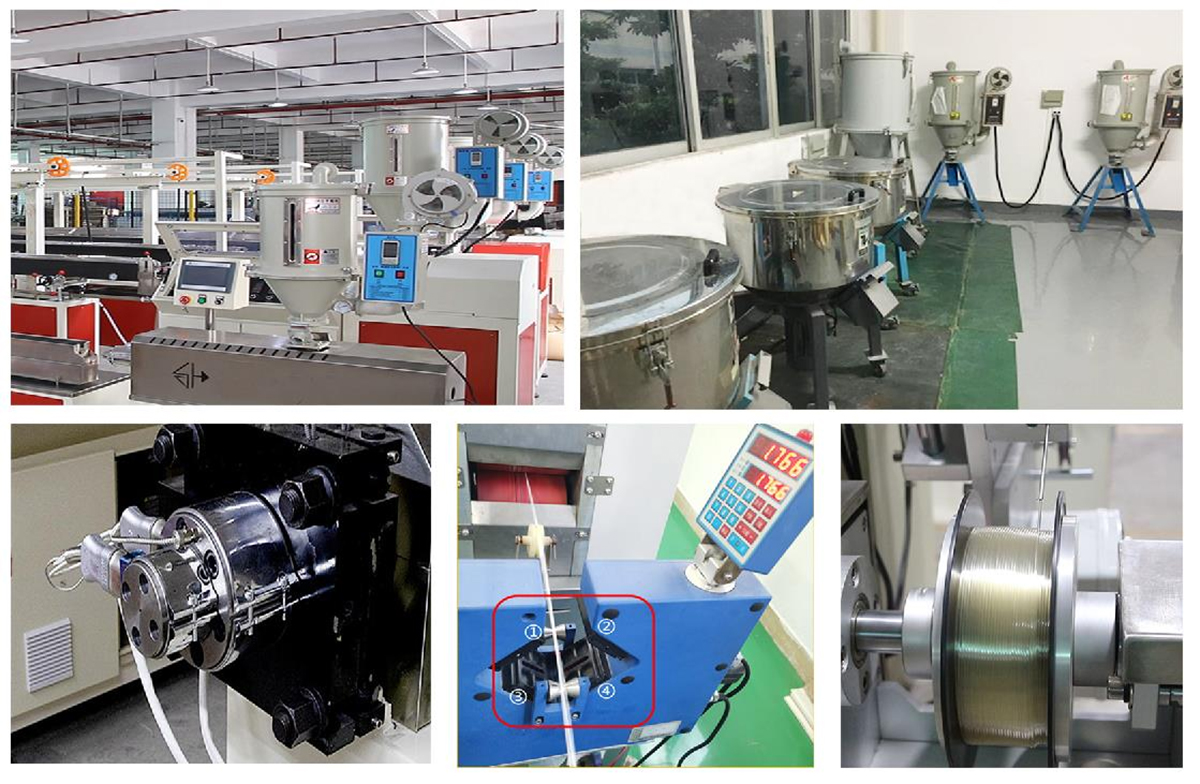
Equipment
The manufacturing workshop will make arrangements after the inspection of raw materials, at least two engineers cross-check the clearance of mixing tank, color mixed of material, humidity from hopper dryer, temperature of extruder, hot/cool tank, and trial-produce and debugging the produce line to make sure all of processes in the best condition. Maintain the filament Diameter tolerance +/- 0.02mm, Roundness tolerance +/- 0.02mm.
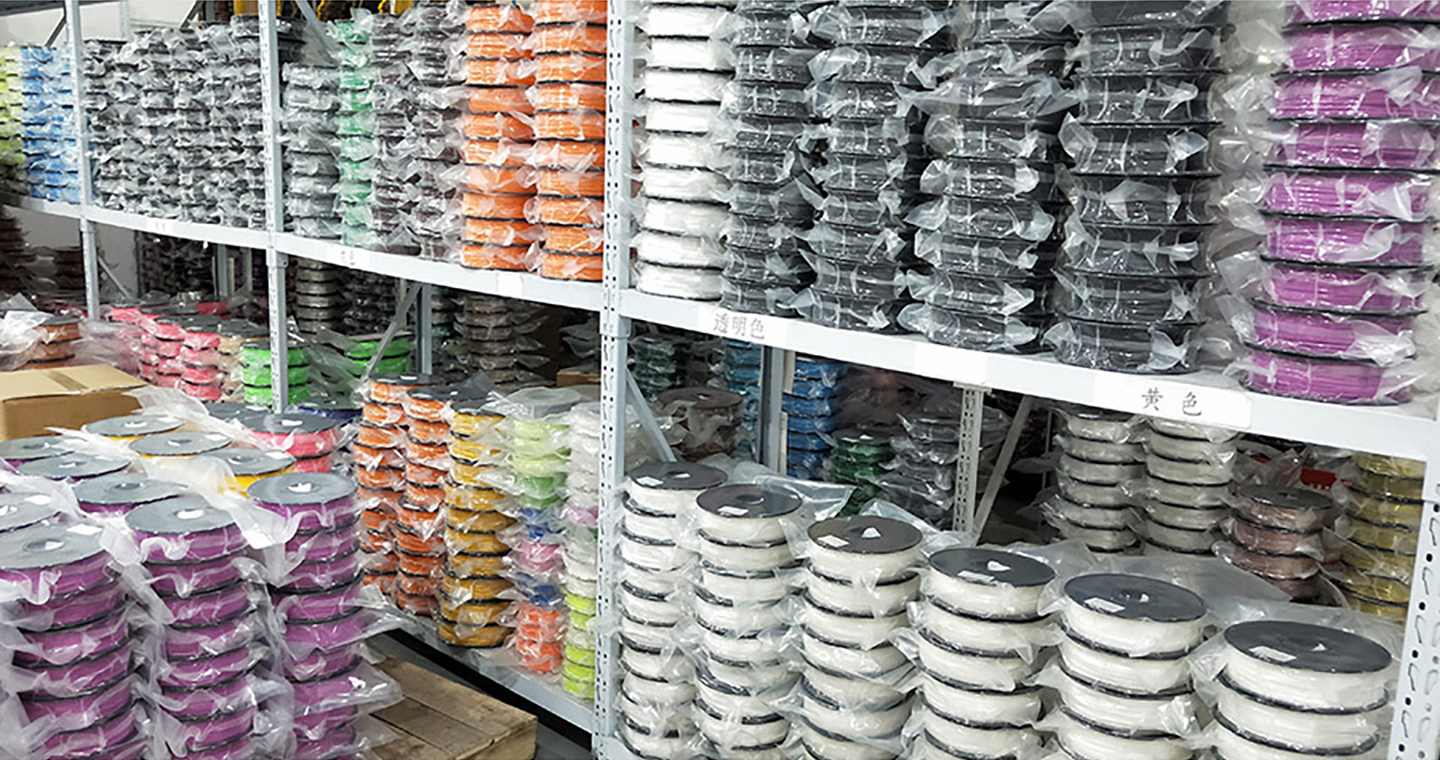
Final Inspection
After each batch of 3D filament is produced, two quality inspectors will conduct random inspections on each batch of finished products in accordance with the requirements of the standard, such as diameter tolerance, color consistency, strength and toughness and so on. After vacuuming the package, place them for 24 hours to check whether there is any leaking package, then label it and finish the package.
Best Practices For Printing Black ASA Vibration Mounts
Maximizing the dynamic load-bearing capacity and vibration isolation performance requires precise thermal and geometric slicing parameters.
Extrusion & Bed Temp
Maintain nozzle temperatures between 240°C – 260°C to ensure maximum inter-layer polymer diffusion. Set the heated build plate to 95°C – 105°C and utilize an enclosed printing chamber (45°C – 60°C ambient) to eliminate internal residual thermal stress and layer delamination under dynamic cyclical shear.
Wall Thickness & Perimeter Count
For high-load industrial dampening brackets, specify at least 4 to 6 solid continuous perimeters (1.6mm to 2.4mm minimum wall thickness). Increased solid perimeter counts provide the hoop strength required to withstand high bolt tightening torque without localized plastic deformation.
Internal Damping Infill Geometry
Avoid standard rectilinear infill, which demonstrates anisotropic mechanical shear failure. Instead, employ 35% – 60% Gyroid or 3D Honeycomb infill patterns. These non-planar cell walls distribute vibrational energy omnidirectionally, dampening resonant amplitudes efficiently.
Explore Torwell Tech High Performance 3D Filaments
From precision engineering ASA and durable PETG to ultra-elastic TPU and specialized PLA, Torwell supplies global enterprises with high-tolerance additive materials.