
Featured Precision & Industrial 3D Printing Filaments
Engineered for robust mechanical integrity, dimensional stability, and versatile functional prototyping across demanding production environments.
The Rise of Carbon Fiber 3D Printing in Singapore’s Smart Industry
Bridging lightweight composite performance with additive manufacturing agility across the Southeast Asian industrial heartland.
Advanced Jurong Tech Hubs
With strategic infrastructure like the Jurong Innovation District (JID) and initiatives supported by NAMIC (National Additive Manufacturing Innovation Cluster), Singapore has rapidly matured into a world-class testbed for composite additive manufacturing.
High Strength-to-Weight
Carbon fiber reinforced polymers (CFRTP) infuse microscopic chopped carbon fibers into resilient matrices (Nylon PA, PETG, PLA, PEEK), yielding tensile strength, modulus, and dimensional stiffness comparable to cast aluminum alloy parts.
Zero Thermal Warpage
The carbon fibers drastically reduce the thermal expansion coefficient of parent polymers, eliminating bed-adhesion curl and warping across large-format industrial build chambers in humid tropical microclimates.
Market Insight: Singapore’s Strategic Additive Drive
As a central logistics and high-precision fabrication capital in APAC, Singaporean manufacturers are progressively replacing traditionally milled metals with high-grade carbon-fiber filaments. The reduction in cycle times from weeks to hours, coupled with zero tooling overhead, accelerates production lines across Jurong, Tuas, Changi, and Seletar Aerospace Park.
Engineering Carbon Fiber Composites for Additive Manufacturing
Additive manufacturing using carbon fiber filaments represents a monumental leap in production capability. In traditional polymer extrusion, parts often exhibit mechanical anisotropy and vulnerability to elevated temperatures. By compounding engineering-grade base resins—such as Polyamide (PA12/PA6), Polyethylene Terephthalate Glycol (PETG), Polycarbonate (PC), and Polylactic Acid (PLA)—with high-modulus carbon microfibers (typically 10% to 25% by weight loading), manufacturers achieve exceptional structural stability and load-bearing endurance.
In Singapore’s specialized fabrication sector, precision tolerances are non-negotiable. Carbon fiber strands align along the extrusion vector during nozzle deposition, inducing an isotropic tensile reinforcement along the toolpath. This internal microstructure counteracts internal stress accumulation, providing outstanding z-axis layer cohesion when printed at calibrated extrusion temperatures.
Key Material Formulations & Technical Specifications
Selecting the optimal composite material depends on thermal exposure, mechanical load, wear environment, and chemical contact requirements:
| Material Grade | Tensile Modulus (MPa) | Heat Deflection Temp (°C) | Primary Industrial Use-Cases |
|---|---|---|---|
| PA-CF (Carbon Nylon) | 6,800 - 8,200 | 150°C - 180°C | Under-the-hood automotive, robotic end-effectors, functional gear housings |
| PETG-CF (Carbon PETG) | 4,500 - 5,600 | 75°C - 85°C | ESD-safe assembly jigs, electronic fixtures, fluid containment brackets |
| PLA-CF (Carbon PLA) | 3,800 - 4,800 | 55°C - 65°C | High-rigidity rapid prototyping, architectural models, drone aerodynamic frames |
| PEEK-CF (Ultra-Polymer) | 10,500 - 13,000 | 260°C - 300°C | Aerospace structural brackets, offshore oil & gas sensors, medical prosthetics |
Localized Industrial Applications in Singapore
Singapore’s industrial landscape features distinctive high-value, low-volume manufacturing sectors where carbon fiber 3D printing is making immediate, high-ROI impacts:
- Aerospace Maintenance, Repair & Overhaul (MRO): Operating extensively out of Seletar and Changi, aerospace technicians utilize carbon-reinforced nylon filaments to fabricate lightweight cabin ducting, customized inspection jigs, and ground support tooling conforming to strict weight and flame-retardant standards.
- Precision Semiconductor & Electronics Tooling: Singapore produces a significant portion of global semiconductor wafers. Carbon-loaded composites naturally disperse electrostatic buildup (ESD safe), making them ideal for pick-and-place vacuum nozzles, cleanroom component carriers, and wafer-handling jigs.
- Marine & Offshore Engineering: Operating in harsh saline environments in Tuas and Jurong Port, marine engineers leverage carbon PETG and PA materials to print corrosion-proof valves, specialized acoustic sensor enclosures, and subsea autonomous robotic chassis.
- Robotic Automation & Industrial End-of-Arm Tooling (EOAT): Weight reduction on robotic arms directly increases payload capacity and acceleration speeds. Replacing milled aluminum gripper fingers with carbon-fiber 3D printed components minimizes inertia while maintaining high gripping force.
Torwell Technologies: Engineering Excellence
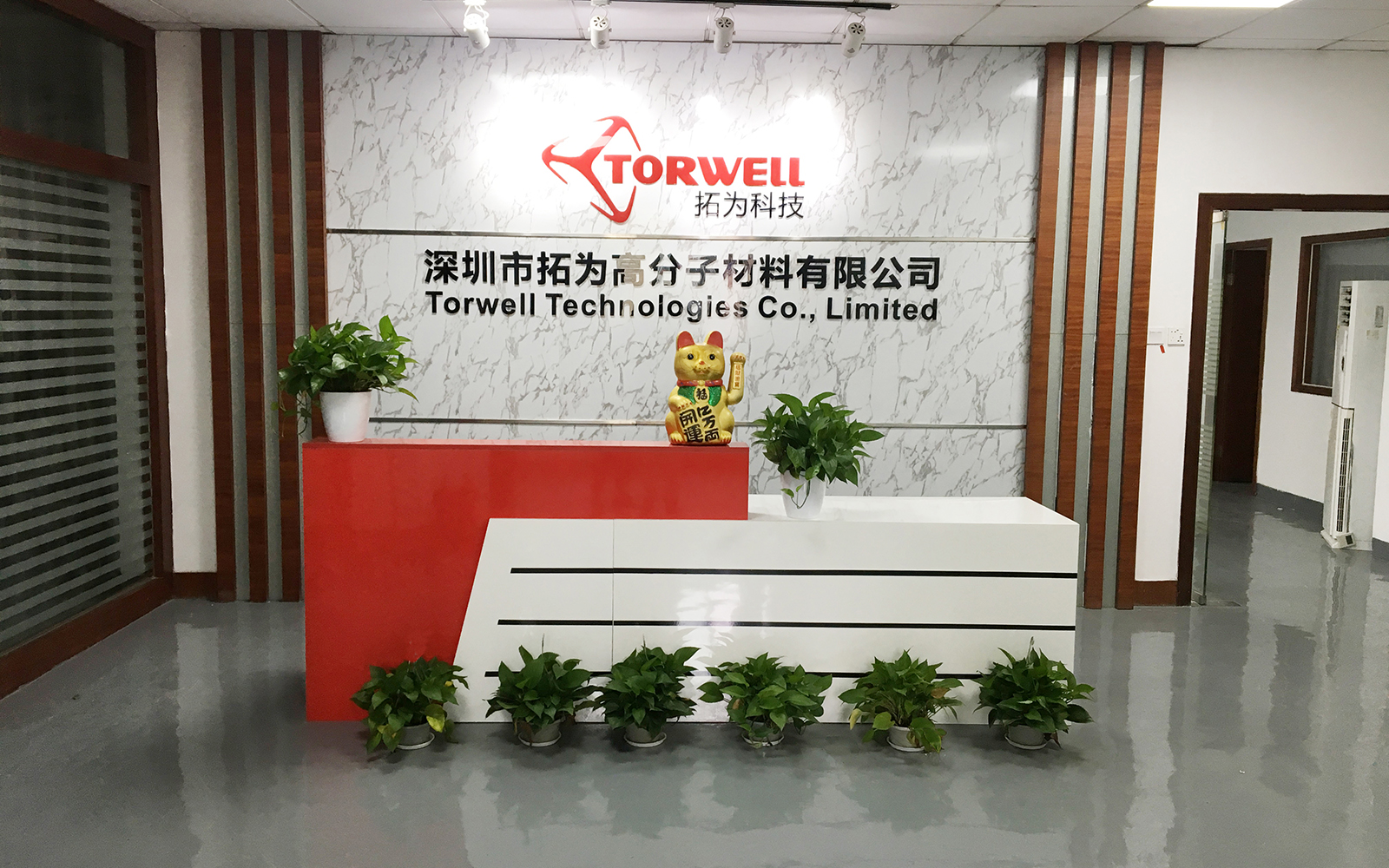
Founded in 2011, Torwell Technologies Co., Ltd. is one of the earliest high-tech enterprises which specializing in high-tech 3D printer filaments research, manufacture and sell, occupies 2,500 square meters modern factory with production capacity of 50,000kgs per month.
With more than 10 years experiences in 3D printing market exploration, cooperated with Institute for High Technology and New Materials in domestic famous universities, and engaging Polymer materials experts as technical adviser, Torwell becomes one of member of Chinese rapid prototyping association and leader enterprise with the most innovative products in 3D printing industry, owns independent intellectual property rights, patents and trademarks (Torwell US, Torwell EU, NovaMaker US, NovaMaker EU).
Torwell passed international quality management system ISO9001, international environment system ISO14001, the advanced manufacturing equipment, test devices and virgin raw materials available are introduced to produce and distribute 3D printer filament of unparalleled quality, to insure all the products of Torwell are compliant with RoHS standard, MSDS, Reach, TUV and SGS test certificated.
Be a reliable and professional 3D printing partner, Torwell has committed to expanding its products to America, Canada, UK, Germany, Netherlands, France, Spain, Sweden, Italy, Russia, Mexico, Australia, New Zealand, Brazil, Argentina, Japan, South Korea, Vietnam, Thailand, Malaysia, India, more than 80 countries and regions.
Factory Precision: Laser Micrometer & Twin-Screw Compounding
From raw virgin resin compounding to automated spooling, every meter of filament undergoes rigorous quality checks to ensure zero nozzle clogs.
±0.02mm Tolerance
Continuous dual-axis laser diameter monitoring guarantees steady volumetric flow rate and prevents under-extrusion or nozzle jamming during critical prints.
Vacuum Desiccant Sealed
Spools undergo multi-stage dehumidification drying before being vacuum-sealed with high-grade desiccant packets in moisture-barrier aluminum packaging.
Global Certifications
Full compliance with international environmental and industrial standards including RoHS, REACH, MSDS, TUV, and SGS laboratory validation.
OEM / ODM Customization
Tailored fiber ratios, masterbatch color formulation, continuous spool lengths, private labeling, and custom engineering polymer compounding.
Engineering Sourcing Guide: Best Practices for Carbon Fiber 3D Printing
Implementing carbon-fiber composite filaments into automated manufacturing workflows requires careful printer hardware configuration and storage handling, particularly in tropical climates like Singapore:
Hardened Nozzle Requirement
Standard brass nozzles degrade rapidly under the abrasive friction of micro carbon fibers. Users must utilize hardened tool steel, tungsten carbide, or ruby-tipped nozzles (minimum 0.4mm or 0.6mm diameter) to maintain pristine dimensional precision over extended printing runs.
Climate & Moisture Management
With Singapore’s ambient relative humidity frequently exceeding 80%, hygroscopic polymers like PA-CF must be dried thoroughly (70°C to 80°C for 6–8 hours) and fed directly from dedicated heated dry-boxes to prevent steam hydrolysis and micro-void formation during extrusion.
By pairing industrial-grade raw materials with rigorous process parameters, enterprises across Singapore can reliably produce end-use parts with tensile strength exceeding 100 MPa, heat resistance surpassing 150°C, and a flawless matte-black surface finish that completely hides layer lines.
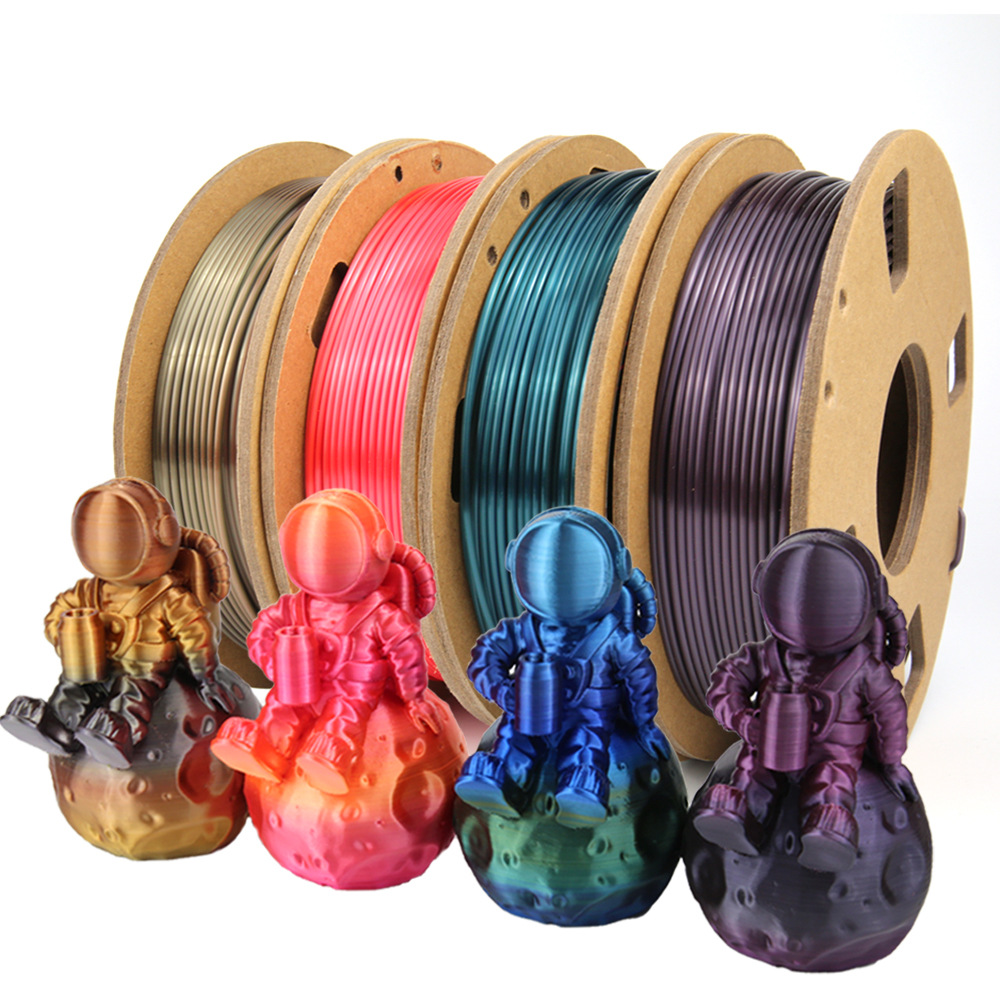
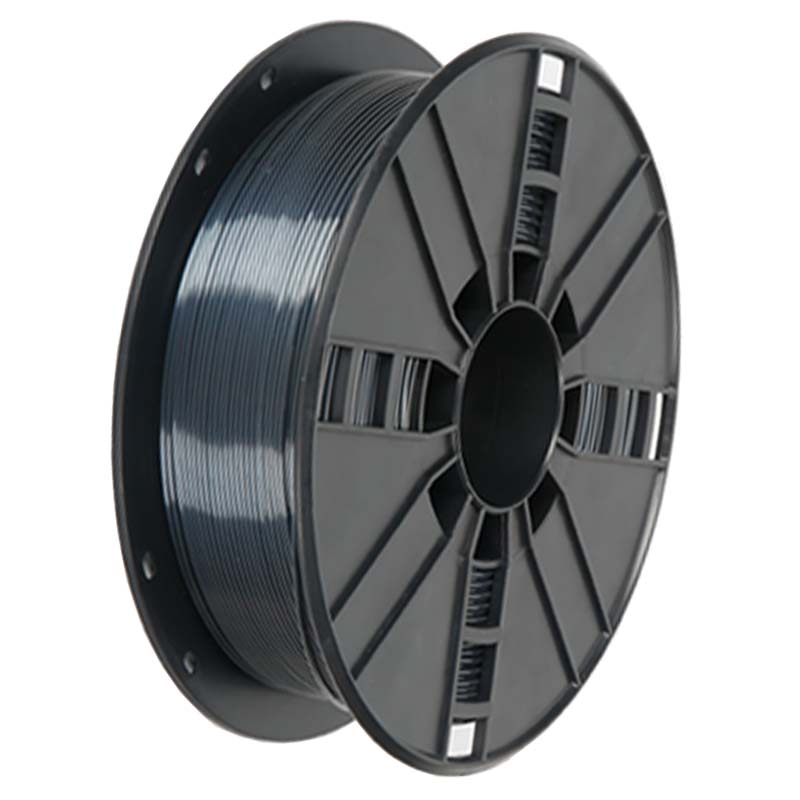
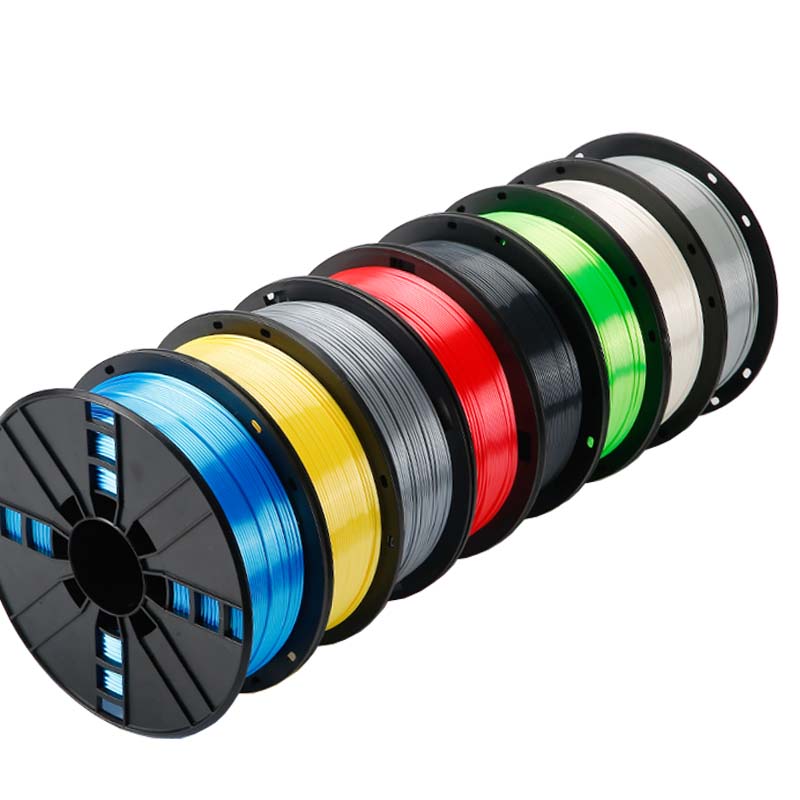
Complete Additive Manufacturing Filament Range
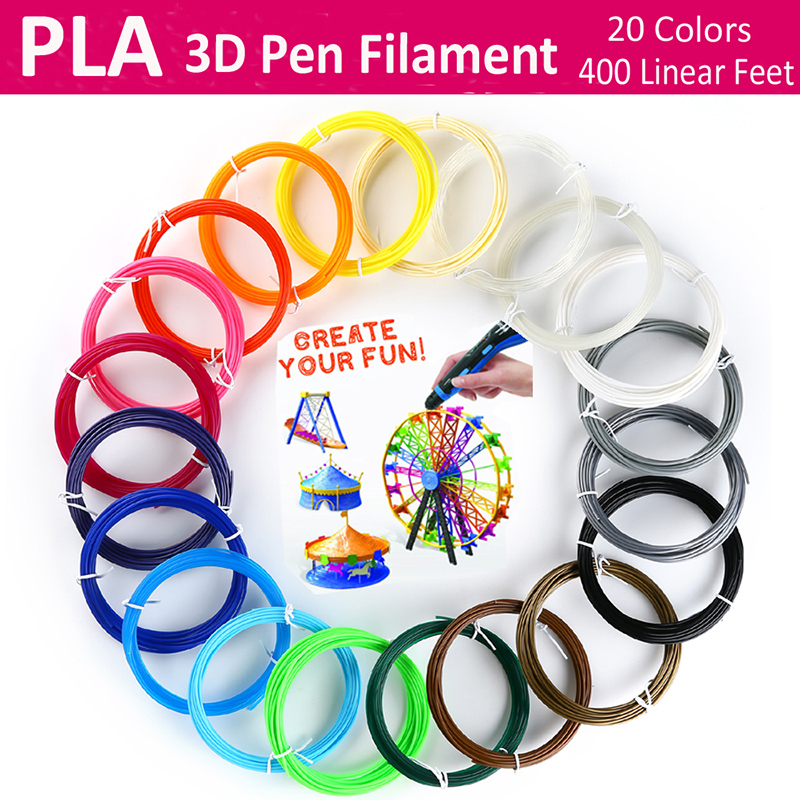
Explore our full line of premium 3D printer filaments, engineered for high reliability, flawless surface aesthetics, and versatile prototyping capabilities.
Frequently Asked Questions
Everything you need to know about procuring, printing, and deploying industrial carbon fiber 3D printing filaments in Singapore.