High-Performance Industrial Filaments
Explore our top-tier precision extruded thermoplastic filaments, serving as the polymer matrix backbone for carbon-reinforcement and industrial engineering applications across France.
The Carbon Fiber Filament Industrial Landscape in France
The manufacturing paradigm in France is experiencing an accelerated transition toward lightweight, high-tensile composite materials, heavily catalyzed by the "France 2030" national investment plan. As European industries demand structural decarbonization and superior strength-to-weight ratios, Carbon Fiber Reinforced Polymer (CFRP) filaments have emerged as the cornerstone of French additive manufacturing. From the aerospace clusters in Occitanie (Toulouse) to the automotive innovation belts in Île-de-France and Auvergne-Rhône-Alpes, industrial manufacturers require advanced extrusion factories that deliver uncompromising filament concentricity, uniform micro-fiber dispersion, and exceptional mechanical consistency.
Carbon fiber filaments—incorporating short-chopped or continuous micro-carbon strands embedded into engineered thermoplastics such as Polyamide (PA12/PA6), PETG, Polycarbonate (PC), and PLA—exhibit significantly higher tensile modulus, flexural rigidity, and heat deflection temperatures (HDT) compared to unfilled matrices. In modern French smart factories, these materials are actively displacing machined aluminum and cast metal components for lightweight end-use parts, high-stress robotic end-effectors, inspection jigs, and thermal tooling fixtures.
Aerospace & Defense Hubs
Supporting Airbus, Safran, and Dassault supply chains in Toulouse, Bordeaux, and Marignane with lightweight, flame-retardant, high-modulus composite components compliant with European aviation standards.
Automotive & Motor Racing
Supplying French automotive leaders and motorsport teams across Le Mans and Magny-Cours with rapid functional prototypes, aerodynamic ducting, and under-the-hood heat-resistant brackets.
Maritime & Rail Transit
Serving Brittany’s offshore sailing vessel fabricators and SNCF / Alstom rail infrastructure programs with corrosion-proof, UV-stable carbon-composite structural replacements.
Factory Process & Rigorous Quality Control
Our state-of-the-art extrusion lines maintain strict ISO-certified manufacturing environments, ensuring each batch of industrial 3D filament delivers micron-level tolerance and optimal carbon fiber loading.
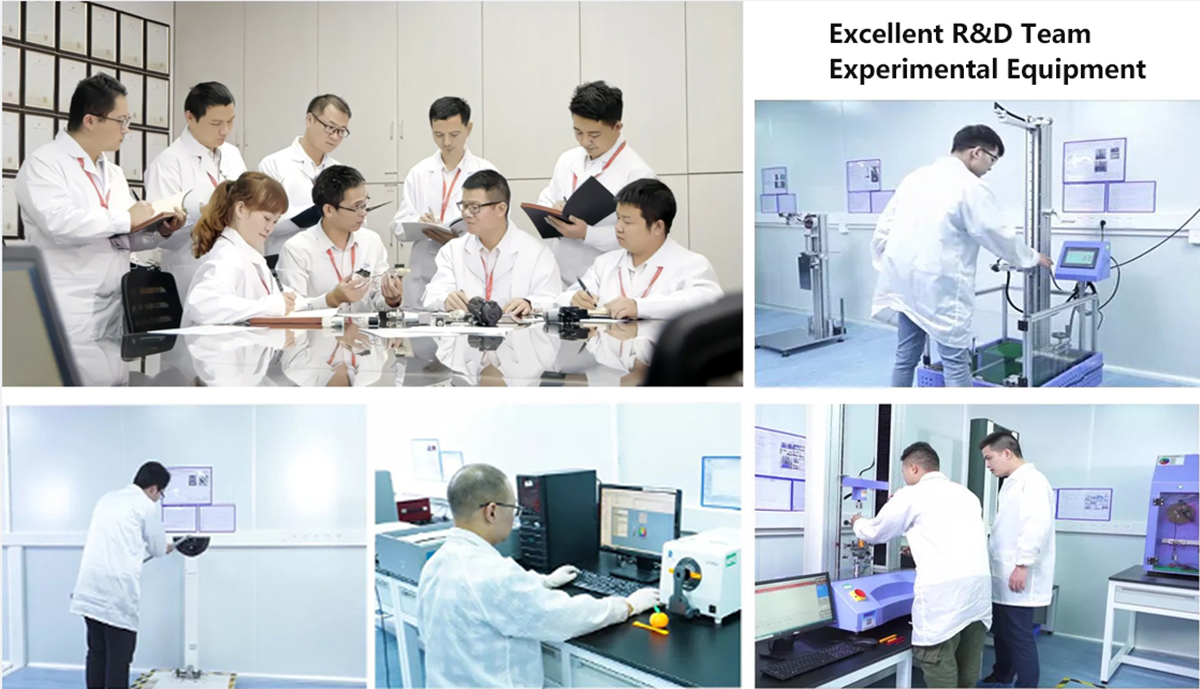
Quality Control
The factory area has passed ISO45001 occupational health and safety management system certification. Every new employee must be experienced one week of safety production knowledge teaching and two weeks of produce skills training, and master every course in the production process. Who is in the position will be responsible for its duty.
Our French B2B clients benefit from standardized operational traceability where every spool is laser-etched with a batch serial number corresponding to exhaustive testing data logs.
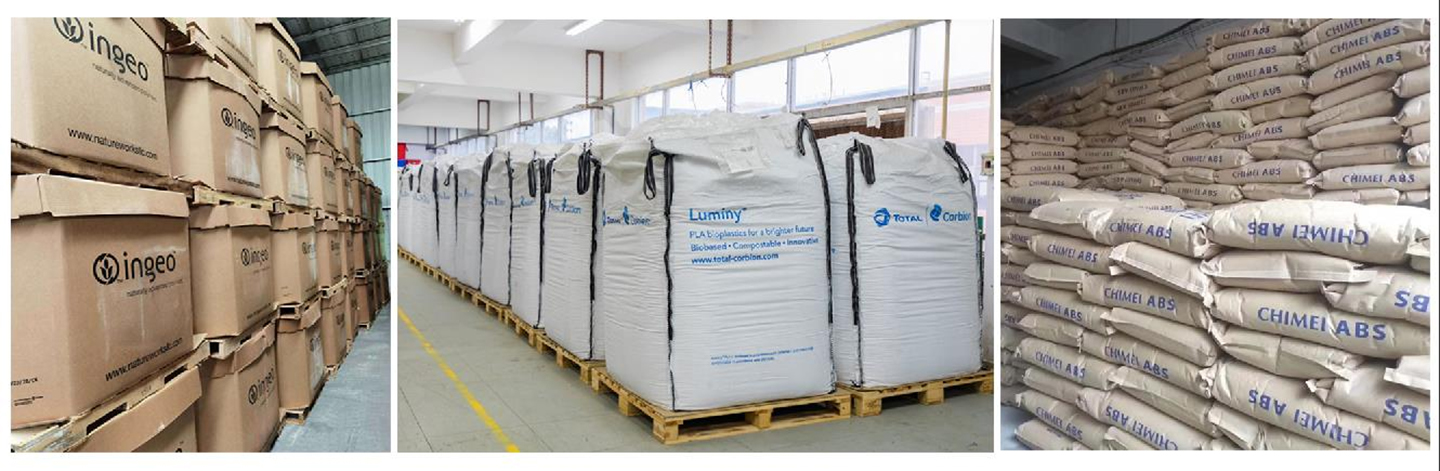
Raw Material
PLA is the most preferred material for 3D printing, Torwell firstly chooses PLA from US NatureWorks, and Total-Corbion is the alternative. ABS from TaiWan ChiMei, PETG from South Korea SK. Each batch of main raw materials comes from the partners who has cooperated more than 5 years to ensure the reliability of the products from the source. Each batch of raw materials will undergo parameters inspection before produce to ensure that raw materials are original and virginal.
For high-performance carbon-infused filaments, virgin polymer bases are compounded with high-purity chopped carbon fibers treated with specialized coupling agents to maximize interfacial matrix adhesion.
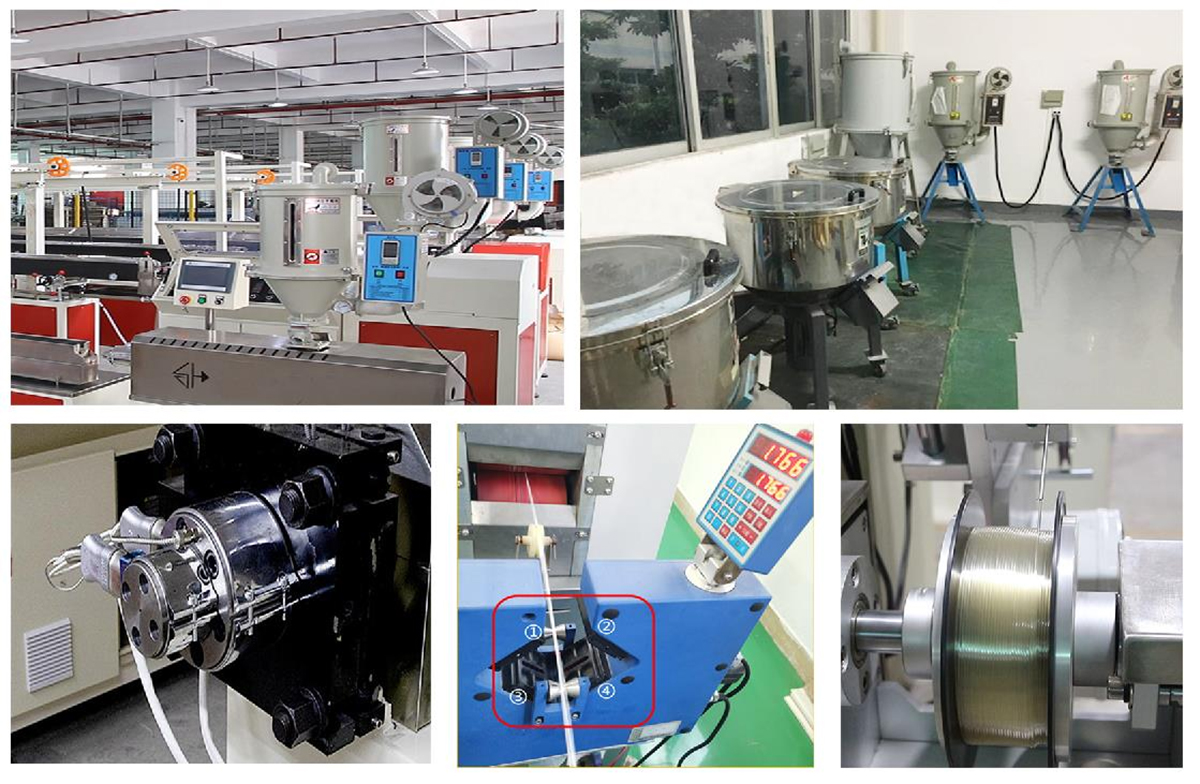
Equipment
The manufacturing workshop will make arrangements after the inspection of raw materials, at least two engineers cross-check the clearance of mixing tank, color mixed of material, humidity from hopper dryer, temperature of extruder, hot/cool tank, and trial-produce and debugging the produce line to make sure all of processes in the best condition. Maintain the filament Diameter tolerance +/- 0.02mm, Roundness tolerance +/- 0.02mm.
Closed-loop dual-axis laser gauge feedback continuously monitors the strand profile at 1000 scans per second, eliminating nozzle clogging and dimensional drift during industrial prints.
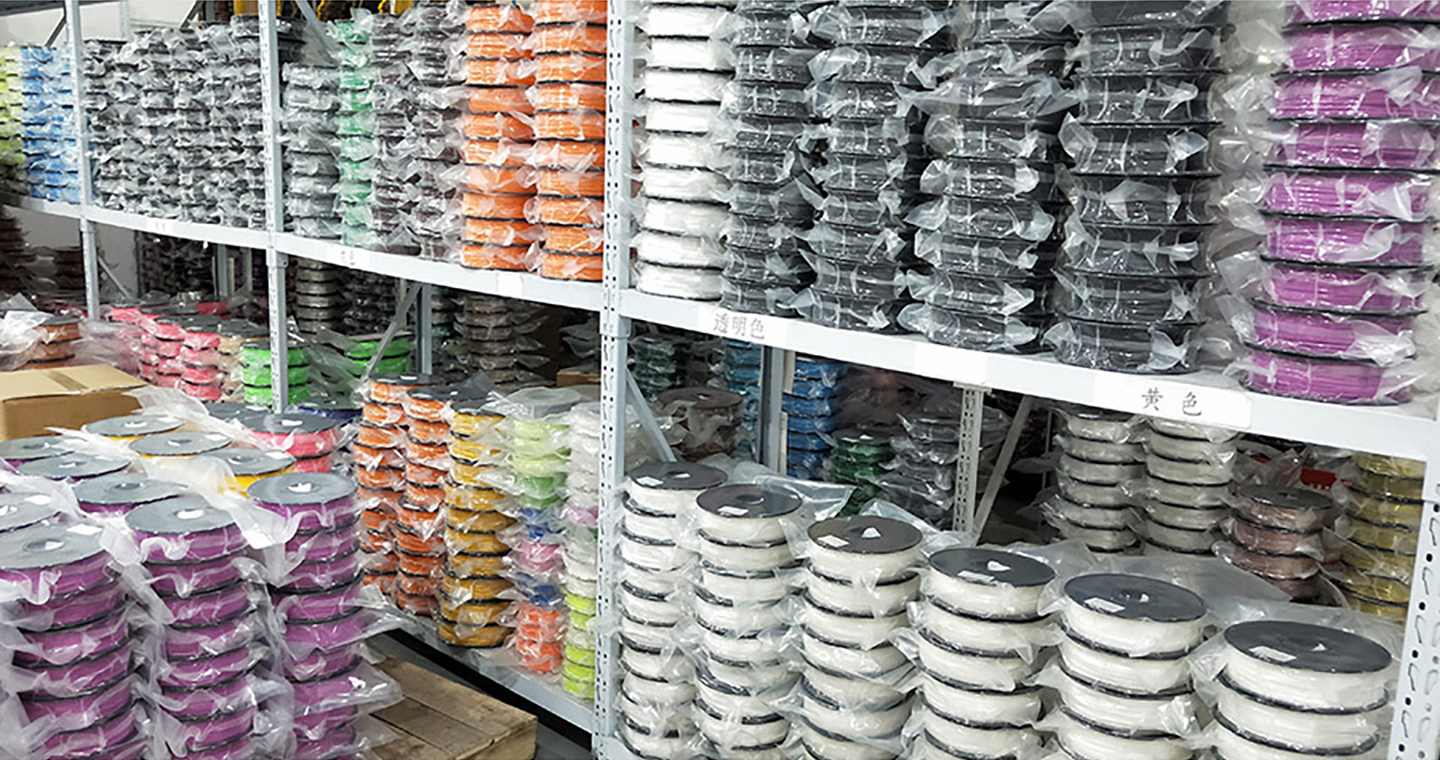
Final Inspection
After each batch of 3D filament is produced, two quality inspectors will conduct random inspections on each batch of finished products in accordance with the requirements of the standard, such as diameter tolerance, color consistency, strength and toughness and so on. After vacuuming the package, place them for 24 hours to check whether there is any leaking package, then label it and finish the package.
Moisture-sensitive composite filaments are conditioned in dehumidification chambers before airtight nitrogen-flushed foil sealing with active desiccant packs.
Advanced Material Science: Carbon Fiber Reinforcement in FFF/FDM
Incorporating micro-carbon fibers into polymer matrices alters the thermodynamic and mechanical characteristics of extruded filaments. Standard thermoplastics undergo isotropic shrinkage upon cooling, often resulting in warping, internal residual stress, and poor layer adhesion. When reinforced with 15% to 25% precision-milled carbon fibers, the composite exhibits a negligible coefficient of thermal expansion (CTE) along the print path, providing virtually warp-free printing even on open-frame 3D printers.
Key Mechanical Benefits for French Industrial Applications:
- Exceptional Tensile Modulus & Rigidity: Carbon fiber strands increase the flexural modulus by up to 250% compared to unfilled base polymers, preventing part deflection under dynamic cyclic loads.
- Enhanced Thermal Deflection Temperature (HDT): Carbon fiber reinforcement elevates the heat resistance threshold, allowing PA-CF and PETG-CF parts to operate in high-temperature engine bays and electronic enclosures exceeding 120°C to 160°C.
- Weight Reduction for High-Speed Robotics: Replacing CNC milled 6061-T6 aluminum with carbon fiber 3D prints reduces component mass by up to 55%, reducing mechanical inertia on high-speed delta and Cartesian pick-and-place robots in French automated fulfillment centers.
- Matte Aesthetic with Hidden Layer Lines: The presence of carbon fibers scatters ambient light reflection, creating a clean, professional matte surface finish that effectively masks FDM layer lines without post-processing.
Comparative Technical Specification Matrix
| Filament Composite Grade | Base Polymer | Tensile Strength (MPa) | Flexural Modulus (GPa) | HDT @ 0.45 MPa (°C) | Target Industrial Use in France |
|---|---|---|---|---|---|
| Carbon Fiber PLA (PLA-CF) | NatureWorks High-Flow PLA | 55 - 65 | 4.8 - 5.5 | 58°C - 65°C | Rapid functional jigs, architectural scale models, drone prototyping |
| Carbon Fiber PETG (PETG-CF) | SK Chemical Virgin PETG | 60 - 72 | 5.2 - 6.0 | 78°C - 85°C | Outdoor marine brackets, fluid manifolds, chemical-resistant covers |
| Carbon Fiber Nylon (PA12-CF) | Industrial Grade Polyamide 12 | 95 - 120 | 7.5 - 9.0 | 145°C - 160°C | Aerospace tooling, under-hood automotive brackets, CNC replacements |
| Carbon Fiber ABS/PC (PC-CF) | ChiMei Virgin Matrix | 70 - 85 | 6.2 - 7.5 | 125°C - 135°C | Electrical switchgear housings, robotic arms, impact fixtures |
Optimized Supply Chain & Factory Sourcing for French Companies
French engineering bureaus, university research laboratories (such as CNRS and Arts et Métiers ParisTech), and Tier-1 contract manufacturers operate under strict lead-time and traceability constraints. When selecting a carbon fiber filament factory partner, European procurement managers prioritize stringent raw material provenance, ISO compliance, and consistent batch-to-batch repeatability.
Our global extrusion factories collaborate seamlessly with distributors, direct enterprise clients, and OEM service bureaus throughout France, offering tailored white-label spooling, custom masterbatch coloration, and specialized spool dimensions (1kg, 2.5kg, 5kg spools) designed for automated multi-material print farms.
Frequently Asked Questions (FAQ) - Carbon Fiber Filaments
Q: Do carbon fiber filaments cause nozzle abrasion during printing?
Yes. Carbon fiber particles are inherently abrasive. We strongly recommend using hardened steel, tungsten carbide, or ruby-tipped nozzles (minimum 0.4mm or 0.6mm diameter) instead of standard brass nozzles to prevent rapid bore erosion and extrusion under-dosing.
Q: How should carbon fiber composite filaments be stored in French climatic conditions?
While carbon fiber PLA and PETG are moderately moisture-resistant, Polyamide-based (PA-CF) filaments are hygroscopic and must be dried in a filament convection dryer at 70°C-80°C for 6 to 8 hours prior to printing, and stored in sealed containers with active desiccant.
Q: What is the advantage of using +/- 0.02mm tolerance for composite extrusion?
Tighter dimensional tolerance prevents hot-end backpressure spikes and under-extrusion voids. Consistent diameter ensures uniform carbon fiber volume distribution per layer, leading to isotropic tensile properties and superior surface aesthetics.
Q: Can carbon fiber filaments replace CNC machined aluminum parts?
For functional fixtures, non-load-bearing airframe covers, robotic end-effectors, and mounting brackets, high-grade PA12-CF or PETG-CF provides comparable stiffness with up to 50-60% weight reduction and significant manufacturing cost savings.
Complete High-Grade 3D Filament Collection
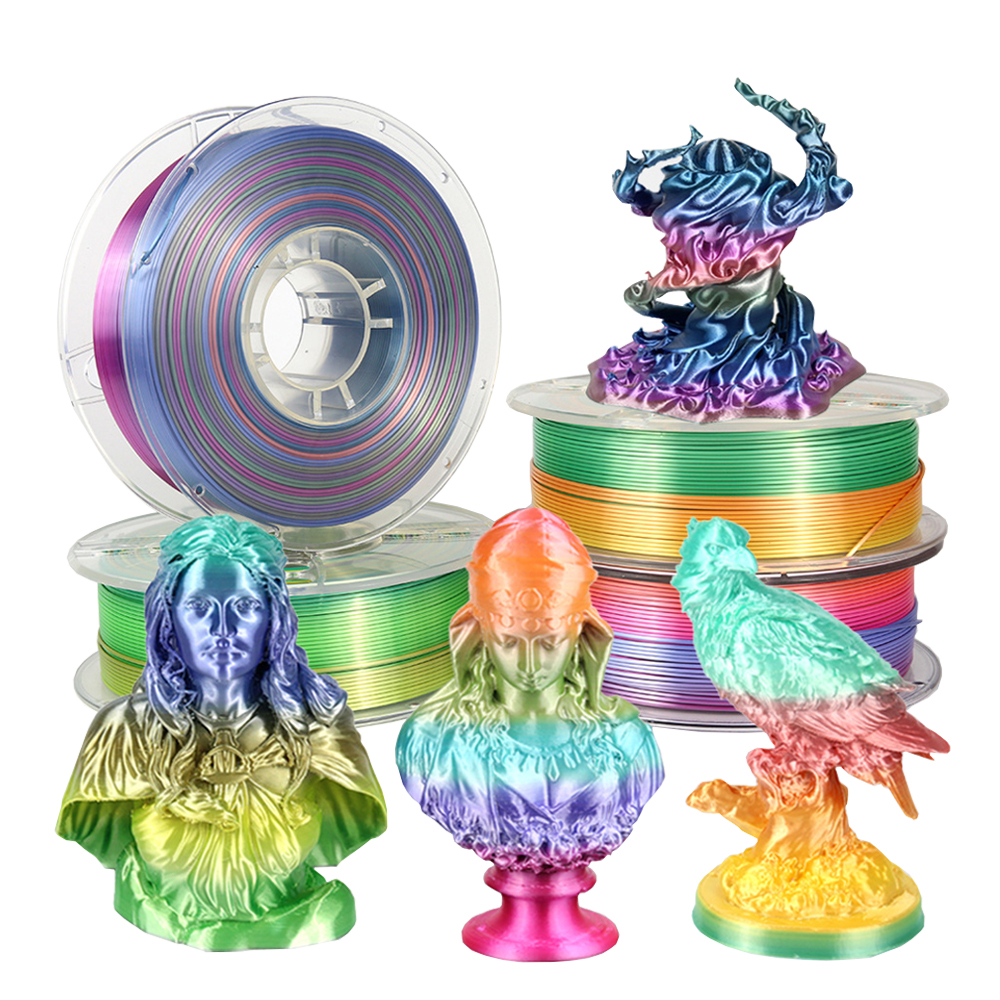
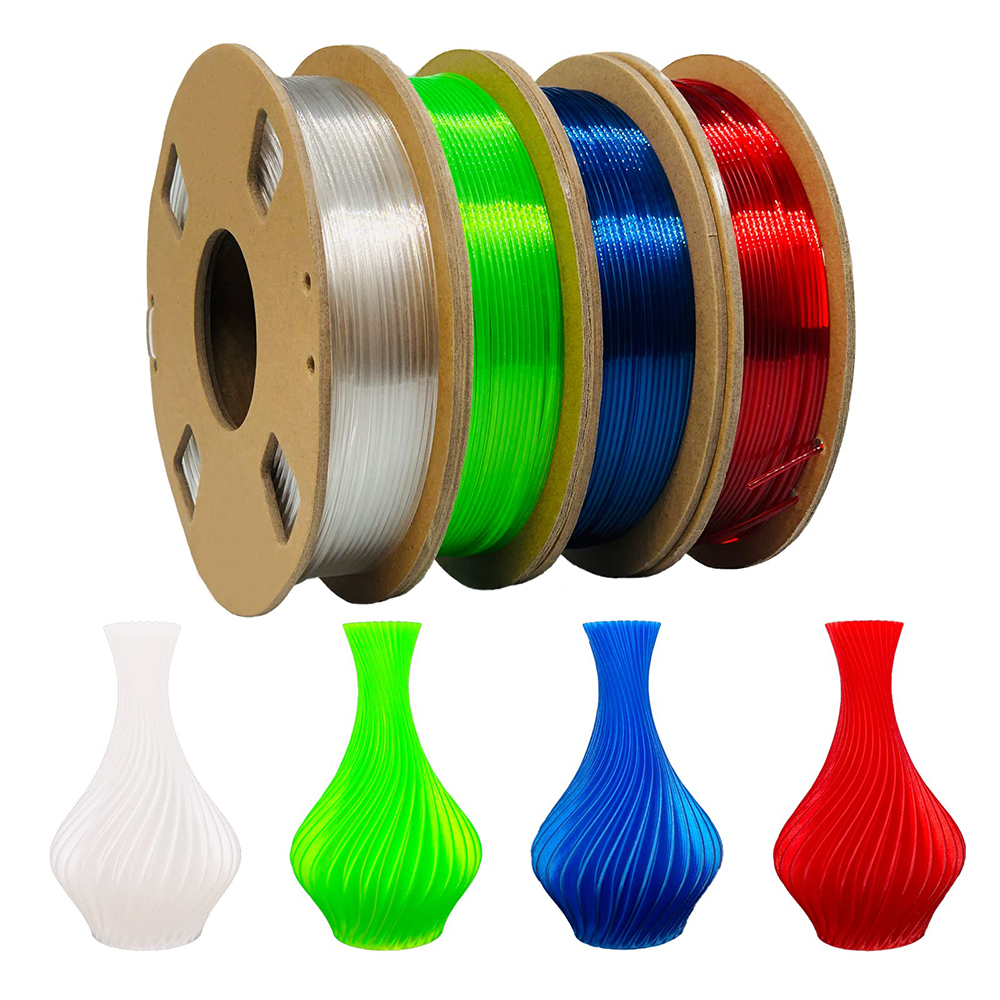
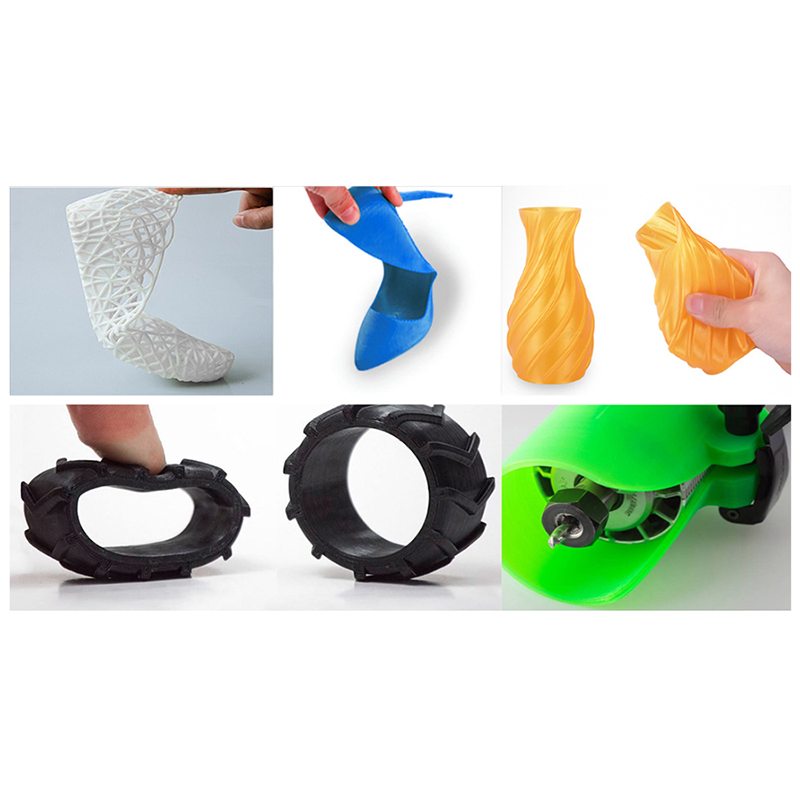
Browse our full spectrum of professional additive manufacturing materials, engineered for precision, high impact strength, vibrant visual finishes, and flexible industrial fabrication.