Featured Industrial & Engineering Materials
Explore our top-tier functional filaments formulated for demanding production lines, rapid prototyping, and structural tooling applications across Mexican industrial clusters.
Carbon Fiber PETG in Mexico: Commercial & Industrial Dynamics
Mexico has rapidly evolved into one of the world's most critical advanced manufacturing corridors. Fueled by nearshoring momentum, the United States-Mexico-Canada Agreement (USMCA/T-MEC), and heavy multinational capital investments, Mexican manufacturing hubs—spanning the Bajío region (Querétaro, Guanajuato, San Luis Potosí, Aguascalientes), the northern industrial powerhouse of Monterrey (Nuevo León), and border manufacturing hubs like Ciudad Juárez and Tijuana—are aggressively integrating Additive Manufacturing (AM) into their continuous production ecosystems.
Within this industrial revolution, Carbon Fiber Polyethylene Terephthalate Glycol (Carbon Fiber PETG / PETG-CF) has emerged as the premier composite material. While standard unreinforced thermoplastics like PLA or standard PETG provide baseline dimensional accuracy, they frequently fail under the rigorous mechanical, thermal, and chemical stresses demanded by Tier-1 automotive assembly lines, aerospace sub-assemblies, and high-speed automated packaging machinery. Carbon Fiber PETG bridges the vital gap between commodity 3D printing filaments and ultra-expensive specialty engineering polymers like PEEK or PEI.
Automotive Nearshoring
Mexico's robust automotive assembly plants utilize Carbon Fiber PETG for custom lightweight assembly jigs, robotic end-of-arm tooling (EOAT), nesting fixtures, and quick-turn replacement components that minimize factory downtime.
Aerospace & Defense
In Querétaro and Sonora aerospace hubs, high stiffness-to-weight ratios and exceptional dimensional stability make PETG-CF the go-to choice for non-critical interior brackets, air ducting prototypes, and tooling templates.
Electronics & Maquiladoras
Medical device and consumer electronic assembly plants in Tijuana and Guadalajara rely on the chemical resistance, low moisture absorption, and electrostatic dissipation qualities of carbon fiber compounds.
Material Science & Mechanical Benchmarks of Carbon Fiber PETG
Carbon Fiber PETG combines the user-friendly printability, chemical resilience, and hydrophobic properties of glycol-modified polyethylene terephthalate with high-modulus chopped carbon fibers (typically 10% to 20% by weight). This micro-reinforcement fundamentally alters the polymer matrix, providing substantial structural advantages over conventional unreinforced filaments:
1. Superior Tensile Modulus and Structural Rigidity
The incorporation of high-aspect-ratio carbon fibers drastically enhances the flexural modulus and tensile stiffness of the base PETG resin. Components printed with carbon fiber PETG experience virtually zero flexing or structural deformation under sustained mechanical loads, making them ideal for load-bearing brackets and rigid structural housings.
2. Exceptional Dimensional Stability and Minimal Warpage
One of the primary challenges with printing high-strength engineering plastics like standard ABS or Nylon is thermal shrinkage and warping on large build volumes. Chopped carbon fibers drastically lower the Coefficient of Thermal Expansion (CTE), ensuring exceptional print bed adhesion, crisp geometric tolerances, and zero curling on sharp corners.
3. Matte Industrial Surface Finish and Layer Concealment
The micro-fiber dispersion scatters light reflection across the exterior shell of the printed part. This results in an aesthetically stunning, dark-matte industrial texture that conceals layer lines, enabling immediate deployment of end-use production parts without labor-intensive sanding or secondary post-processing.
4. Chemical, Moisture, and UV Resistance
Unlike Nylon-based composites (PA-CF) which exhibit high hygroscopicity and require rigorous environmental conditioning, PETG maintains low water absorption. It resists harsh industrial solvents, oils, greases, weak acids, and sustained UV exposure common in Mexican factory environments.
5. Heat Deflection Temperature (HDT) Performance
The mechanical reinforcement network elevates the continuous service temperature of the component, allowing functional prototypes and production aids to withstand elevated ambient temperatures within enclosed machine cells, conveyor systems, and under-hood test environments without softening.
Localized Application Scenarios in Mexican Manufacturing Corridors
As Mexican maquiladoras and contract manufacturers adopt Industry 4.0 paradigms, localized on-demand manufacturing using Carbon Fiber PETG replaces traditional CNC aluminum machining and injection molding for short-run tooling. Key application scenarios include:
Automotive Quality Inspection Gages
Metrology laboratories in Puebla and Toluca utilize PETG-CF to print high-precision CMM holding fixtures and go/no-go inspection gages. Its low thermal expansion guarantees measurement accuracy across varying ambient warehouse temperatures.
End-of-Arm Tooling (EOAT) for Robotics
Lightweighting automated robotic grippers on high-speed pick-and-place lines in Monterrey reduces motor inertia, minimizes mechanical wear on industrial robot arms, and enables faster cycle times with enhanced payload capacities.
Chemical-Resistant Fluid Handling
Processing plants in Veracruz and Jalisco deploy custom-printed manifolds, valve housings, and fluid brackets that encounter industrial coolants, lubricants, and washdown chemicals without degradation or stress cracking.
Torwell Technologies: Certified Global Manufacturer & Supply Partner
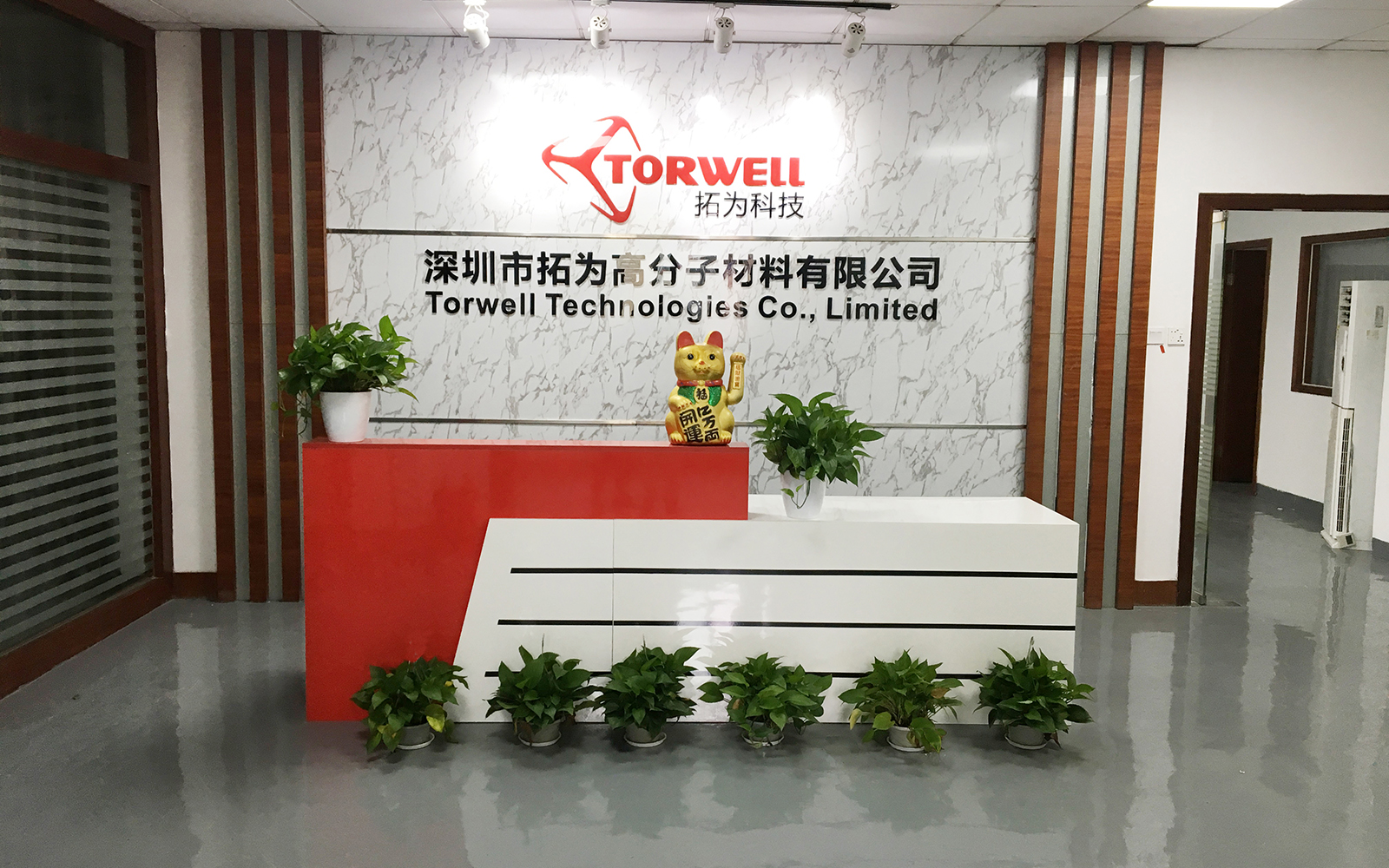
Founded in 2011, Torwell Technologies Co., Ltd. is one of the earliest high-tech enterprises which specializing in high – tech 3D printer filaments research, manufacture and sell, occupies 2,500 square meters modern factory with production capacity of 50,000kgs per month.
With more than 10years experiences in 3D printing market exploration, cooperated with Institute for High Technology and New Materials in domestic famous universities, and engaging Polymer materials experts as technical adviser, Torwell becomes one of member of Chinese rapid prototyping association and leader enterprise with the most innovative products in 3D printing industry, owns independent intellectual property rights, patents and trademarks(Torwell US, Torwell EU, NovaMaker US, NovaMaker EU).
Torwell passed international quality management system ISO9001, international environment system ISO14001, the advanced manufacturing equipment, test devices and virgin raw materials available are introduced to produce and distribute 3D printer filament of unparalleled quality, to insure all the products of Torwell are compliant with RoHS standard, MSDS, Reach, TUV and SGS test certificated.
Be a reliable and professional 3D printing partner, Torwell has committed to expanding its products to America, Canada, UK, Germany, Netherlands, France, Spain, Sweden, Italy, Russia, Mexico, Australia, New Zealand, Brazil, Argentina, Japan, South Korea, Vietnam, Thailand, Malaysia, India, more than 80 countries and regions.
Technical Processing Guidelines for Carbon Fiber Reinforced PETG
To achieve optimal mechanical integrity, inter-layer bonding, and surface finish when processing Carbon Fiber PETG on industrial and desktop FDM/FFF equipment, manufacturing engineers should adhere to the following baseline parameters:
Abrasion-Resistant Tooling
Abrasive carbon fibers will rapidly erode standard brass nozzles. Always install hardened steel, tungsten carbide, or ruby-tipped nozzles (0.4mm or 0.6mm minimum diameter) to maintain strict orifice geometry and prevent extrusion inconsistencies.
Thermal Management
Maintain extrusion temperatures between 240°C – 265°C and heated bed temperatures between 70°C – 85°C. For maximum inter-layer crystallization and shear strength, limit part cooling fan speeds to 20%–40% during continuous printing.
Moisture Control Protocols
Although PETG absorbs significantly less moisture than Polyamide (Nylon), pre-drying spools at 65°C for 4–6 hours prior to high-tolerance production runs prevents hydrolytic degradation, stringing, and micro-void formation inside extruded beads.
Industry Trends: The 2025–2030 Composite Additive Outlook in Mexico
The additive manufacturing ecosystem in Mexico is on a steep upward trajectory. Moving beyond simple form-and-fit prototyping, enterprise buyers are driving three major structural shifts across the composite filament landscape:
Integration of Recycled Matrix Composites (rPETG-CF)
With global automotive OEMs targeting carbon neutrality, Mexican Tier-1 suppliers are demanding circular supply chains. Compounding post-consumer and post-industrial PETG matrix polymers with virgin carbon fibers allows plants to achieve aggressive sustainability targets without sacrificing mechanical strength.
Autonomous Hybrid Additive Cells
Large-scale industrial production facilities across Monterrey, Saltillo, and Querétaro are integrating 5-axis CNC routers with multi-pellet or high-throughput filament composite printheads, enabling automated near-net-shape manufacturing of large automotive stamping dies and composite molds.
Torwell Comprehensive Advanced Material Catalog
Discover our complete range of certified thermoplastic and specialty composite filaments engineered for global industrial distributors, manufacturing facilities, and rapid prototyping laboratories.