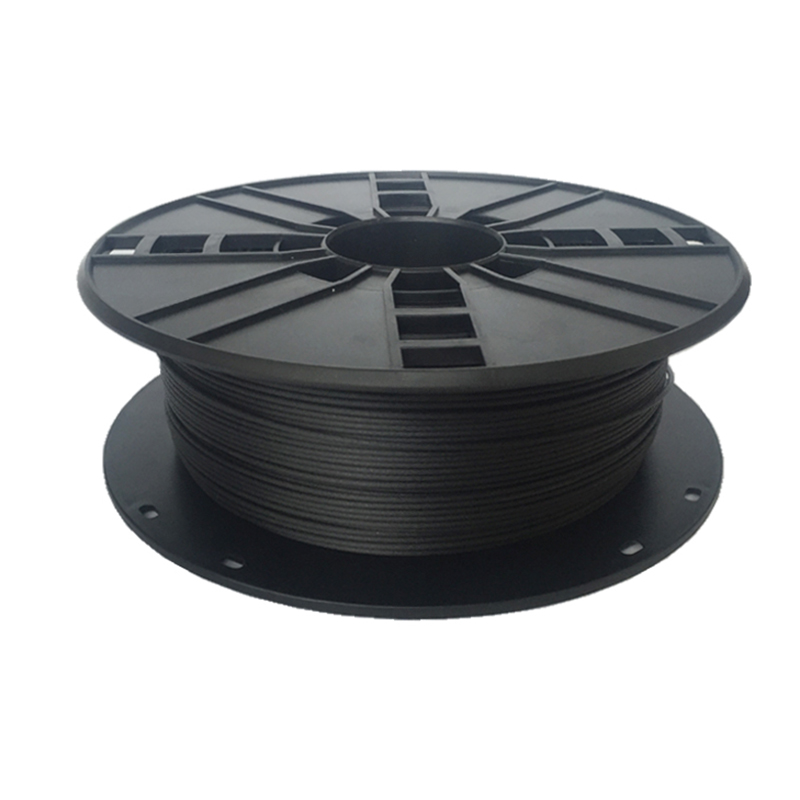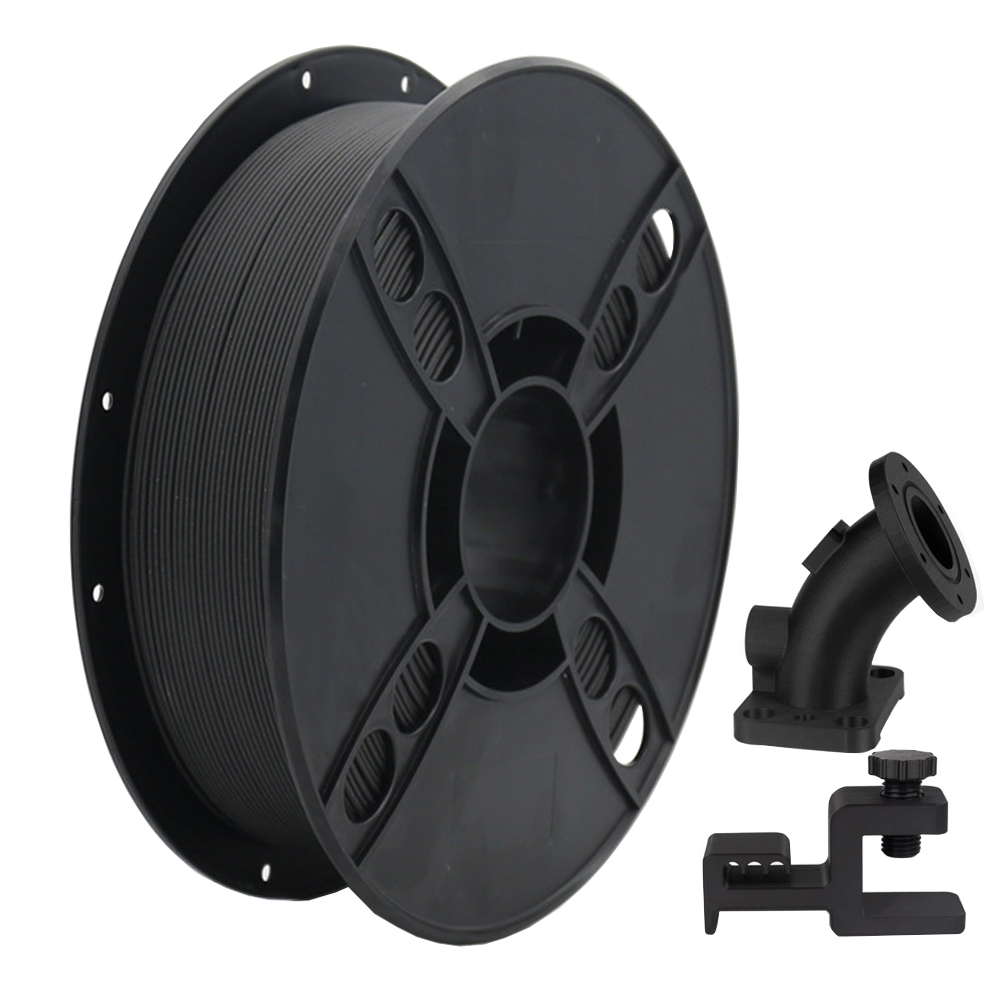
Featured Additive Solutions For Rapid Prototyping & Fixtures
Engineered filaments optimized for test benches, high-strain structural jaws, and precision quality assurance clamping fixtures.
The Modern Paradigm of Additive Tooling in High-Load Testing
In modern mechanical validation laboratories, automotive manufacturing, and aerospace quality assurance lines, mechanical test fixtures undergo rigorous cyclic loads, static bending forces, and intense clamping pressures. Traditionally, test benches, tensile chucks, and coordinate measuring machine (CMM) holding fixtures have relied on subtractive CNC-machined 6061-T6 aluminum or PEEK polymers. However, long procurement cycles, prohibitive machining costs, and high mass have created critical bottlenecks in rapid iterative testing.
The emergence of Carbon Fiber Reinforced Polyethylene Terephthalate Glycol (CF-PETG) represents a pivotal breakthrough in engineering-grade additive tooling. By dispersing micro-carbon fibers within an amorphous, chemically robust copolymer matrix, CF-PETG achieves an exceptional strength-to-weight ratio, structural rigidity, and near-isotropic dimensional stability. This material bridges the gap between everyday rapid prototyping plastics and expensive metallic alloys, enabling manufacturing engineers to deploy high-load mechanical test fixtures on-demand in hours instead of weeks.
Micro-Structure Dynamics: Why CF-PETG Outperforms Standard Thermoplastics
Exploring how chopped carbon fibers alter thermal expansion, prevent creep deformation, and optimize interlaminar shear strength in load-bearing jigs.
Unreinforced polymers like standard PETG, ABS, or PLA undergo long-term molecular relaxation (creep) when subjected to constant clamping forces in test fixtures. The integration of high-modulus chopped carbon fibers creates an internal mechanical scaffold that resists molecular sliding, ensuring sustained clamping torque and dimensional repeatability over millions of test cycles.
Carbon fibers possess a negative or near-zero coefficient of thermal expansion (CTE) along their longitudinal axis. When compounded into PETG, they substantially decrease volumetric thermal contraction during deposition. This allows ultra-tight dimensional tolerances on large footprint fixture bases without bed curling or internal stress accumulation.
Mechanical test environments routinely involve aggressive cutting fluids, hydraulic oils, industrial lubricants, solvents, and cleaning detergents. Unlike polyamides (Nylon) which absorb ambient moisture and lose rigidity, CF-PETG retains its baseline mechanical modulus in moist and chemically demanding testing environments.
Industrial Implementations of CF-PETG in High-Stress Test Rigs
From automotive endurance rigs to high-frequency vibration testing, discover real-world deployments where CF-PETG replaces metallic fixtures.
During dynamic cyclic testing of automotive engine brackets, chassis mounts, and steering knuckles, fixtures must withstand cyclic vibrations up to 50 Hz. CF-PETG provides high structural stiffness alongside superior internal dampening compared to aluminum, eliminating resonant frequency amplification that could distort strain-gauge feedback.
Aerospace structural validation requires non-marring yet ultra-rigid clamping blocks for composite panel shear testing. CF-PETG fixtures distribute clamping pressure evenly without scratching delicate composite surfaces, while eliminating flexural deflection during pull-off and shear-strain evaluations.
Automated high-throughput PCB and smartphone drop-test cradles demand low moving mass to minimize actuator inertia while maintaining strict flatness tolerances. Additively manufactured CF-PETG nesting nests provide rapid kinematic acceleration with zero structural flexing under multi-axis impact.
In hydrostatic proof testing of valving manifolds, sealing plates printed from CF-PETG withstand hydrostatic pressures exceeding 40 Bar when designed with optimized gyroid infills and thick continuous perimeters, outperforming standard polymers without bursting or micro-cracking.
High-speed pick-and-place testing stations require lightweight end-of-arm tooling (EOAT). CF-PETG reduces robotic payload weight by over 60% compared to steel, lowering motor thermal load and enabling faster cycle times during endurance testing.
Metrology fixtures demand complete environmental stability. With an ultra-low hygroscopic expansion rate, CF-PETG inspection nests hold micrometer-level datum points consistently regardless of ambient humidity fluctuations in industrial cleanrooms.
Comparative Engineering Matrix: Fixture Materials Comparison
Evaluating mechanical modulus, moisture absorption, printability, and cost economics across tooling materials.
| Engineering Material | Tensile Modulus (MPa) | Tensile Strength (MPa) | HDT @ 0.45 MPa (°C) | Moisture Sensitivity | Machining / Print Lead Time | Relative Cost Index |
|---|---|---|---|---|---|---|
| Carbon Fiber PETG (Torwell Tech) | 7,200 - 8,500 | 75 - 88 | 82°C | Low (<0.4%) | 4 - 12 Hours (Additive) | 1.0x (Baseline Economic) |
| Standard Neat PETG | 2,100 | 48 | 68°C | Low (<0.4%) | 4 - 12 Hours (Additive) | 0.7x |
| Carbon Fiber PLA | 5,800 | 65 | 55°C | Moderate (<0.8%) | 4 - 12 Hours (Additive) | 0.9x |
| Carbon Fiber Nylon (PA12-CF) | 8,200 (Dry) / 4,100 (Wet) | 110 (Dry) / 60 (Wet) | 145°C | High (Hydrophilic Drift) | 6 - 18 Hours (Enclosed) | 2.8x |
| 6061-T6 Billet Aluminum | 68,900 | 310 | >300°C | None | 5 - 15 Business Days (CNC) | 6.5x |
Design For Additive Manufacturing (DfAM) For CF-PETG Test Fixtures
Maximize structural integrity, prevent delamination, and optimize load transfer paths in 3D printed mechanical test assemblies.
Because fused filament fabrication produces anisotropic characteristics where X/Y tensile strength exceeds Z-axis interlayer bond strength, always align primary tensile and shear forces along the toolpath extrusion lines (X/Y planes). For multiaxial load nodes, incorporate 45-degree chamfered rib trusses.
Never tap plastic threads directly for high-torque repetitive bolting. Design stepped counterbores for brass ultrasonic or heat-set inserts. For dynamic sliding pins, press-fit hardened steel drill bushings into printed CF-PETG housings to deliver infinite cyclic wear resistance.
Utilize Gyroid or 3D Honeycomb infill geometries configured at 45% to 75% density. Unlike rectilinear infills that generate anisotropic shear planes, continuous triply periodic minimal surface (TPMS) gyroid structures distribute omnidirectional compressive and torsional loads evenly throughout the fixture core.
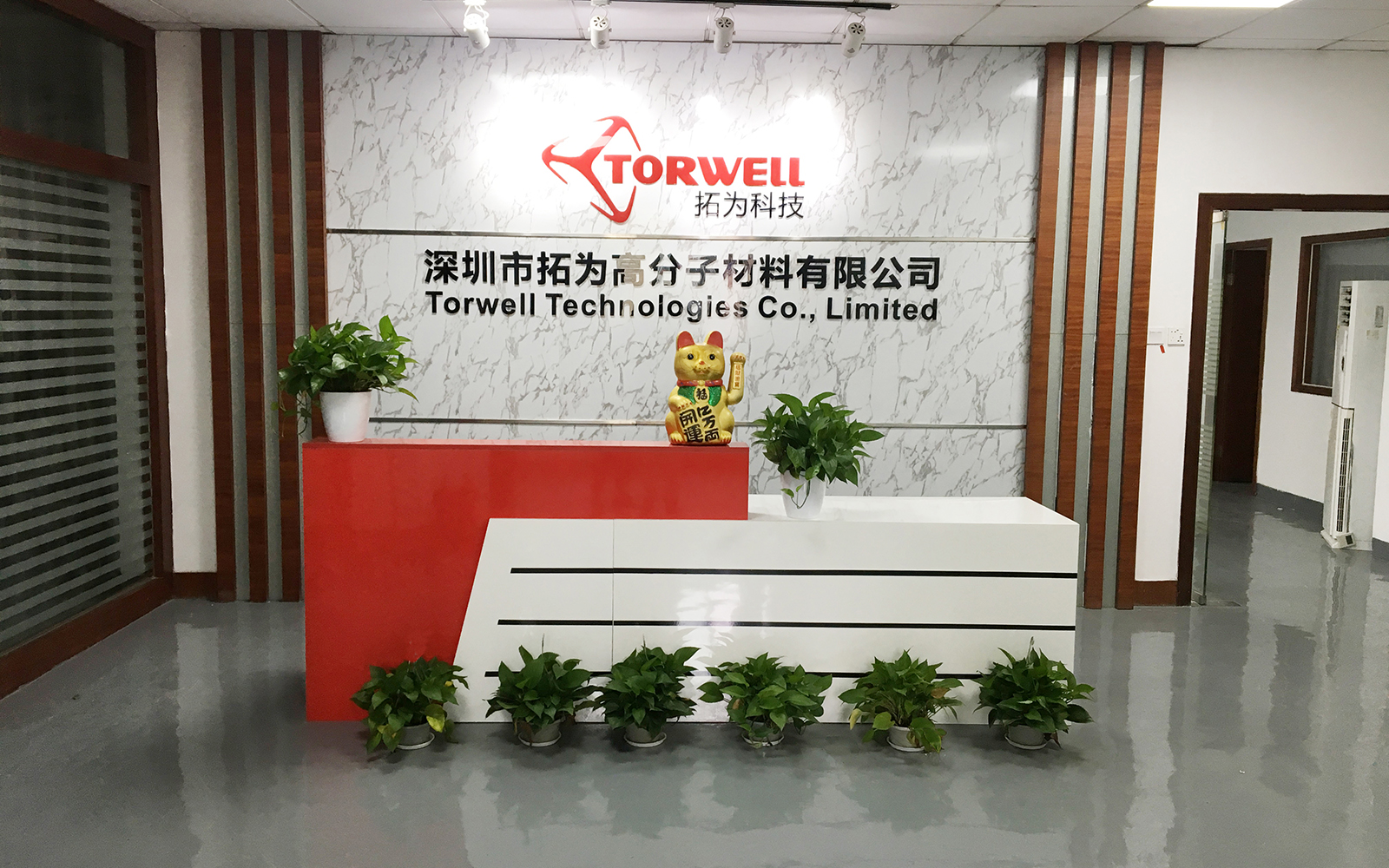
Torwell Technologies Co., Ltd.
Founded in 2011, Torwell Technologies Co., Ltd. is one of the earliest high-tech enterprises specializing in high-tech 3D printer filaments research, manufacture, and global distribution. Torwell occupies a 2,500 square meters modern factory with a robust production capacity of 50,000 kgs per month.
With more than 10 years of experience in 3D printing market exploration, Torwell has partnered closely with Institutes for High Technology and New Materials across domestic prestigious universities, engaging polymer materials experts as senior technical advisers. Torwell stands as an active member of the Chinese Rapid Prototyping Association and a pioneer enterprise with the most innovative product portfolio in the additive manufacturing industry, holding independent intellectual property rights, patents, and global trademarks (Torwell US, Torwell EU, NovaMaker US, NovaMaker EU).
Torwell has passed the international quality management system ISO9001 and international environmental management system ISO14001. Advanced industrial extrusion equipment, precision laser diameter monitoring devices, and 100% virgin polymer raw materials ensure unparalleled batch-to-batch consistency. All Torwell filament series strictly comply with RoHS, MSDS, REACH, TUV, and SGS certifications.
As a trusted and reliable global additive manufacturing partner, Torwell proudly exports high-performance filaments to over 80 countries and regions, including America, Canada, UK, Germany, Netherlands, France, Spain, Sweden, Italy, Russia, Mexico, Australia, New Zealand, Brazil, Argentina, Japan, South Korea, Vietnam, Thailand, Malaysia, and India.
High-Performance Filaments For Fixture Tooling & Production Runs
Explore our full range of flexible dampeners, high-rigidity carbon composites, standard functional polymers, and impact-modified materials.