Engineered Composite Filaments for Gasket Sealing
High-precision thermoplastic and carbon-reinforced materials tailored for custom flange geometries, fluid containment, and vibration damping mechanical seals.
Industrial Landscape: The Evolution of Mechanical Gasket Seals via Additive Manufacturing
Flexible mechanical gasket seals represent vital, unsung components across global manufacturing sectors. From multi-stage automotive engine intake manifolds and battery pack enclosures in electric vehicles (EVs) to high-pressure hydraulic pipe couplings, chemical reaction vessels, and aerospace fuel-containment conduits, gasket seals bear the immense responsibility of preventing fluid escape, isolating gas pressures, and dampening harsh structural vibrations. Historically, the fabrication of custom, flexible, or semi-rigid gaskets relied on die-cutting sheet elastomers, compression rubber molding, or Computerized Numerical Control (CNC) waterjet machining. While these legacy production avenues excel in ultra-high-volume homogenous production, they demonstrate substantial limitations when tackling rapid engineering revisions, low-to-medium batch customizations, complex multi-material profiles, and topologically optimized sealing beads.
The convergence of Fused Deposition Modeling (FDM / FFF) 3D printing technology with high-performance carbon fiber printer filament formulations has fundamentally altered this paradigm. By infusing chopped micro-carbon fibers or nano-tubular reinforcement into flexible thermoplastic matrices (such as Thermoplastic Polyurethane - TPU, Thermoplastic Copolyester - TPC, and modified flex-grade PETG/Nylon copolymers), additive manufacturing enables on-demand production of functional, anisotropic, and load-bearing gasket seals without expensive tooling or extended lead times.
Creep & Extrusion Resistance
Under persistent bolt preload torque, unreinforced flexible elastomers often undergo compression creep and cold flow, causing loss of seal tightness. Micro-carbon fiber networks establish an internal scaffolding that arrests localized polymer deformation.
Thermal & Dimensional Stability
Carbon fiber exhibits near-zero or negative thermal expansion coefficient along its axial fiber orientation, minimizing thermal warping in cyclical engine or industrial pipeline operations.
Multi-Material Integration
Enables direct 3D printing of dual-durometer gasket assemblies: rigid carbon fiber reinforced backplates integrated seamlessly with compliant elastomeric sealing lips in a single continuous build cycle.
Reinforcement Dynamics: How Carbon Fiber Elevates Elastomeric & Semi-Rigid Seals
In traditional elastomer engineering, adding fillers such as carbon black, silica, or clay improves vulcanizate modulus and tear strength. In FDM filament synthesis, the incorporation of chopped high-modulus carbon fibers (typically 5% to 20% by weight, with fiber lengths ranging between 50 to 150 micrometers) induces a transformative structural reinforcement effect:
- Anisotropic Load Transfer: During nozzle extrusion through melt orifices (e.g., 0.4mm or 0.6mm hardened nozzles), shearing stresses naturally align the carbon microfibers along the print travel path. This alignment provides superior tensile and shear resistance along the sealing bead, preventing gasket blowout under internal fluid pressures.
- Suppression of Bolt-Hole Distortion: Traditional unreinforced elastomeric gaskets often squeeze outward or rip at the bolt holes when torqued down. Carbon fiber inclusion raises the compressive yield strength and modulus, distributing torque evenly across the entire mating flange face.
- Enhanced Surface Friction and Anti-Slip Interface: The subtle micro-texture provided by surface-exposed carbon fibers increases frictional engagement between machined metal flanges (aluminum, cast iron, steel), virtually eliminating lateral gasket slippage during heavy mechanical vibration.
- Electrostatic Discharge (ESD) and Chemical Dissipation: The conductive percolation network formed by uniform carbon fiber dispersion helps dissipate static build-up—a crucial safety requirement when sealing volatile fuel lines, solvent pumps, and sensitive electronics enclosures.
In-Depth Industrial Application Scenarios
Analyzing high-demand environments where carbon fiber reinforced filaments solve mission-critical fluid sealing and mechanical isolation challenges.
1. Automotive Powertrain & EV Battery Enclosure Gaskets
Automotive under-the-hood environments expose components to cyclical operating temperatures (-40°C to +135°C), splash lubricating oils, coolants (ethylene glycol/water mixes), and substantial chassis vibrations. Carbon fiber reinforced filaments (such as CF-PETG, CF-PA, and high-durometer CF-TPU) serve as premier choices for custom oil pan gaskets, thermostat housing seals, air intake plenum interfaces, and IP67/IP68-rated electric vehicle battery pack enclosures. The carbon fiber matrix prevents the seal from thinning or suffering fatigue cracking over prolonged highway driving cycles.
2. Aerospace & UAV Fuel, Avionics, and Environmental Ducting Seals
Weight reduction is paramount in aerospace design. Carbon fiber composite filaments deliver exceptional strength-to-weight ratios for unmanned aerial vehicles (UAVs) and commercial airframe environmental control system (ECS) duct seals. Printed with flame-retardant matrix resins, CF seals resist high-altitude ozone exposure, low ambient pressures, and rapid temperature fluctuations without losing sealing elasticity.
3. Industrial Petrochemical Valve Packings & Chemical Flange Isolators
In petrochemical processing plants and water treatment facilities, standard silicone or natural rubber seals can rapidly degrade when exposed to aromatic hydrocarbons, acids, or alkali solutions. Using carbon fiber reinforced PETG or fluoropolymer/nylon blends provides chemical inertness alongside structural integrity, making them ideal for custom flange spacers, pump impeller housing gaskets, and pipe vibration dampening rings.
4. Automated Robotics, End-Effectors, and Pneumatic Actuator Seals
High-speed pick-and-place robots and factory automation arms rely on dynamic pneumatic seals and suction cup manifold gaskets. These components undergo millions of reciprocating cycles. Carbon fiber composite seals exhibit lower wear rates and friction coefficients compared to pure flexible polymers, dramatically extending mean time between failures (MTBF) on automated assembly lines.
Material Property Comparison Matrix for Gasket Applications
Evaluating standard vs. carbon fiber composite filament properties in mechanical sealing contexts.
| Filament Type | Shore Hardness / Rigidity | Tensile Modulus (MPa) | Chemical Resistance | Primary Gasket Functionality |
|---|---|---|---|---|
| Standard TPU / TPE | 85A - 95A (High Flexibility) | 80 - 150 | Moderate (Oils, Grease) | Low-pressure static liquid seals, dust boots, soft vibration pads. |
| Carbon Fiber TPU (CF-TPU) | 95A - 60D (Semi-Flexible) | 450 - 950 | High (Hydrocarbons, Greases) | High-pressure flexible gaskets, hydraulic seals, anti-extrusion rings. |
| Torwell Carbon Fiber PLA | 82D - 85D (High Rigidity) | 4,200 - 5,500 | Standard (Alcohols, Water) | Rigid flange alignment rings, compression backer plates, mold fixtures. |
| Carbon Fiber PETG (CF-PETG) | 78D - 82D (Semi-Rigid) | 3,100 - 4,200 | Excellent (Acids, Bases, Salts) | Chemical pipeline flanges, pump casings, waterproof enclosure gaskets. |
| Carbon Fiber Nylon (CF-PA) | 75D - 80D (Tough Structural) | 5,800 - 7,800 | Superior (Fuels, Solvents, Oils) | Under-hood automotive gaskets, high-temperature fluid containment. |
Emerging Trends & Next-Generation Engineering in 3D Printed Gaskets
The additive manufacturing sector for functional composite seals is evolving rapidly, driven by algorithmic design and advanced materials synthesis:
- Generative AI & FEA Gasket Geometry Optimization: Modern finite element analysis (FEA) software allows engineers to simulate non-linear gasket compression stresses under thermal loads. Generative design creates non-uniform internal infill densities (e.g., higher gyroid infill density directly adjacent to bolt holes, transitioning to compliant porous infill across fluid channels) which are effortlessly manufactured using carbon fiber 3D printing.
- Continuous Fiber Co-Extrusion: While chopped carbon fiber filaments are the industrial workhorse, dual-extrusion systems that embed continuous carbon fiber strands within a flexible matrix are emerging. This creates gasket rings with incredible hoop-stress resistance capable of withstanding hundreds of bar of internal hydraulic pressure.
- Sustainable & Recycled Carbon Composites: High-purity recycled carbon fiber reclaimed from aerospace manufacturing scrap is increasingly compounded with bio-based PETG and PLA matrix polymers, providing high performance with a substantially lower carbon footprint.
Optimal 3D Printing Parameters for Leak-Proof Carbon Fiber Gasket Seals
Producing hermetically sealed, fluid-tight gaskets using carbon fiber filaments requires strict adherence to optimized processing parameters:
- Abrasion-Resistant Nozzles: Carbon micro-fibers are abrasive. Standard brass nozzles will wear rapidly, leading to dimensional inaccuracies. Always use hardened steel, ruby-tipped, or tungsten carbide nozzles (0.4mm to 0.6mm).
- 100% Infill & Concentric Perimeter Walls: To prevent fluid seepage along layer lines, gaskets should be printed with 4 to 6 continuous concentric perimeter outlines rather than standard grid infills. Where solid infill is required, utilize aligned rectilinear or 100% concentric paths.
- Extrusion Temperature & Layer Fusion: Print at the upper end of the recommended melt temperature range (e.g., 230°C - 250°C for CF-PETG, 260°C - 280°C for CF-Nylon) with zero or low cooling fan speed. This maximizes polymer chain entanglement between layers, eliminating micro-voids that could cause pressurized liquid or gas leaks.
- Filament Dehumidification: Carbon fibers can draw ambient moisture into hygroscopic polymer matrices. Always dry carbon fiber filament spools in a dedicated drybox before printing to avoid steam micro-cavities during extrusion.
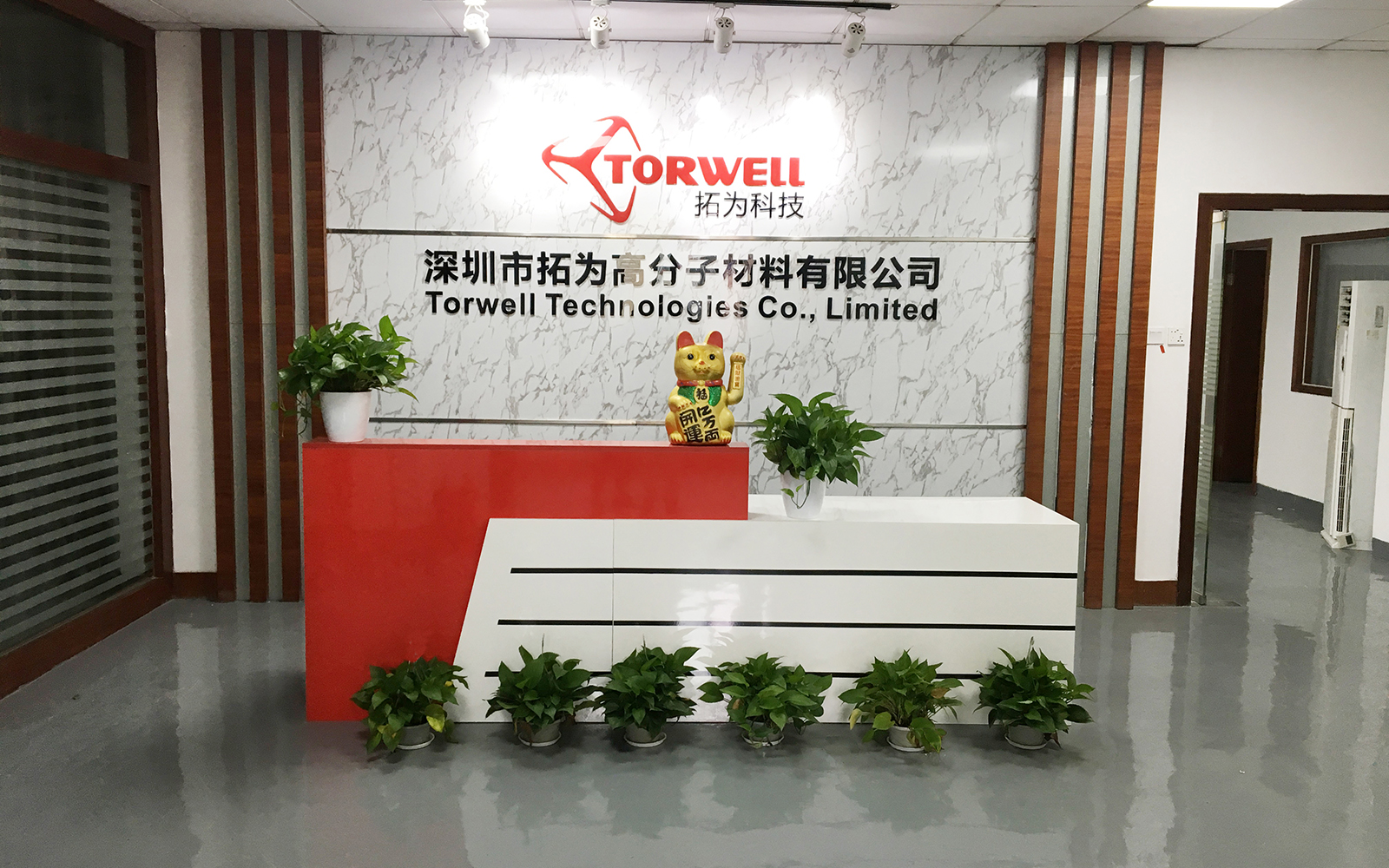
Company Profile
Founded in 2011, Torwell Technologies Co., Ltd. is one of the earliest high-tech enterprises which specializing in high-tech 3D printer filaments research, manufacture and sell, occupies 2,500 square meters modern factory with production capacity of 50,000kgs per month.
With more than 10years experiences in 3D printing market exploration, cooperated with Institute for High Technology and New Materials in domestic famous universities, and engaging Polymer materials experts as technical adviser, Torwell becomes one of member of Chinese rapid prototyping association and leader enterprise with the most innovative products in 3D printing industry, owns independent intellectual property rights, patents and trademarks (Torwell US, Torwell EU, NovaMaker US, NovaMaker EU).
Torwell passed international quality management system ISO9001, international environment system ISO14001, the advanced manufacturing equipment, test devices and virgin raw materials available are introduced to produce and distribute 3D printer filament of unparalleled quality, to insure all the products of Torwell are compliant with RoHS standard, MSDS, Reach, TUV and SGS test certificated.
Be a reliable and professional 3D printing partner, Torwell has committed to expanding its products to America, Canada, UK, Germany, Netherlands, France, Spain, Sweden, Italy, Russia, Mexico, Australia, New Zealand, Brazil, Argentina, Japan, South Korea, Vietnam, Thailand, Malaysia, India, more than 80 countries and regions.
Comprehensive 3D Printing Material Catalog
Explore Torwell's certified 3D printer filament portfolio for industrial rapid prototyping, mechanical seals, and functional composite component manufacturing.