High-Durability Polymer Formulations for Mechanical Brackets
Explore our top-tier additive materials specifically optimized for extreme mechanical stress, continuous harmonic vibration, and high-impact structural bracket mountings.
The Evolution of Flexible Additive Polymers in Mechanical Bracket Design
In modern industrial engineering, mechanical brackets serve as foundational components across automation machinery, robotics, aerospace avionics, and automotive assemblies. Historically, design engineers relied strictly on CNC-machined 6061-T6 aluminum, stainless steel, or stiff injection-molded plastics to manufacture structural brackets. While these rigid materials deliver substantial tensile and shear thresholds, they consistently exhibit significant drawbacks when subjected to continuous cyclic shock, high-frequency harmonic vibration, and misaligned mechanical loads. Rigid brackets transmit untreated vibrations throughout adjacent mechanical linkages, accelerating fastener loosening, motor bearing degradation, and micro-fractures in delicate sensor housings.
The advent of advanced thermoplastic polyurethane (TPU), thermoplastic elastomers (TPE), and modified copolymer matrices has initiated a paradigm shift toward elastomeric additive manufacturing. Utilizing high-performance flexible 3D printing materials for durable industrial mechanical brackets enables mechanical engineers to achieve tailored elasticity, progressive energy absorption, and zero-backlash compliance within a single, consolidated component. Rather than relying on multi-component assemblies comprising rigid metal brackets, secondary rubber bushings, and elastomeric O-rings, additive manufacturing allows for the fabrication of monolithic bracket structures that embody both structural rigidity and localized dynamic compliance.
Harmonic & Shock Damping
Viscoelastic polymer structures absorb dynamic kinetic impacts and isolate mechanical vibrations up to 45% more effectively than conventional rigid metallic brackets.
Cyclic Fatigue Resilience
Exceptional elongation-at-break and elastic recovery ensure mechanical brackets withstand millions of continuous flexural cycles without micro-cracking or creep deformation.
Chemical & Oil Resistance
Polyether and polyester based flexible filaments resist industrial greases, cooling fluids, hydraulic oils, and harsh ambient washdown chemicals seamlessly.
Engineering Property Matrix for Industrial Mechanical Brackets
Selecting the appropriate Shore hardness, modulus of elasticity, and thermal deflection point is critical to ensuring structural longevity under dynamic operational loads.
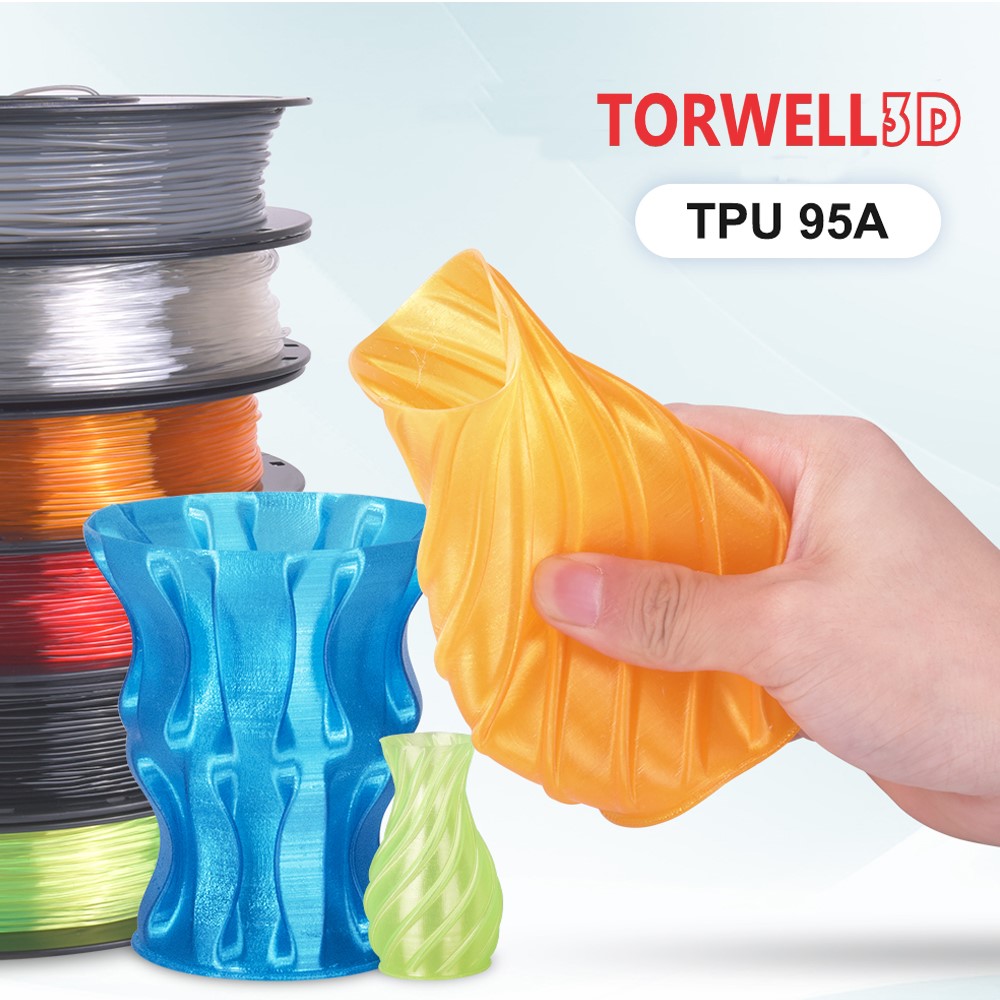
When selecting a flexible filament for structural bracketry, balancing Shore Hardness with isotropic layer adhesion is vital. Standard flexible materials like Shore 85A offer maximum compliance for pure vibration dampening pads, while Shore 95A TPU and impact-modified polymer blends provide the ideal equilibrium between structural rigidity (preventing excessive deflection under load) and elastomeric flexure (preventing brittle shear failure).
| Filament / Material Grade | Shore Hardness | Tensile Strength (MPa) | Elongation at Break (%) | Vibration Damping Index | Primary Mechanical Bracket Use Case |
|---|---|---|---|---|---|
| Torwell Industrial Flexible TPU 95A | 95A (approx. 46D) | 42 - 50 MPa | 450% - 550% | Ultra-High (0.28 tan δ) | Heavy-duty robotic end-effector mounts, shock brackets |
| Industrial Impact-Modified PETG | 74D - 78D | 48 - 55 MPa | 120% - 160% | Moderate (0.09 tan δ) | Conveyor belt guide brackets, chemical conduit fixtures |
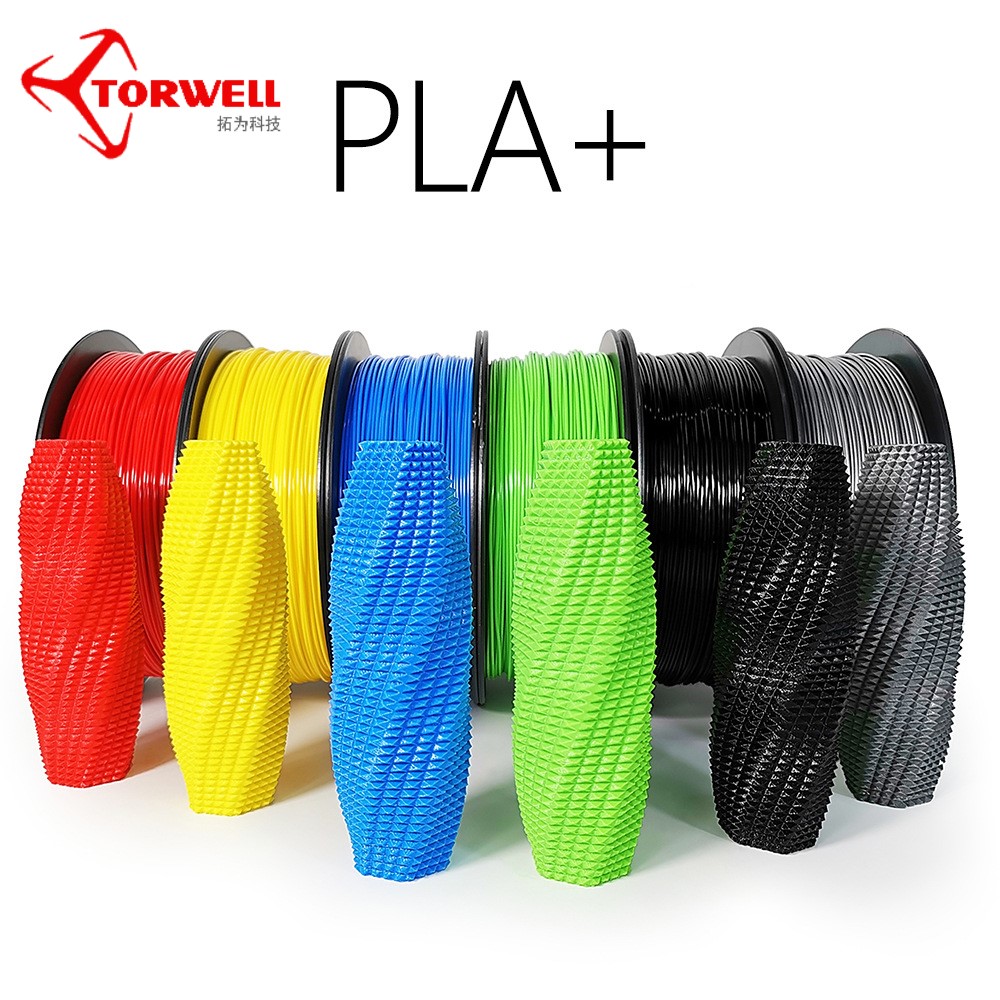
| Torwell PLA PLUS Pro (High-Strength) | 80D - 83D | 58 - 65 MPa | 25% - 40% | Low-Medium (0.05 tan δ) | Rigid structural brackets, motor faceplates, jig housings |
| Flexible TPU 85A (Ultra-Soft) | 85A (approx. 35D) | 28 - 36 MPa | 600% - 700% | Maximum (0.42 tan δ) | Vibration isolation gaskets, acoustic decoupling brackets |
Deep Application Scenarios for Flexible Mechanical Brackets
1. Robotic End-Effector Soft-Damping Brackets
High-speed delta and collaborative robots undergo severe rotational deceleration and continuous directional snapping. Using Shore 95A TPU to 3D print end-effector mounting brackets provides critical mechanical compliance. If an automated gripper experiences unexpected contact with a workpiece or structural frame, the flexible bracket yields elastically, dispersing kinetic energy away from expensive servomotors and zero-backlash harmonic drives, effectively functioning as an automatic, self-resetting mechanical torque fuse.
2. Automotive & AGV Sensor Suspension Brackets
Automated Guided Vehicles (AGVs) and Autonomous Mobile Robots (AMRs) operating on rough factory floors generate high-frequency chassis vibrations that distort LiDAR, camera, and ultrasonic sensor calibration. 3D printing custom flexible mounting brackets using polyether-based elastomer filaments allows engineers to tune internal infill geometry (such as gyroid or cross-3D patterns) to match the resonant harmonic frequency of the vehicle, filtering out road vibration while holding sensors securely in place.
3. Industrial Conveyor Rail & Deflector Mounting Brackets
In high-throughput bottling, packaging, and logistics facilities, mechanical guide brackets constantly absorb lateral impacts from moving parcels, pallets, and containers. Traditional rigid plastic brackets crack over time, while bent steel brackets require manual realignment. Flexible 3D printed brackets absorb localized impacts repeatedly without plastic deformation, returning instantly to nominal geometry and slashing production line downtime.
DFAM Principles for Flexible Industrial Brackets
Maximizing the load capability of flexible 3D printed mechanical brackets requires strict adherence to Design for Additive Manufacturing (DFAM) methodologies:
1. Anisotropic Infill Tuning: Utilize continuous triply periodic minimal surface (TPMS) gyroid infill at 35% to 65% density. Gyroid structures disperse compressive and shear forces evenly across 360 degrees, eradicating anisotropic shear planes common to standard grid infills.
2. Interlayer Cohesion Control: Optimize hotend temperature between 225°C and 245°C with minimal part cooling fan speeds (20%-40%) to ensure comprehensive polymer chain inter-diffusion across printed layers, delivering isotropic tensile strength exceeding 85% of bulk resin values.
3. Integrated Compression Bushings: Design embedded countersinks for brass heat-set inserts or flanged steel washers to prevent localized bolt head pull-through under high fastener torque.
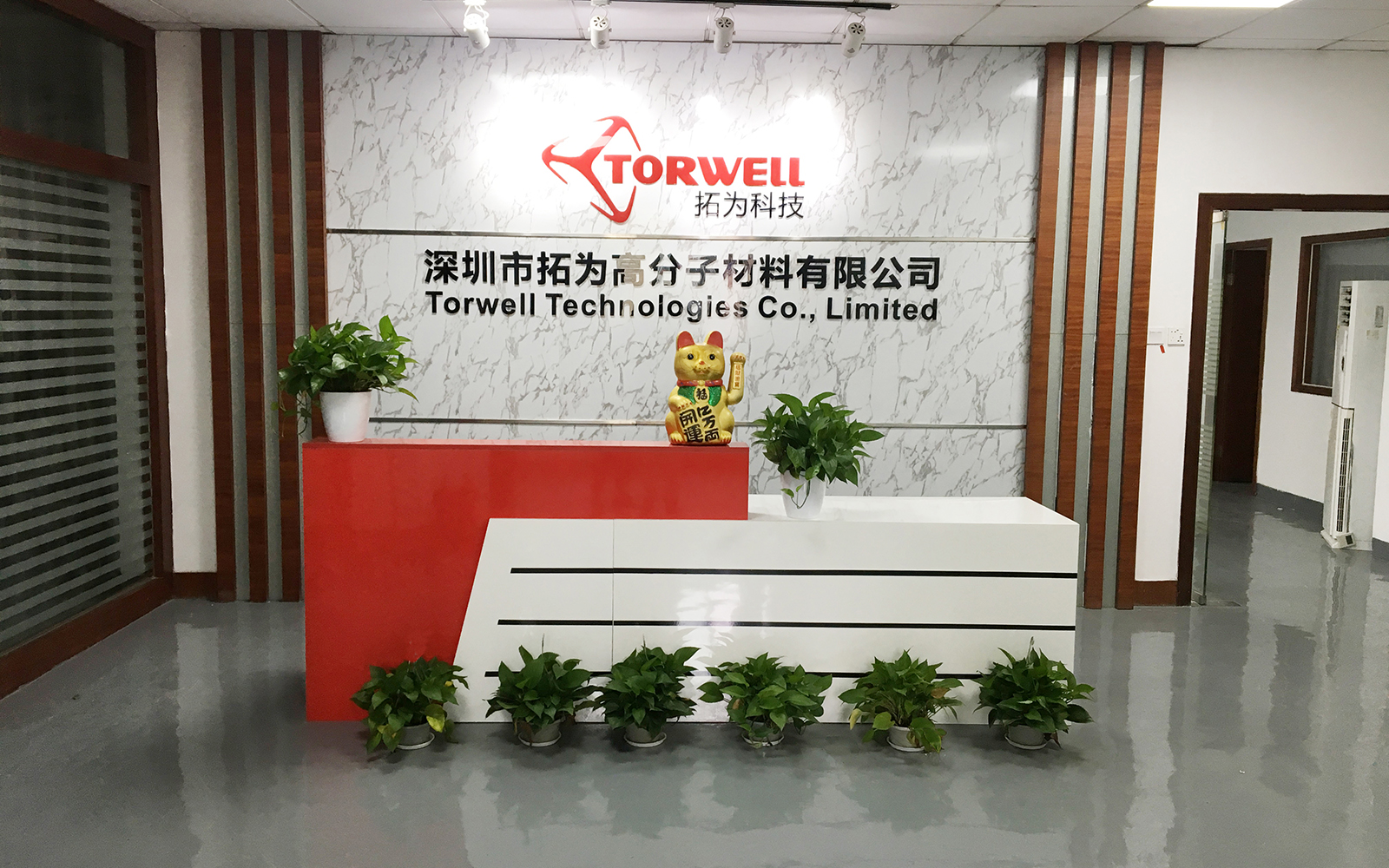
Torwell Technologies Enterprise Profile
Founded in 2011, Torwell Technologies Co., Ltd. is one of the earliest high-tech enterprises which specializing in high-tech 3D printer filaments research, manufacture and sell, occupies 2,500 square meters modern factory with production capacity of 50,000kgs per month.
With more than 10years experiences in 3D printing market exploration, cooperated with Institute for High Technology and New Materials in domestic famous universities, and engaging Polymer materials experts as technical adviser, Torwell becomes one of member of Chinese rapid prototyping association and leader enterprise with the most innovative products in 3D printing industry, owns independent intellectual property rights, patents and trademarks(Torwell US, Torwell EU, NovaMaker US, NovaMaker EU).
Torwell passed international quality management system ISO9001, international environment system ISO14001, the advanced manufacturing equipment, test devices and virgin raw materials available are introduced to produce and distribute 3D printer filament of unparalleled quality, to insure all the products of Torwell are compliant with RoHS standard, MSDS, Reach, TUV and SGS test certificated.
Be a reliable and professional 3D printing partner, Torwell has committed to expanding its products to America, Canada, UK, Germany, Netherlands, France, Spain, Sweden, Italy, Russia, Mexico, Australia, New Zealand, Brazil, Argentina, Japan, South Korea, Vietnam, Thailand, Malaysia, India, more than 80 countries and regions.
Frequently Asked Questions: Flexible Materials for Mechanical Brackets
How do flexible 3D printed brackets handle continuous static loads without creep?
Selecting higher Shore hardness polymers (e.g., 95A TPU or elastomer-alloyed PETG/PLA+) coupled with dense internal wall perimeters (4+ outlines) ensures static compressive stress remains well below the polymer's yield threshold, preventing permanent creep deformation under continuous clamp loads.
Can flexible TPU mechanical brackets withstand exposure to industrial lubricants?
Yes. Polyether and polyester TPUs provide inherent chemical resistance against mineral oils, synthetic grease, cutting coolants, diesel fuels, and hydraulic fluids, making them ideal for CNC machine enclosures, automotive engine compartments, and automated factory lines.
How does Shore 95A TPU compare to cast polyurethane or vulcanized rubber brackets?
Additive TPU matches or exceeds cast polyurethane in tear propagation resistance (up to 120 kN/m) and abrasion resistance. Additive manufacturing additionally enables internal geometric channeling, weight reduction pockets, and custom cable routing paths unmachinable through traditional molding.
What extruder setup is optimal for industrial flexible filament bracket production?
Direct-drive extruders equipped with constrained filament guide paths and dual-drive hardened steel gears deliver the most consistent extrusion control, eliminating filament buckling and allowing precise retraction control when printing complex bracket geometries.
Complete Portfolio of Engineering & Aesthetic 3D Printing Materials
From heavy-duty dynamic brackets to precision functional prototyping, explore our comprehensive range of high-performance polymer filaments.