High-Performance Filaments for Robotic Prototyping & Dynamic End-Effectors
Engineered for precision tolerances, ultra-low inertia structural parts, and extreme fatigue resistance in automated Cartesian, SCARA, and articulated robotic arms.
Industrial Evolution: The Growing Imperative for Flexible Materials in Modern Robotics
As contemporary automation transitions from rigid, high-mass industrial workcells toward agile collaborative robots (cobots), autonomous mobile manipulators (AMMs), and bio-inspired soft robotics, the materials used to construct robotic arm components have undergone a revolutionary transformation.
Traditional robotic arms rely heavily on subtractively manufactured aluminum, structural steel, or hard thermoplastics. While these materials provide high structural rigidity, they introduce significant rotational inertia, high motor energy consumption, severe risk during human-robot interactions, and a distinct inability to absorb cyclical shock loads or grasp delicate geometries without complex sensorized feedback.
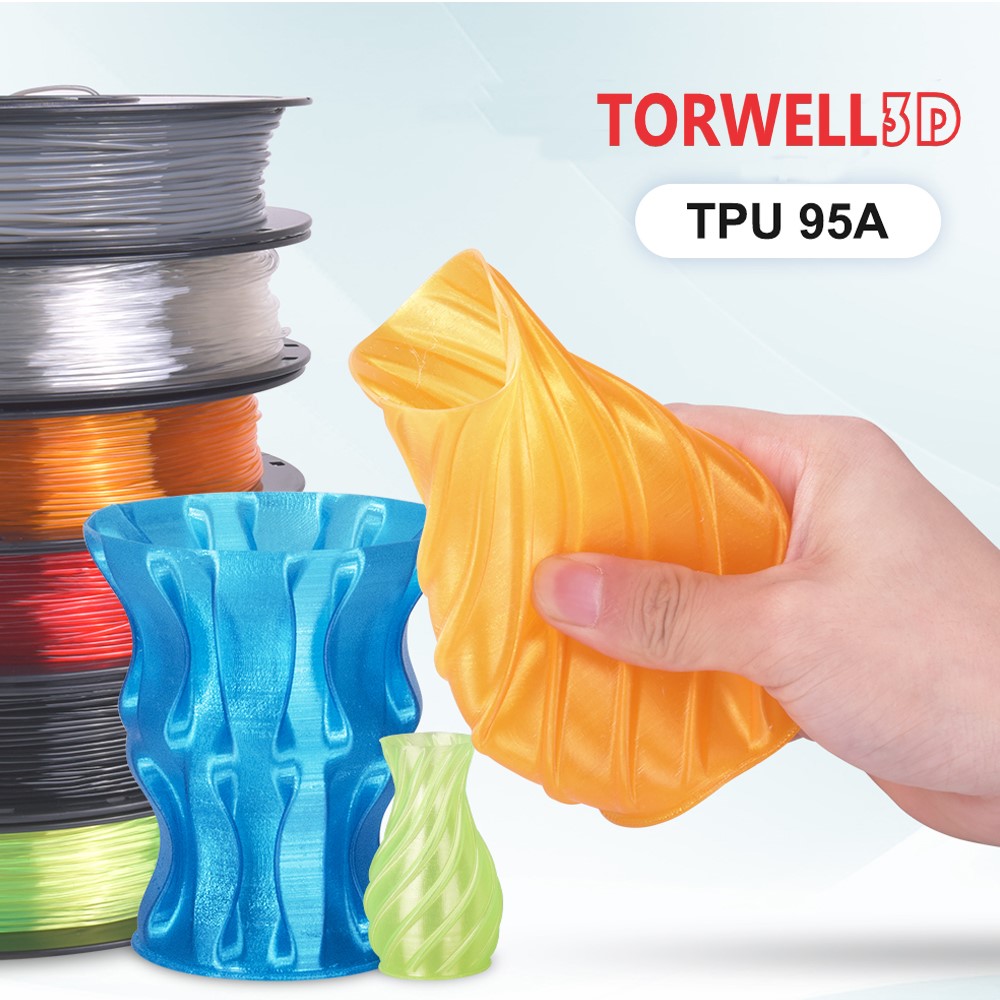
By utilizing high-grade flexible 3D printing materials—such as advanced thermoplastic polyurethane (TPU), thermoplastic elastomers (TPE), and flexible copolyether esters (TPC)—robotics engineers can fabricate variable-stiffness components, compliant joints, protective dynamic bumpers, integrated cable track gaiters, and biomimetic end-effectors in a single additive production cycle.
Core Engineering Applications in Lightweight Robotic Manipulators
Flexible additive manufacturing materials unlock non-linear mechanical advantages across key sub-assemblies of multi-axis robotic arms.
1. Compliant End-Effectors & Soft Grippers
Traditional pneumatic or motorized metal grippers require complex force feedback algorithms to manipulate delicate, irregularly shaped objects such as agricultural produce, glassware, and silicon wafers. 3D printed TPU grippers utilize passive compliance, wrapping securely around target items without localized pressure concentration or mechanical damage.
2. Harmonic Vibration Damping & Shock Mounts
High-speed pick-and-place delta and SCARA robots generate severe resonance vibrations during rapid acceleration and deceleration cycles. Custom elastomeric 3D printed motor isolators and joint damping rings dissipate kinetic shock energy, extending servo-bearing lifespan and enhancing endpoint settling times.
3. Human-Cobot Safety Skins & Protective Collars
Collaborative robots require compliant outer envelopes to satisfy ISO/TS 15066 safety standards. Flexible lattice shells printed with 95A/85A TPU disperse impact forces over large surface areas during accidental contact, preventing operator injury while preserving the arm's ultra-low payload tare weight.
4. Custom Flexure Joints & Metamaterial Hinges
By strategically modulating infill patterns (e.g., gyroid, honeycomb, cross-lattice) and wall thicknesses, engineers can manufacture monolithic flexure mechanisms. These one-piece hinges eliminate conventional mechanical pins, fasteners, and ball bearings, removing friction and eliminating lubrication needs in cleanroom automation.
5. Dynamic Cable Guiding & Sealed Conduit Gaiters
Multi-axis articulation constantly bends and twists internal wiring harnesses and pneumatic tubes. Custom printed flexible TPU bellows and conduit sleeves safeguard delicate cabling from pinching, metal swarf, moisture, and chemical exposure, ensuring million-cycle flex life in demanding industrial environments.
6. Hybrid Rigid-Elastic Structural Multi-Materials
Modern robotic arms benefit greatly from combining high-rigidity structural frameworks (e.g., ABS, PETG, or Carbon Fiber PLA) with overprinted flexible TPU interfaces. This yields robust, stiff skeletal linkages with integrated elastic dampening surfaces without requiring secondary assembly adhesive steps.
Robotics Material Engineering: Performance & Property Matrix
Selecting the appropriate polymer grade is paramount when balancing payload capacity, cyclical deflection, fatigue life, and environmental robustness. Below is a comparative engineering overview of common robotic additive materials versus flexible polyurethane formulations.
| Material Category | Shore Hardness / Tensile Modulus | Elongation at Break (%) | Damping & Shock Resistance | Primary Robotic Arm Component Role | Suitability |
|---|---|---|---|---|---|
| Flexible TPU 95A | 95 Shore A / ~150 MPa | 450% – 580% | Ultra-High | Compliant grippers, shock-absorbing joints, protective skins | Optimal Flexible |
| Flexible TPE / TPU 85A | 85 Shore A / ~60 MPa | > 600% | Maximum | Soft biomimetic suction cups, dynamic seals, vibration isolators | Optimal Soft |
| Standard PLA / High-Strength PLA | Rigid (~3,500 MPa) | 6% – 12% | Low | Rapid geometric prototyping, motor housing mockups, linkages | Prototyping |
| ABS / ASA Engineering | Rigid (~2,200 MPa) | 15% – 30% | Moderate | Structural brackets, UV-stable outdoor covers, chassis frames | Structural Rigid |
| PETG Co-polyester | Semi-Rigid (~2,000 MPa) | 20% – 45% | Moderate-High | Chemical-resistant enclosures, gear shields, link connectors | Semi-Structural |
Future Trends: Generative Lattice Metamaterials & Smart Electronic Skins
The ongoing evolution of generative design algorithms allows roboticists to formulate spatially varying elasticity within a single 3D printed component. By programmatically tuning internal unit-cell architectures (such as Kelvin foams, Voronoi topologies, and Schwartz diamond lattices), engineers can design robotic fingers that exhibit rigid bending along one axis while remaining totally compliant along orthogonal vectors.
Furthermore, the convergence of conductive elastomeric filaments and multi-nozzle 3D printing enables the direct embedding of piezoresistive sensor traces inside flexible gripper fingers. This creates "electronic skin" (e-skin) capable of measuring tactile pressure, contact area, and thermal gradients directly through the polymer body without needing external sensor brackets.
Coupled with the continuous reduction in robotic arm payload tare weights, flexible additive filaments are paving the way for hyper-efficient, inherently safe industrial automated systems.
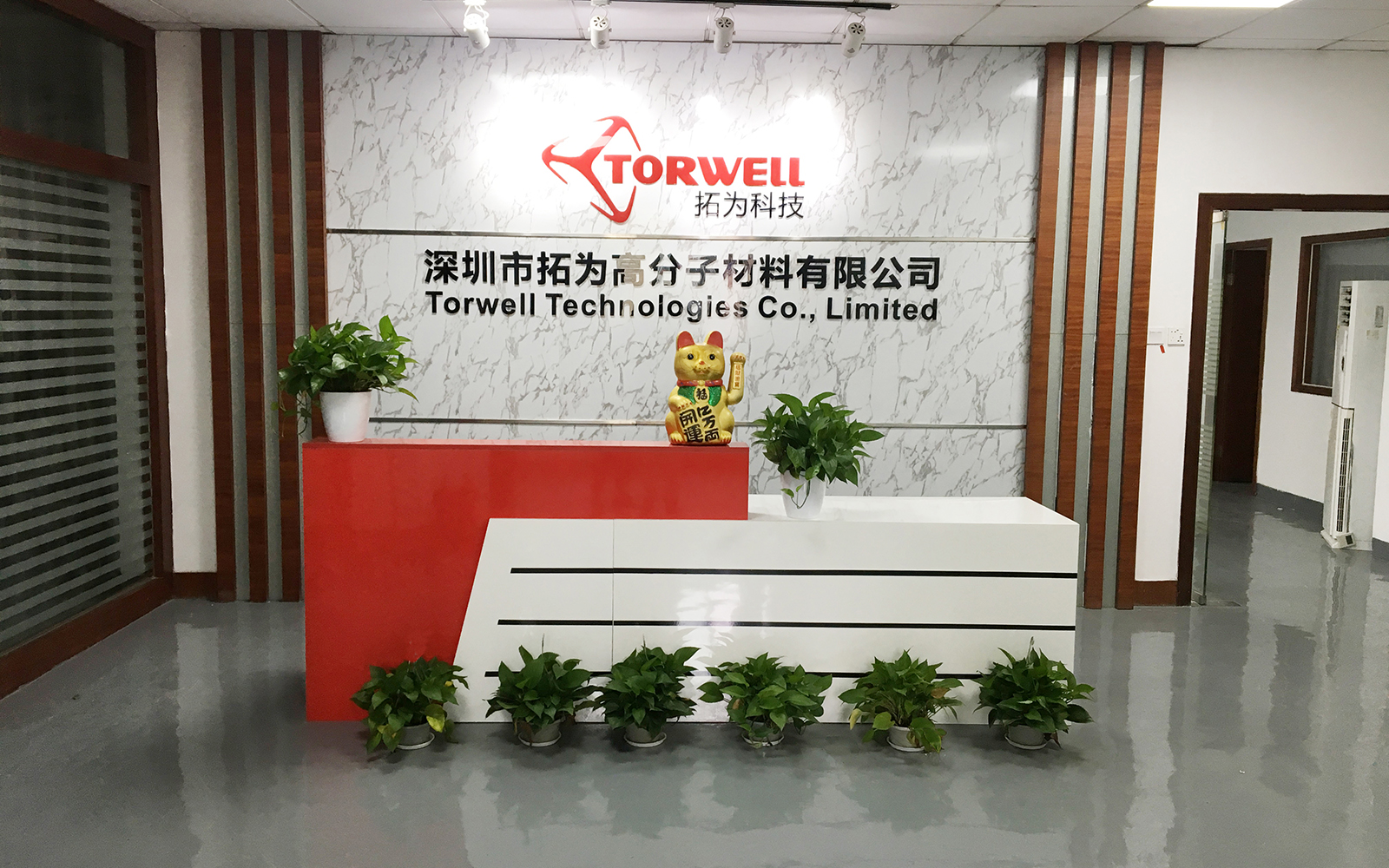
Company Profile & Global Manufacturing Capability
Founded in 2011, Torwell Technologies Co., Ltd. is one of the earliest high-tech enterprises which specializing in high – tech 3D printer filaments research, manufacture and sell, occupies 2,500 square meters modern factory with production capacity of 50,000kgs per month.
With more than 10years experiences in 3D printing market exploration, cooperated with Institute for High Technology and New Materials in domestic famous universities, and engaging Polymer materials experts as technical adviser, Torwell becomes one of member of Chinese rapid prototyping association and leader enterprise with the most innovative products in 3D printing industry, owns independent intellectual property rights, patents and trademarks(Torwell US, Torwell EU, NovaMaker US, NovaMaker EU).
Torwell passed international quality management system ISO9001, international environment system ISO14001, the advanced manufacturing equipment, test devices and virgin raw materials available are introduced to produce and distribute 3D printer filament of unparalleled quality, to insure all the products of Torwell are compliant with RoHS standard, MSDS, Reach, TUV and SGS test certificated.
Be a reliable and professional 3D printing partner, Torwell has committed to expanding its products to America, Canada, UK, Germany, Netherlands, France, Spain, Sweden, Italy, Russia, Mexico, Australia, New Zealand, Brazil, Argentina, Japan, South Korea, Vietnam, Thailand, Malaysia, India, more than 80 countries and regions.
Comprehensive Additive Manufacturing Materials for Next-Gen Robotics
Explore our complete catalog of industrial grade filaments, including specialized flexible elastomeric compounds, impact-resistant ABS/ASA, and high-stability PLA/PETG materials.