Premium Additive Manufacturing Filaments
Engineered for high-speed printing, dimensional fidelity, and industrial endurance.
Industrial Landscape of Flexible TPU Filaments in the Netherlands
Aligning with Dutch innovation, circular economy initiatives, and precision industrial engineering.
The Netherlands holds a paramount position in the European polymer engineering and additive manufacturing landscape. Widely recognized as a continental hub for advanced hardware, deep tech, and automated logistics, Dutch industries require materials that bridge the divide between theoretical elastomeric mechanical properties and real-world industrial reliability. Flexible TPU (Thermoplastic Polyurethane) filament has materialized as an indispensable class of engineering polymers within the Dutch industrial paradigm.
Across key innovation corridors—from the precision mechatronics ecosystems around Eindhoven (Brainport) to the maritime fabrication sectors of Rotterdam and the agri-tech hubs throughout Wageningen—the need for elastomeric parts capable of absorbing repeated shock, enduring aggressive chemical exposures, and delivering isotropic layer adhesion has escalated dramatically. Flexible TPU filament manufacturers and suppliers catering to the Netherlands must supply far more than standard spools; they must deliver strictly verified Shore hardness varieties (spanning Shore 85A to 98A), exceptional thermal process stability, and tight extrusion diameter controls that operate dependably on open-material industrial fused deposition modeling (FDM) systems.
Moreover, the Netherlands' national mandate regarding circularity and sustainable materials directly impacts the specifications for elastomeric supply. Manufacturers must deploy pristine, traceable raw materials that prevent premature thermal degradation during extrusion and withstand cyclic stress without mechanical micro-fractures. For engineers designing custom end-of-arm tooling, robotic gripper elements, pneumatic seals, or wearable bio-monitoring rigs, securing a reliable supply of premium-grade TPU filament establishes the foundation for sustainable competitive advantage.
Precision Shore Toughness
Engineered shore hardness grades specifically calibrated for Dutch mechatronics, ensuring consistent flex modulus and dampening performance across millions of compression cycles.
Strict Isotropic Cohesion
Superior thermal bonding dynamics yield flawless inter-layer fusion, preventing delamination along the Z-axis under intense hydraulic, pneumatic, or mechanical loads.
Circular Compliance
Carefully managed polymer backbones engineered to minimize waste during continuous-run setups, matching Dutch environmental benchmarks and European REACH/RoHS compliance.
Local Application Scenarios in the Dutch Market
How Dutch high-tech, marine, agricultural, and logistics sectors exploit elastomeric printing.
Brainport Mechatronics & End-of-Arm Tooling
In the Eindhoven region, industrial robotics firms rely on flexible TPU filaments to produce custom pneumatic grippers, damping pads, and anti-vibration fixtures. Standard rigid materials fall short when handling delicate microelectronic subassemblies or dynamic optical modules. TPU’s high shore resilience prevents marring on sensitive glass and wafer components while dampening micro-vibrations generated by high-frequency linear actuators.
Maritime & Offshore Infrastructure (Rotterdam)
The Port of Rotterdam and offshore marine operators subject mechanical components to constant saltwater mist, hydrocarbon contact, and intense UV exposure. Flexible TPU components—including customized cable grommets, marine-grade protective gaskets, and conduit seals—are frequently printed on-demand to replace degraded parts. The material's innate resistance to grease, oils, and environmental weathering makes it superior to traditional vulcanized rubber.
Agri-Food Tech & Automated Harvesting Systems
Dutch automated greenhouses and dairy farming equipment require soft-touch, food-grade safe elements. TPU filament is extensively deployed to print specialized harvest collection cups, flexible transport belts, and sorting gates that gently manipulate delicate crops like tomatoes, soft fruits, and seedlings without bruising, simultaneously resisting daily washdown procedures involving high-pressure water and cleaning solvents.
Rapid Orthotics & Customized Footwear
Specialist biomedical centers across Amsterdam and Utrecht leverage Shore 85A and 90A TPU filaments for custom orthotic midsoles, patient-matched dynamic braces, and shock-absorbing protective orthoses. Additive manufacturing allows medical professionals to alter local infill densities, generating variable-stiffness gradients across a single build plate that would be impossible through conventional casting or injection molding.
Emerging Trends in Additive Thermoplastic Elastomers
Key technological and market shifts driving the next phase of TPU adoption in Europe.
The additive manufacturing sector is moving rapidly beyond standard prototyping into serial, batch-scale end-use manufacturing. In the Netherlands, this evolution is guided by several strategic technological vectors:
1. High-Speed TPU Extrusion Formulations: Traditional elastomeric printing was historically limited to slow speeds (15–30 mm/s) due to the filament's low column strength and risk of buckling in extrusion gears. Next-generation TPU filaments manufactured for the modern market leverage modified melt flow indexes (MFI) and higher shear recovery rates, allowing Direct Drive extruders to deposit flexible parts reliably at speeds exceeding 100 mm/s without sacrificing layer-to-layer integrity.
2. Electrostatic Dissipative (ESD) & Conductive Formulations: In high-tech assembly plants across the Benelux region, sensitive semiconductor environments mandate ESD-safe materials to avoid catastrophic component breakdown. Conductive and antistatic flexible TPU filaments are rapidly becoming a standard requirement for electronic casing bumpers, robotic suction interfaces, and assembly tray linings.
3. Closed-Loop Supply Chain Transparency: Dutch procurement teams increasingly demand rigorous chemical pedigree documentation. Traceability of pure resin bases, batch-specific melt volume rate checks, and accurate diameter distributions with laser verification systems have shifted from optional metrics to foundational requirements for supplier agreements.
Enterprise Production Standards & Quality Assurance
Meticulous manufacturing control, pure virgin resins, and calibrated laser extrusion lines.
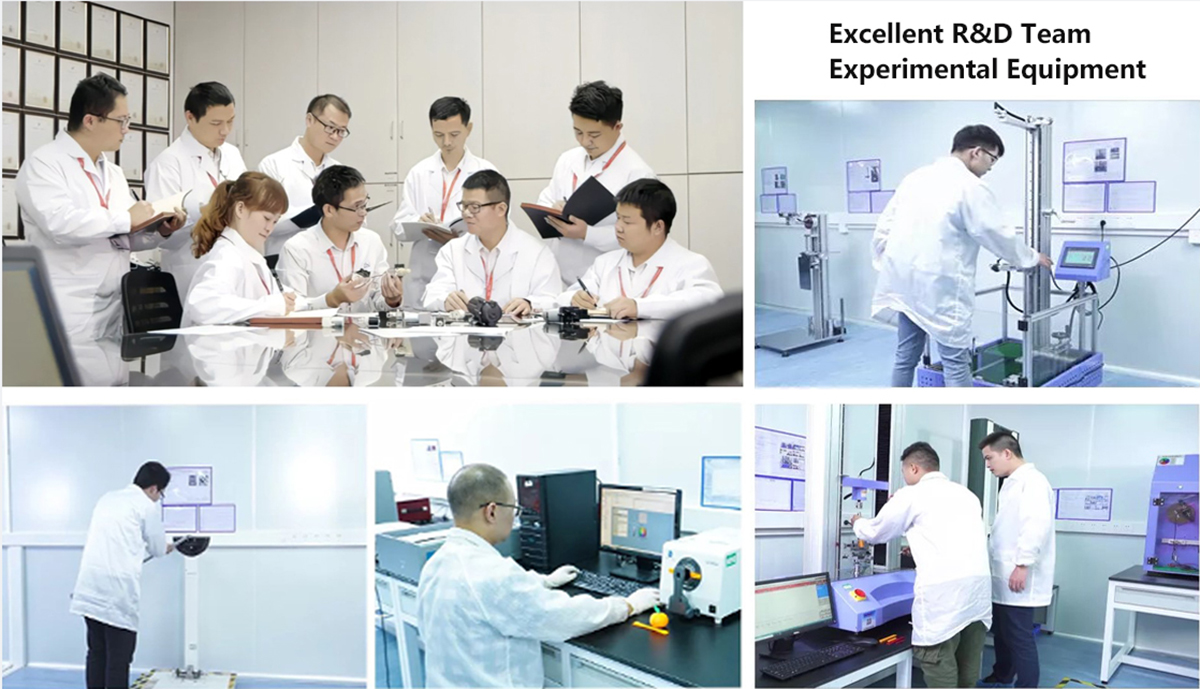
Quality Control
The factory area has passed ISO45001 occupational health and safety management system certification. Every new employee must be experienced one week of safety production knowledge teaching and two weeks of produce skills training, and master every course in the production process. Who is in the position will be responsible for its duty.
Raw Material
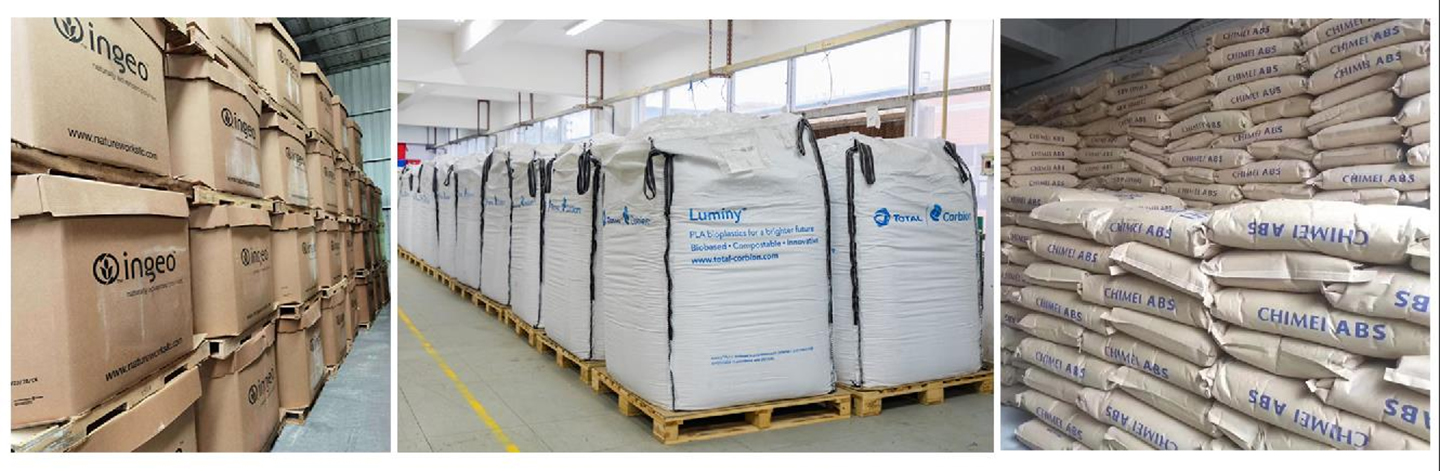
PLA is the most preferred material for 3D printing, Torwell firstly chooses PLA from US NatureWorks, and Total-Corbion is the alternative. ABS from TaiWan ChiMei, PETG from South Korea SK. Each batch of main raw materials comes from the partners who has cooperated more than 5 years to ensure the reliability of the products from the source. Each batch of raw materials will undergo parameters inspection before produce to ensure that raw materials are original and virginal.
Equipment
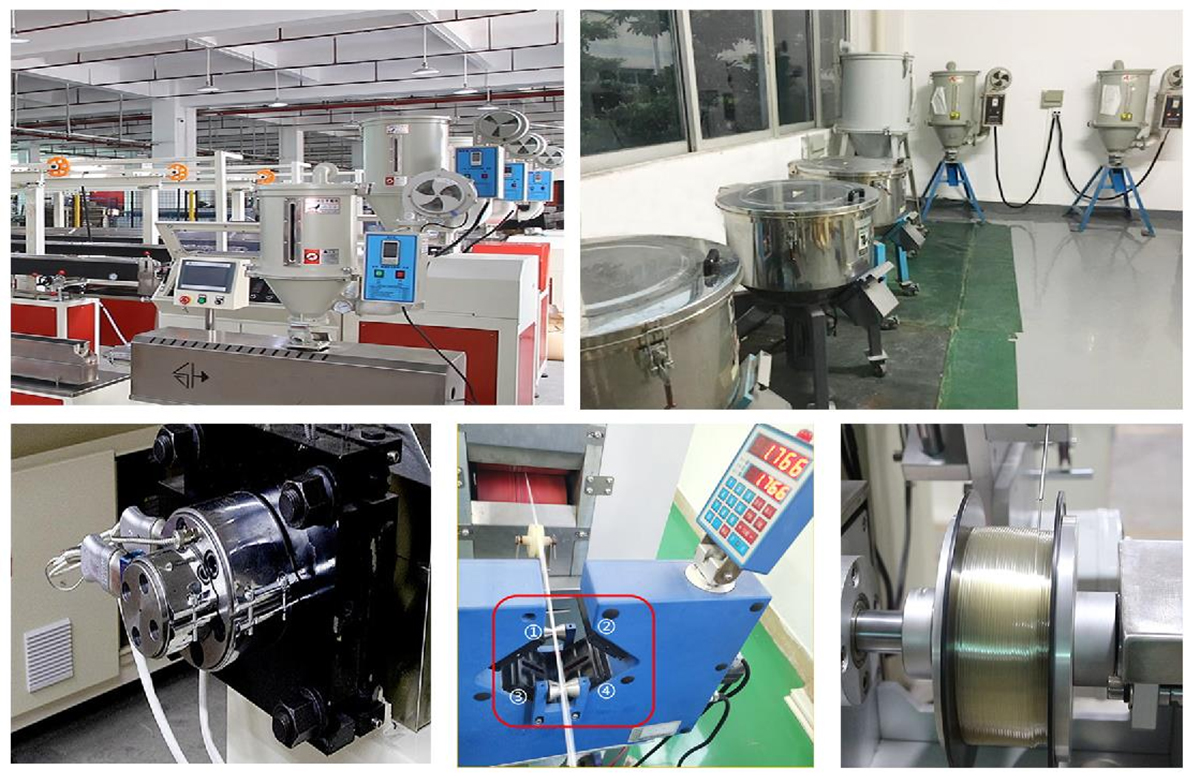
The manufacturing workshop will make arrangements after the inspection of raw materials, at least two engineers cross-check the clearance of mixing tank, color mixed of material, humidity from hopper dryer, temperature of extruder, hot/cool tank, and trial-produce and debugging the produce line to make sure all of processes in the best condition. Maintain the filament Diameter tolerance +/- 0.02mm, Roundness tolerance +/- 0.02mm.
Final Inspection
After each batch of 3D filament is produced, two quality inspectors will conduct random inspections on each batch of finished products in accordance with the requirements of the standard, such as diameter tolerance, color consistency, strength and toughness and so on. After vacuuming the package, place them for 24 hours to check whether there is any leaking package, then label it and finish the package.
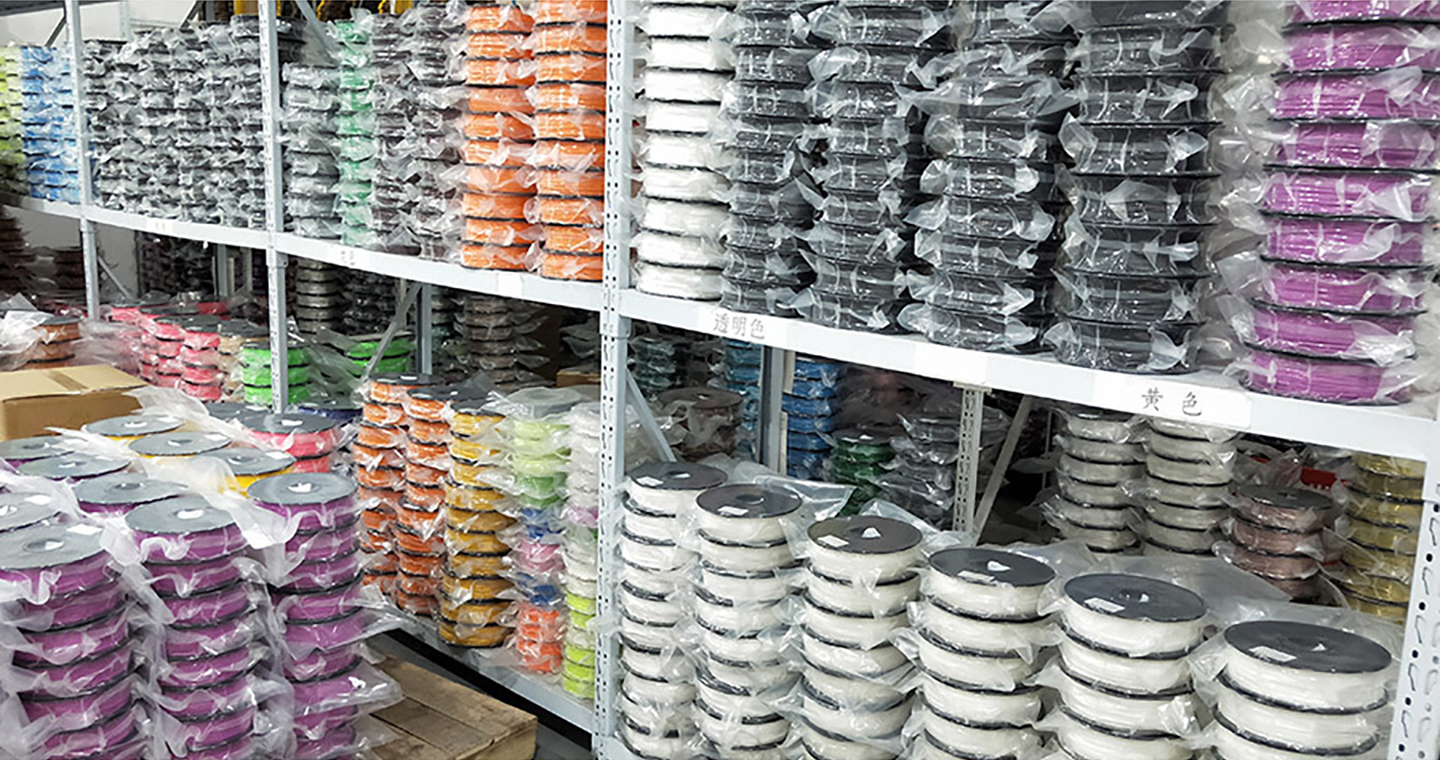
Complete Engineered 3D Printing Filament Portfolio
Explore our industrial range of structural, aesthetic, and functional materials supplied globally.