Featured Filaments for Designer Toy & Aesthetic Prototyping
Explore our premium polymer formulations engineered to satisfy the rigorous cosmetic, tactile, and mechanical demands of modern aesthetic sculptors and toy studios.
The Rise of High-Performance Carbon Composites in Designer Art Toys
The global designer toy and aesthetic collectible industry has undergone a monumental paradigm shift. Historically confined to rotary casting, injection vinyl, or fragile resin casting, modern art toy studios and high-end collectible creators are pivoting toward additive manufacturing. Among the cutting-edge composite materials leading this transformation, PETG Carbon Filament (PETG-CF) has established itself as the benchmark for collectible luxury, cybernetic sculpture aesthetics, and high-fidelity display models.
Modern collectors and boutique design studios demand more than basic geometric accuracy; they require unique tactile depth, anti-glare stealth textures, structural permanence, and sustainable on-demand customizability. By infusing high-purity polyethylene terephthalate glycol matrixes with high-modulus chopped carbon fibers, PETG-CF eliminates the glossy, synthetic plastic look of conventional FDM prints, delivering an organic micro-textured surface that replicates cast titanium, slate graphite, and aerospace-grade composites.
Commercial toy production is moving away from centralized mass fabrication toward hyper-customized, short-run editions. High-end collectors actively seek out pieces that embody futuristic material science. PETG Carbon Filament bridges this exact chasm between fine art sculpts and functional industrial engineering.
- Zero Layer-Line Visibility: Chopped carbon microfibers scatter ambient light, rendering horizontal print layers virtually invisible to the naked eye.
- Stealth Matte Velvet Finish: Eliminates plastic reflection, bestowing high-end aesthetic value directly from the build plate.
- Resilience Against Climate & UV: PETG base polymer resists moisture degradation, warping, and long-term shelf sagging under gallery spotlighting.
Why PETG Carbon Filament Outperforms Traditional Model Materials
A comprehensive examination of how micro-carbon fiber reinforcement enhances the chemical, mechanical, and visual characteristics of designer toy prototypes.
Standard PLA and PETG materials often suffer from high surface specular reflectivity, which accentuates staircase layer artifacts and causes aesthetic sculpts to look cheap under direct lighting. The randomly oriented chopped carbon fibers within PETG-CF absorb and scatter incoming photons, creating a luxurious satin-matte surface that highlights subtle facial contours, mechanical panel lines, and intricate organic creases.
Adding carbon fibers significantly elevates the flexural modulus and thermal stability of the PETG matrix. When depositing acute overhang angles, steep cantilevers, and intricate skeletal armatures common in sci-fi mecha toys, the carbon fibers mitigate thermal shrinkage, virtually eradicating corner warping and ensuring interlocking assemblies snap together with micrometer accuracy.
Traditional resin prints require exhaustive washing, UV curing, sanding, and hazardous chemical smoothing. In contrast, designer models printed in PETG-CF possess an exquisite, museum-ready visual texture directly off the print plate. This reduces manual labor costs by up to 75% for boutique toy studios, expediting the pipeline from 3D generative sculpt to physical retail shelf.
Deep-Dive Application Scenarios in Modern Aesthetic Toy Design
From cyberpunk armor suits to collectible urban vinyl hybrids, discover how top-tier toy artists utilize PETG Carbon Filament to redefine tactile sculpture.
In the realm of high-concept mecha collectibles and robotic anime sculptures, crisp edges, structural stability, and an authentic military-aerospace sheen are paramount. PETG Carbon Filament delivers an authentic carbon-composite aesthetic reminiscent of modern drone armor and high-tech exoskeletons. Designers can print delicate mechanical joints and weight-bearing chassis components that maintain structural integrity without creeping or deforming over time.
Unlike standard decorative figurines, articulated designer toys undergo repeated positional flexing, ball-joint rotation, and friction wear. The inherent lubricity and abrasion resistance provided by the carbon matrix reduce friction wear on internal ball-and-socket mechanisms. The enhanced impact strength ensures that fragile extremities, antennas, and display accessories withstand international courier transport and active handling.
High-end designer toys are frequently exhibited alongside bespoke thematic display bases, architectural brutalist plinths, and scale environments. PETG-CF provides an authentic concrete, basalt, or dark graphite stone appearance. Its exceptional thermal deflection temperature allows these large volumetric display bases to endure high-intensity gallery spotlights without sagging or thermal warping.
Innovative sculptors often combine flexible TPU skins, silicone outer layers, and cast resin faces with a rigid PETG Carbon internal endoskeleton. The superior bonding capability, moisture resistance, and chemical inertness of PETG-CF prevent delamination and chemical contamination between differing media, yielding permanent multi-material collector items.
Filament Performance Benchmark for Designer Toy Fabrication
Evaluating mechanical, optical, and operational attributes across common toy prototyping materials.
| Material Category | Surface Aesthetic | Layer Line Concealment | Impact & Joint Strength | Thermal & Moisture Stability | Post-Processing Overhead |
|---|---|---|---|---|---|
| PETG Carbon Fiber (PETG-CF) | Ultra-Matte Satin Dark Graphite | Exceptional (Light-Dispersive) | Very High (Reinforced Matrix) | High (Up to 75°C - 80°C) | Minimal (Ready Out of Chamber) |
| Standard PETG | Glossy / Semi-Translucent | Moderate (Noticeable Highlights) | High (Flexible Yield) | Moderate (70°C) | Moderate (Difficult to Sand) |
| PLA Carbon Fiber (PLA-CF) | Matte Charcoal | Excellent | Moderate (Brittle Failure Mode) | Low (< 55°C Thermal Creep) | Minimal |
| Standard ABS / ASA | Semi-Matte / Satin | Low to Moderate | High | Very High (85°C - 95°C) | High (Acetone Vapor / Sanding) |
| Standard UV Photopolymer Resin | Smooth Glossy or Satin | Near Invisible | Low to Moderate (Prone to Shatter) | Moderate (UV Yellowing Risk) | Extensive (Wash, Cure, Support Removal) |
The Next Frontier: Generative AI, Computational Toy Design & Carbon Composites
The intersection of Generative AI modeling tools and advanced polymer 3D printing is democratizing the designer toy industry. Independent creators can now convert text-to-3D neural mesh outputs into physical sculptures within hours. However, raw AI-generated models often feature non-standard topologies, organic undercuts, and non-manifold surfaces that challenge standard manufacturing.
PETG Carbon Filament serves as the ideal physical medium for generative design. Its superior bridge-spanning capabilities, low thermal contraction, and self-supporting lattice strength permit the flawless execution of computationally complex, biomimetic, and Voronoi structures that would collapse under standard filaments or require unremovable support structures.
As consumer demand transitions toward hyper-limited editions and sustainable manufacturing, PETG-CF empowers small-scale creative studios to produce museum-quality collectible runs directly from digital CAD files, eliminating overseas shipping bottlenecks and toxic foundry molds.
Technological synergies empowering the next wave of aesthetic decorative artists:
Integrating NFC microchips within hollow PETG-CF prints to verify blockchain provenance and certificate of authenticity.
Formulating PETG-CF with high melt flow indices to support volumetric speeds exceeding 300mm/s without fiber clogging.
Closed-loop regrinding of factory support structures into secondary structural composite cores.
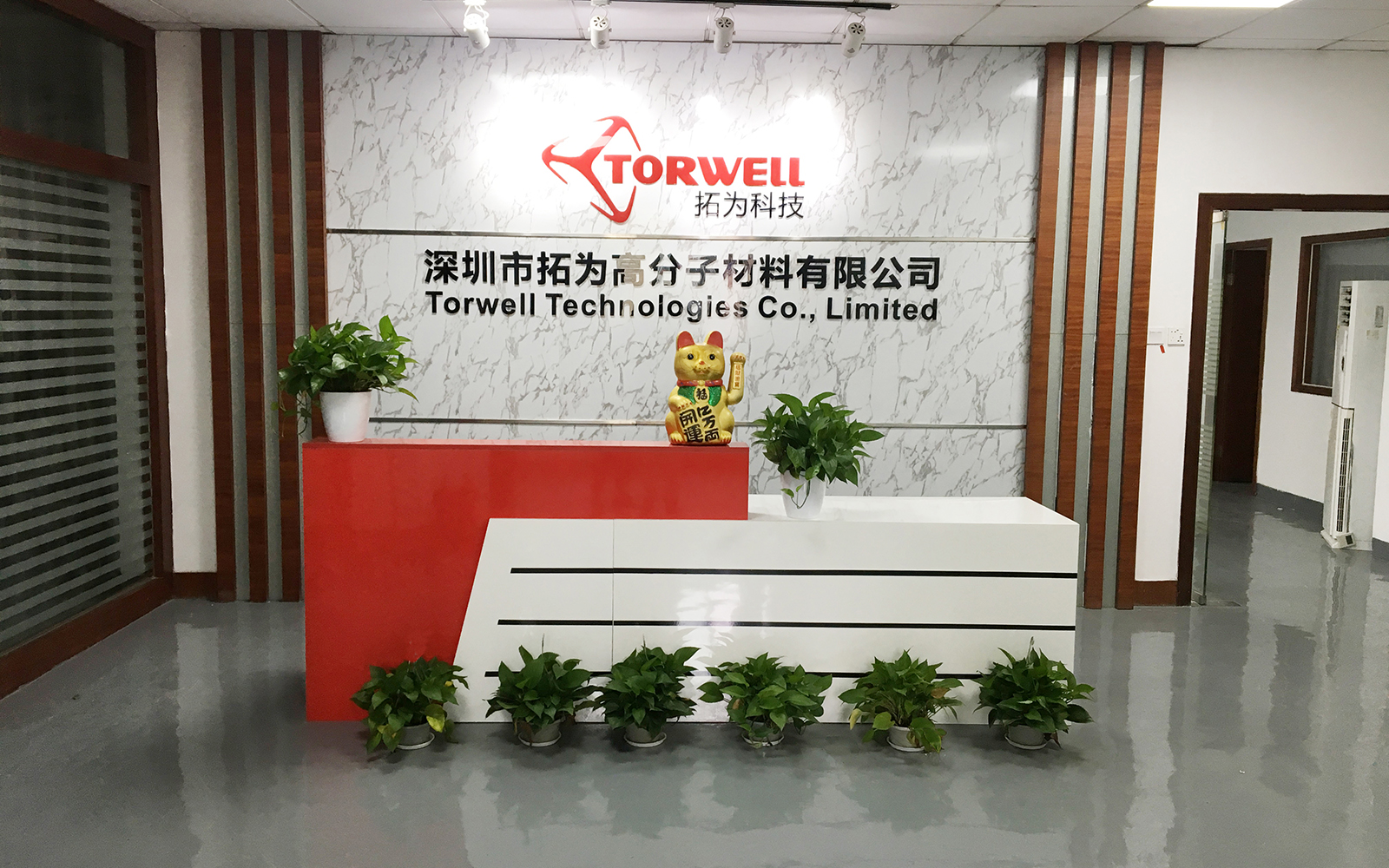
Torwell Technologies Co., Ltd.
Founded in 2011, Torwell Technologies Co., Ltd. is one of the earliest high-tech enterprises specializing in high-tech 3D printer filaments research, manufacture, and sales. Torwell occupies a 2,500 square meters modern factory with a robust production capacity of 50,000kgs per month.
With more than 10 years of experience in 3D printing market exploration, Torwell has collaborated closely with the Institute for High Technology and New Materials in domestic famous universities, engaging leading polymer materials experts as technical advisers. Today, Torwell is a recognized member of the Chinese Rapid Prototyping Association and a leader in 3D printing innovation, holding independent intellectual property rights, international patents, and esteemed trademarks (Torwell US, Torwell EU, NovaMaker US, NovaMaker EU).
Torwell has passed international quality management system ISO9001 and international environmental system ISO14001. Advanced manufacturing equipment, precision laser diameter monitoring devices, and premium virgin raw materials ensure unparalleled filament quality, compliant with RoHS, MSDS, REACH, TUV, and SGS certifications.
As a reliable and professional 3D printing partner, Torwell continuously expands its high-grade product lines across America, Canada, UK, Germany, Netherlands, France, Spain, Sweden, Italy, Russia, Mexico, Australia, New Zealand, Brazil, Argentina, Japan, South Korea, Vietnam, Thailand, Malaysia, India, and more than 80 countries and regions worldwide.
Comprehensive 3D Printing Filament Range for Art & Industry
Browse our complete spectrum of performance polymers, aesthetic filaments, and flexible elastomers tailored for creators, engineers, and industrial designers.