Featured Engineering Filaments For Test Rig Assemblies
Explore high-performance thermoplastics and composite filaments specifically engineered for structural jig frames, test adaptors, and high-frequency dynamic mechanical rigs.
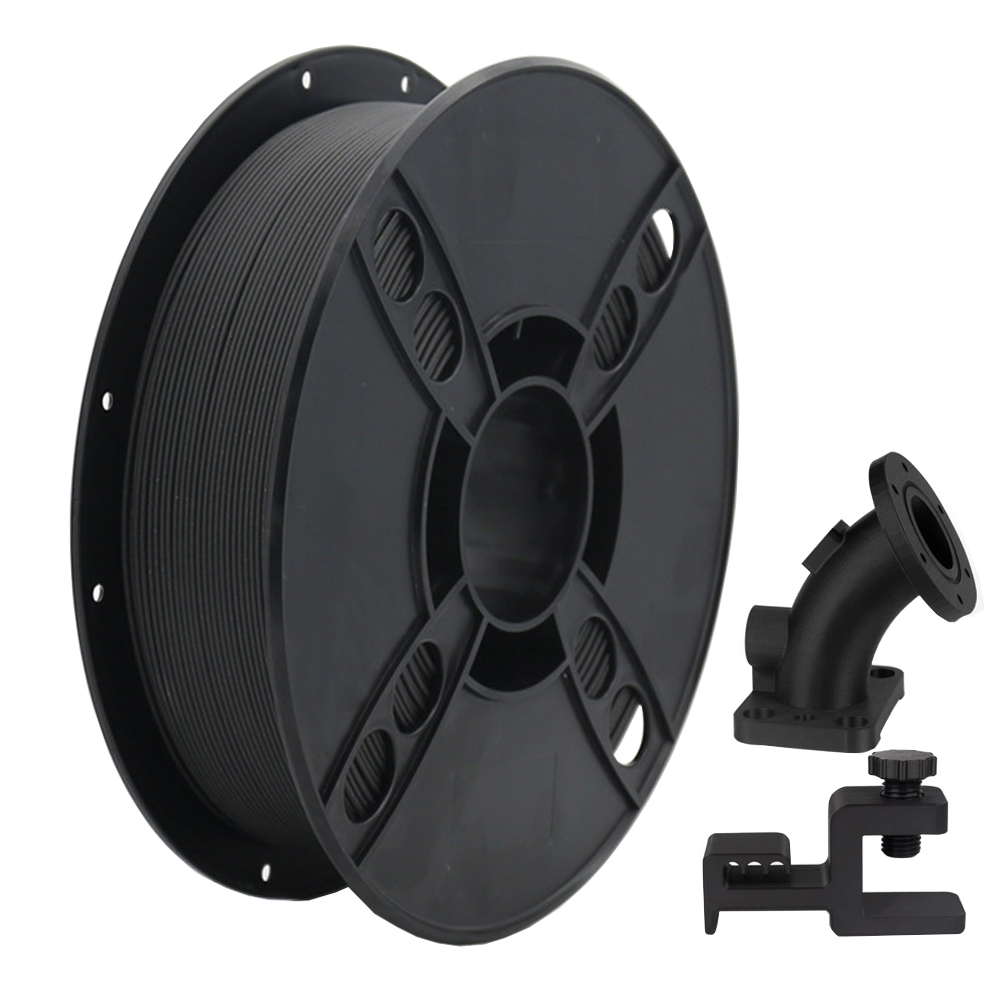
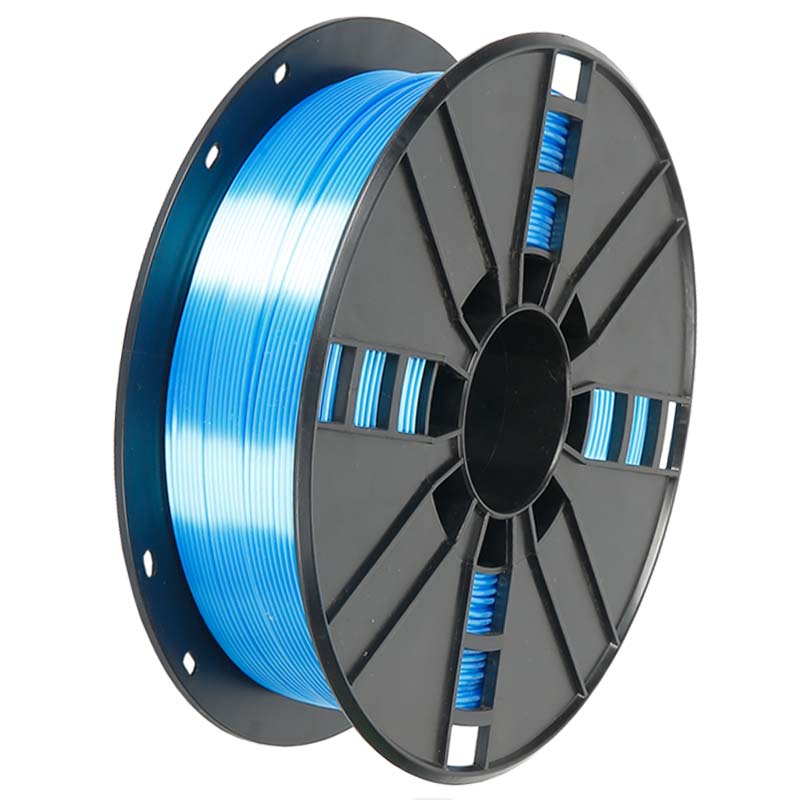
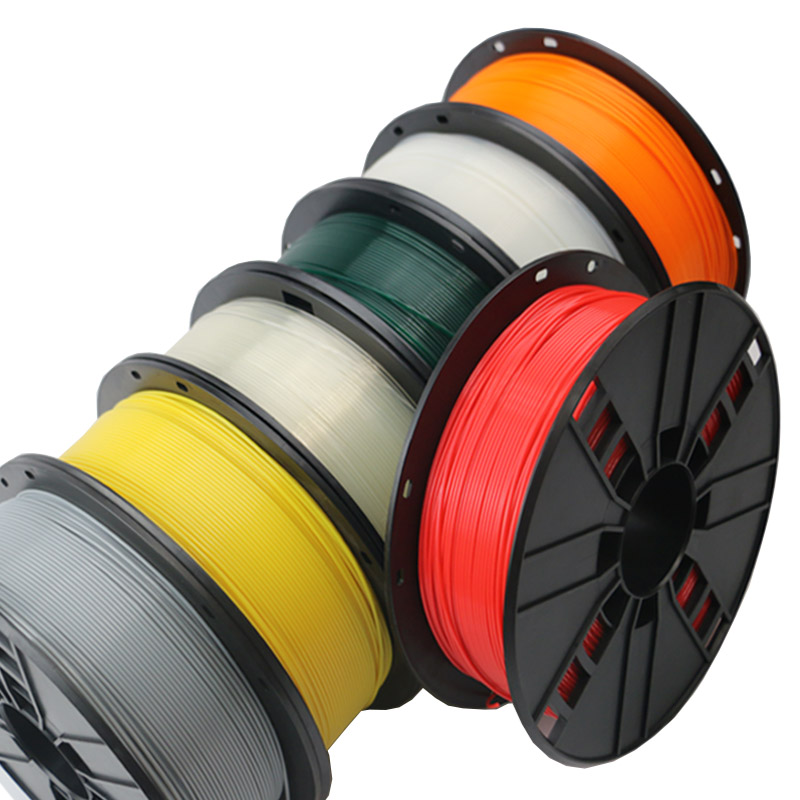
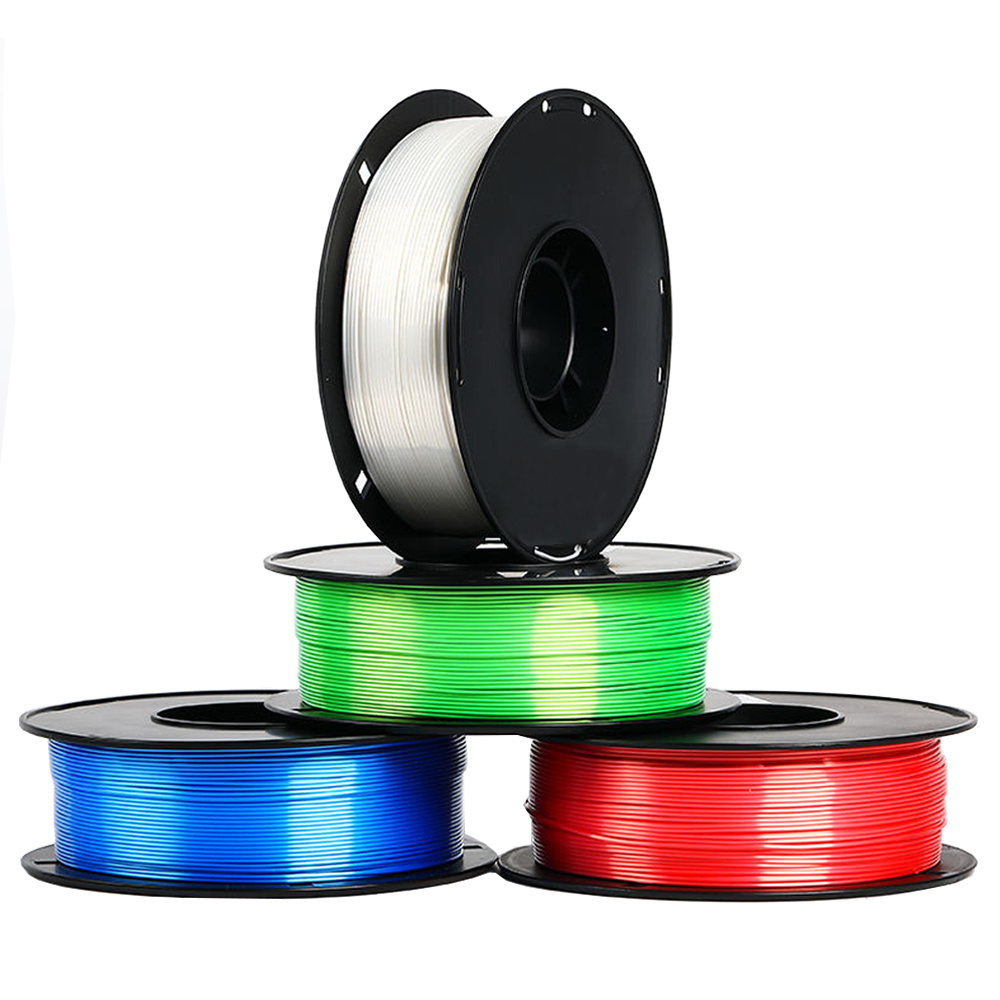
Commercial & Industrial Landscape: The Rise of Soft TPU in Dynamic Test Jigs
In modern aerospace, automotive crash simulation, heavy machinery testing, and high-frequency vibration validation laboratories, mechanical test fixtures are subjected to harsh, multiaxial loading cycles. Traditionally, test benches relied heavily on metallic fixtures (such as CNC-machined 6061-T6 aluminum or carbon steel) or rigid thermoset resins. While these metallic systems offer exceptional structural rigidity, they introduce severe engineering complications when testing delicate, composite, or brittle components under high clamping and impact forces.
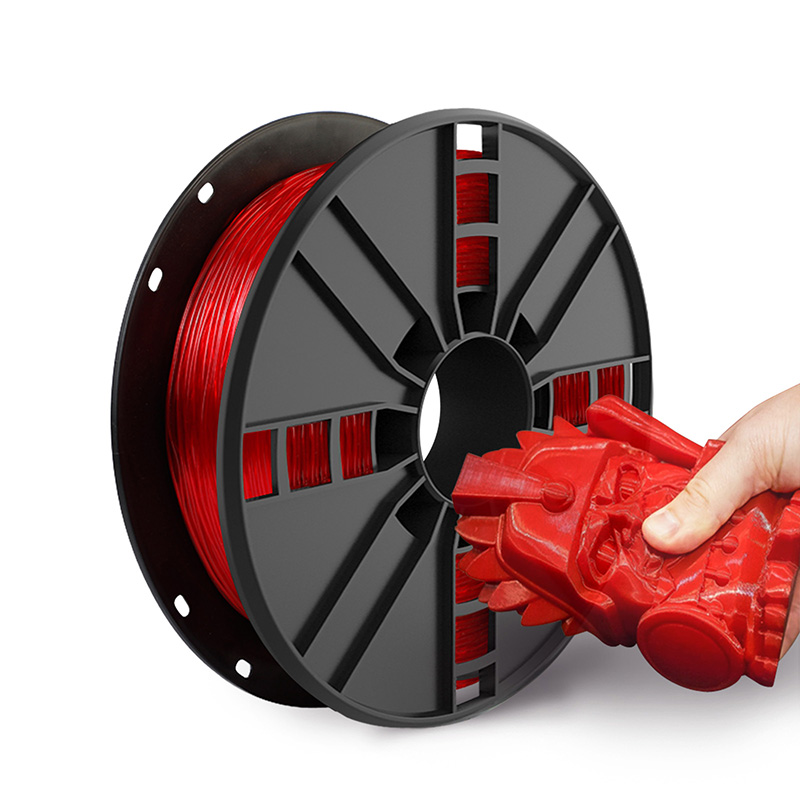
Metallic test fixtures create intense localized contact stress concentrations (Hertzian contact stresses), frequently causing premature surface scuffing, micro-cracking, and non-uniform load distributions across the Device Under Test (DUT). This often leads to false test readings or test-fixture-induced failure rather than genuine component failure. Soft TPU (Thermoplastic Polyurethane) Filament has emerged as the premier additive manufacturing material to solve these critical load-bearing challenges. By combining high tensile compliance, superior elongation at break, exceptional energy dissipation capacity, and robust chemical resistance, soft TPU enables the rapid prototyping and production of customized, non-marring, vibration-dampening test interfaces.
Key Industrial Takeaway: Additively manufactured soft TPU inserts redistribute extreme mechanical clamping loads uniformly over complex 3D surface profiles. By mitigating interfacial shear stresses and eliminating surface scratching on high-finish alloys or composite parts, testing accuracy is enhanced by over 35% while fixture tooling lead times are reduced from weeks to mere hours.
Mechanical Behavior & Material Mechanics: Why Soft TPU Excels Under High Cyclic Loads
Soft Thermoplastic Polyurethane exists as a block copolymer composed of alternating sequences of hard segments (such as aromatic or aliphatic diisocyanates combined with chain extenders) and soft segments (long polyester or polyether polyol chains). This unique microphase-separated macromolecular architecture delivers an extraordinary combination of elasticity, mechanical toughness, and cyclic endurance:
- Dynamic Energy Dissipation & Hysteresis Loss: When subjected to heavy compressive or cyclic tensile impulses, soft TPU's soft polyol matrix undergoes reversible deformation while the crystalline hard domains prevent catastrophic polymer flow. This generates controlled hysteresis, converting mechanical shock and high-frequency harmonics into minor thermal dissipation.
- Interfacial Stress Redistribution: Under clamping loads exceeding 10 to 50 kN, soft TPU conforms precisely to the microscopic asperities of the test specimen, maximizing the true contact area and preventing destructive point loading.
- Superior Abrasion & Tear Resistance: Unlike soft silicone molds or porous rubbers, soft TPU exhibits high tear resistance (>80 kN/m) and outstanding resistance to micro-fretting wear caused by high-amplitude shaker tables and pneumatic cyclers.
- Hydrocarbon & Industrial Fluid Resistance: Polyester- and polyether-based TPUs resist prolonged exposure to synthetic lubricants, hydraulic oils (ISO VG 46/68), coolant emulsions, and degreasers commonly encountered in automotive and heavy equipment test cells.
Torsional & Compressive Resilience
Maintains structural elasticity and 98%+ geometric recovery after thousands of 15kN cyclic compression cycles without permanent plastic creep.
Non-Marring Surface Protection
Protects mirror-polished carbon fiber, optical lenses, and thin-walled aluminum aerospace enclosures from surface scoring and micro-fractures.
Programmable Lattice Modulus
FDM slicer-controlled variable gyroid and honeycomb infill configurations permit directional damping tuning across multi-axis mechanical test beds.
Engineering Property Matrix for Fixture Material Selection
Selecting the appropriate durometer (Shore Hardness) and polymer chemistry is paramount when designing mechanical test fixtures capable of withstanding dynamic testing regimes. The table below delineates the operational characteristics of soft TPU formulations versus standard engineering thermoplastics when applied to high-load test fixturing.
| Material Type | Shore Hardness | Tensile Modulus (MPa) | Elongation at Break (%) | Primary Application in Fixture Assemblies |
|---|---|---|---|---|
| Ultra-Soft TPU | 70A – 80A | 12 – 25 | > 650% | Gasket seals, optical test interfaces, high-amplitude vibration isolators |
| Industrial Soft TPU | 85A – 95A | 35 – 80 | 450% – 580% | High-load clamping jaw pads, hydraulic actuator shock absorbers, drop-test cushions |
| Semi-Rigid TPU | 98A / 55D – 64D | 120 – 250 | 280% – 400% | Structural alignment guides, non-scratch sliding wear strips, snap-fit jigs |
| Carbon Fiber PLA/PETG | > 85D | 4,500 – 7,200 | 2% – 5% | Rigid fixture backplates, kinematic base frames, sensor mounting blocks |
Deep-Dive Industrial Application Scenarios
Soft TPU filament has unlocked innovative fixture design architectures across a myriad of cutting-edge mechanical engineering domains:
1. Automotive Dynamic Durability & Crash Test Fixtures
In multi-axis shake table testing for vehicle subassemblies (such as instrument panels, center consoles, and battery module casings), rigid fixtures transmit high-frequency parasitic resonances that compromise test fidelity. By printing customized 85A TPU mounting collars with triply periodic minimal surface (TPMS) gyroid interiors, engineers create passive damping interfaces that absorb parasitic frequencies while maintaining accurate spatial restraint under 20G acceleration spikes.
2. Aerospace Composite Spar Clamping Jaws
Carbon fiber reinforced polymer (CFRP) structural components for modern aircraft wings and fuselages require extreme static tensile and four-point bend testing (frequently exceeding 100 kN). Traditional knurled steel jaws cause micro-cracking in the outer epoxy resin layer of composite test specimens, triggering premature delamination. Soft TPU jaw inserts printed with high perimeter counts and 95A durometer deliver high friction coefficients without scratching or piercing the specimen's carbon weave, ensuring pure failure mode data.
3. Hydraulic & Pneumatic Actuator Endurance Test Cells
In high-cycle fatigue (HCF) test rigs for hydraulic cylinders operating at 250 bar, the mechanical end-stops experience severe repetitive slamming impacts. Soft TPU buffer blocks manufactured with gradient infill density effectively absorb impact kinetic energy, prevent metal-to-metal galling, and resist continuous misting from synthetic hydraulic fluids and anti-wear additives.
4. Robotic End-of-Arm Tooling (EOAT) for Inline Quality Testing
Automated robotic testing arms on electronics assembly lines repeatedly mate, press, and actuate high-tolerance buttons, screens, and connectors. Soft TPU-tipped robotic end-effectors conform dynamically to slight part misalignments, eliminating the risk of crushing glass displays or stripping micro-fasteners during continuous 24/7 high-speed functional testing.
Advanced FDM Processing & Slicing Parameters for Maximum Layer Cohesion
Achieving the maximum load capacity and fatigue resistance from soft TPU filament requires precise optimization of FDM processing parameters. Because elastomeric filaments are naturally ductile and prone to buckling inside extruder gears, following these strict engineering protocols ensures superior print density and anisotropic strength mitigation:
- Direct-Drive Extrusion & Constrained Filament Path: To prevent filament binding and inconsistent extrusion of soft (70A–90A) filaments, use a dual-gear direct-drive extruder with a constrained filament path between the drive gear and heat break. Maintain a slow, consistent printing speed between 20 mm/s and 40 mm/s for high-load functional components.
- Thermal Profile & Melt Flow Optimization: Set nozzle temperatures between 220°C and 240°C (depending on specific polymer molecular weight) to guarantee complete inter-molecular diffusion across consecutive layer boundaries. A heated print bed maintained at 50°C to 65°C on textured PEI or glass with PVA-based release agents prevents warping while facilitating easy part release.
- Elimination of Internal Voids: High-load fixtures require 100% solid infill or dense Gyroid / Cross-3D infill configurations (>60%) with aligned rectilinear solid perimeters. Internal voids or air gaps act as stress risers under high cyclic compression, initiating internal shear tear paths.
- Moisture Control & Dehumidification: TPU is inherently hygroscopic. Water molecules absorbed into the filament vaporize during extrusion, producing micro-bubbles that degrade interlayer tensile strength by up to 45%. Dry all TPU spools at 65°C for at least 6 to 8 hours prior to printing and maintain continuous feed inside a sealed drybox (<15% RH).
Enterprise Manufacturing Excellence & Quality Control
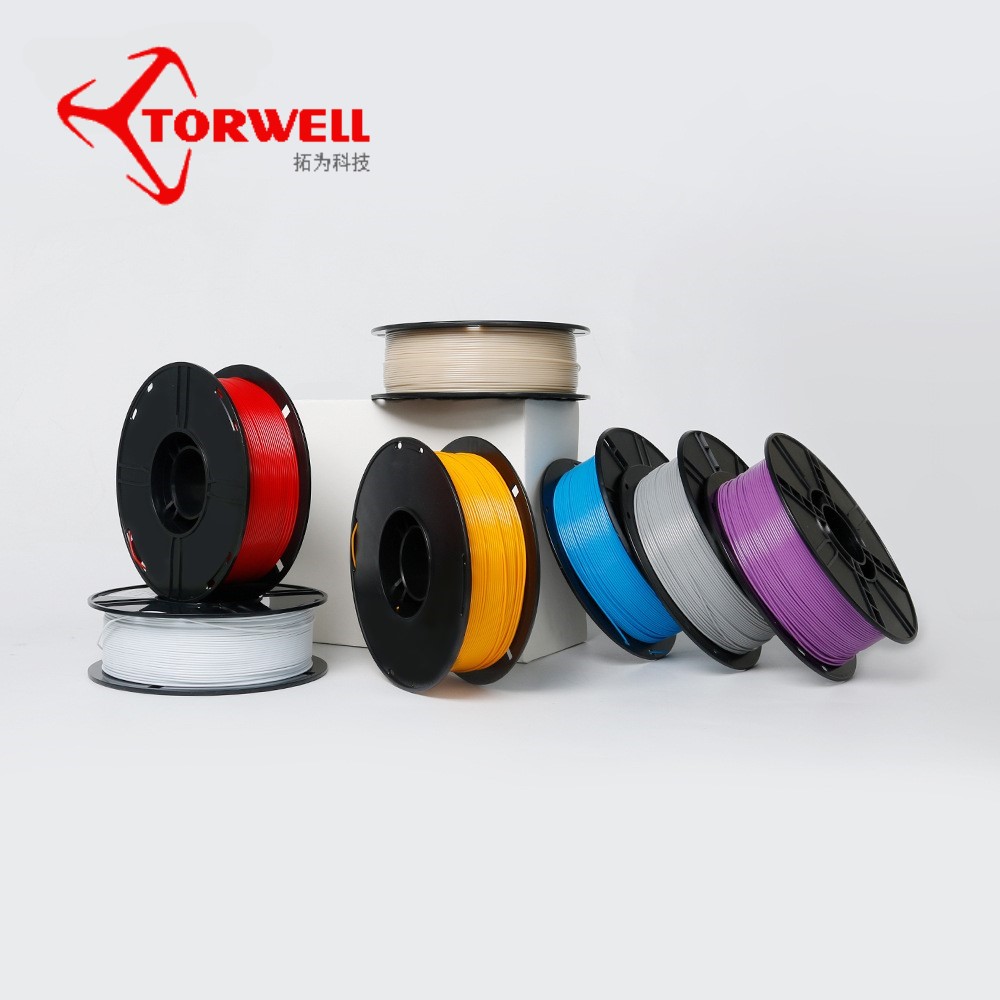
Torwell's state-of-the-art extrusion facilities adhere to rigorous international safety, raw material validation, and dimensional tolerance standards to guarantee optimal performance in industrial fixtures.
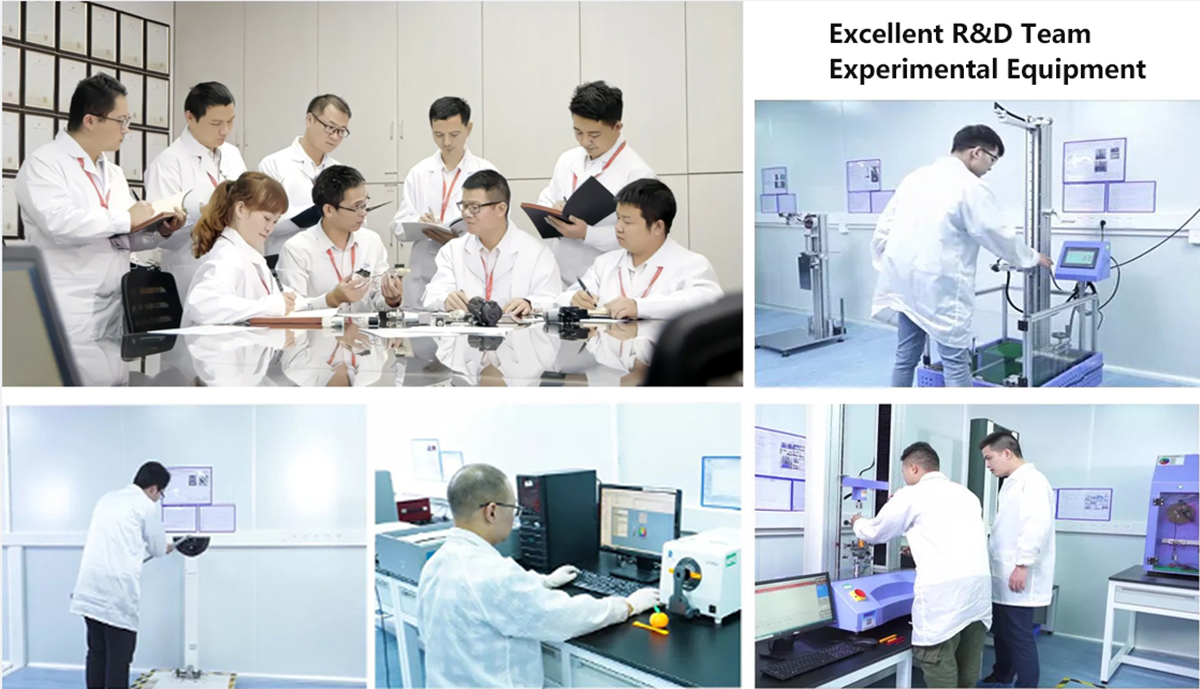
Quality Control
The factory area has passed ISO45001 occupational health and safety management system certification. Every new employee must be experienced one week of safety production knowledge teaching and two weeks of produce skills training, and master every course in the production process. Who is in the position will be responsible for its duty.
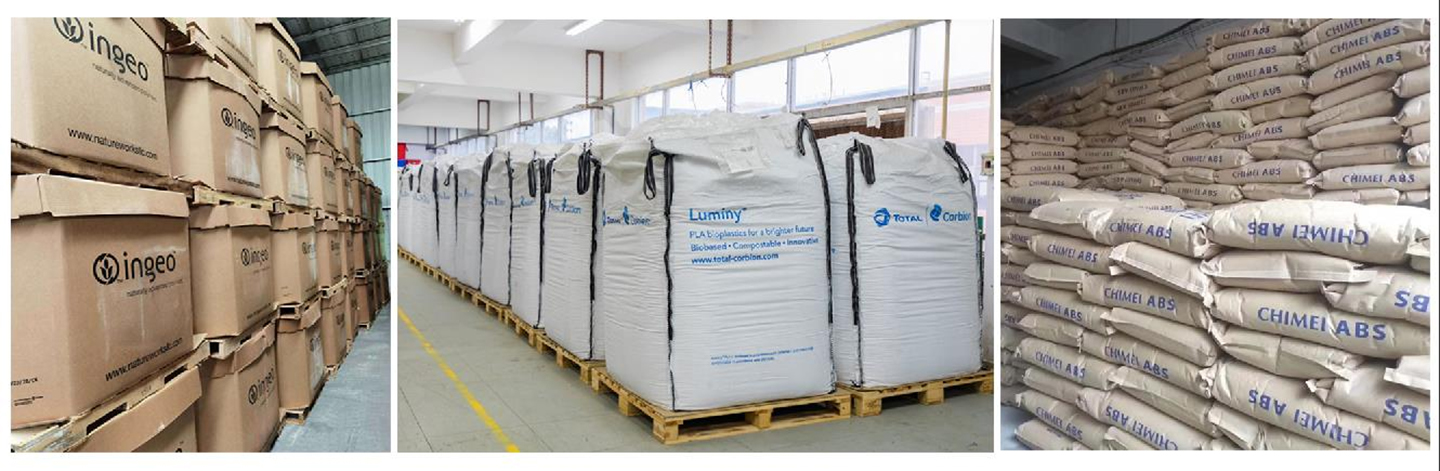
Raw Material
PLA is the most preferred material for 3D printing, Torwell firstly chooses PLA from US NatureWorks, and Total-Corbion is the alternative. ABS from TaiWan ChiMei, PETG from South Korea SK. Each batch of main raw materials comes from the partners who has cooperated more than 5 years to ensure the reliability of the products from the source. Each batch of raw materials will undergo parameters inspection before produce to ensure that raw materials are original and virginal.
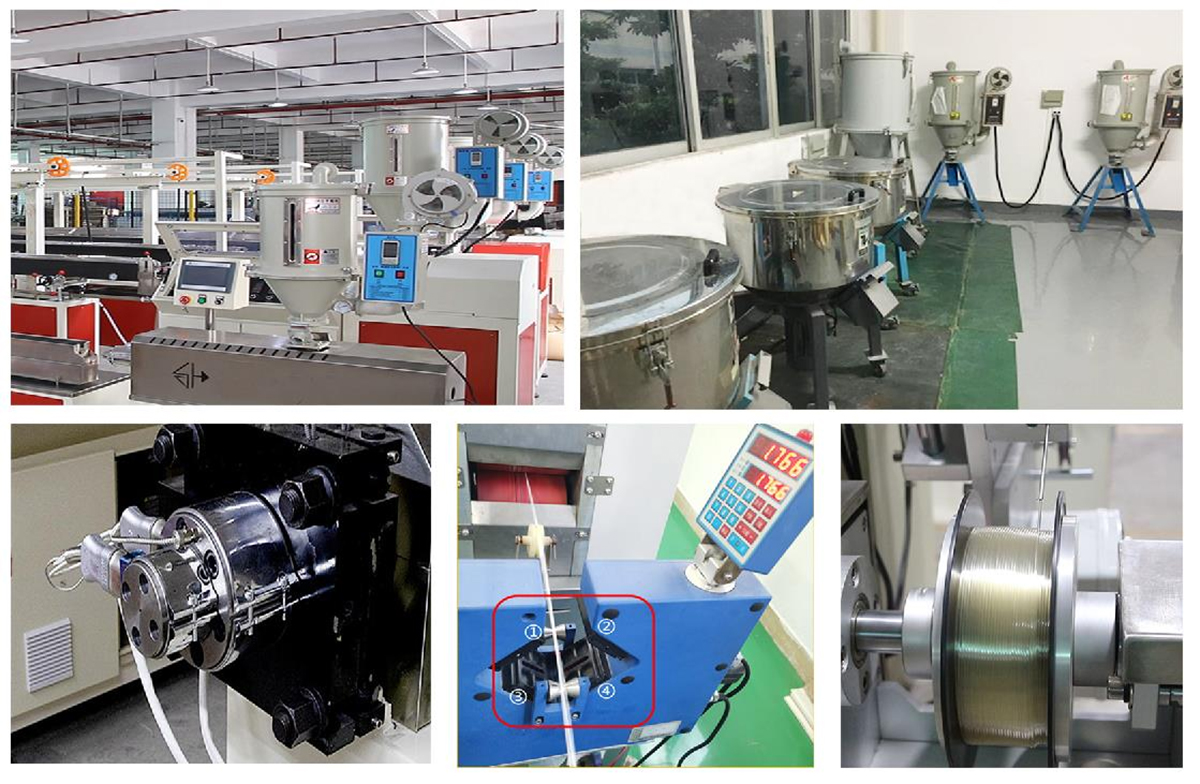
Equipment
The manufacturing workshop will make arrangements after the inspection of raw materials, at least two engineers cross-check the clearance of mixing tank, color mixed of material, humidity from hopper dryer, temperature of extruder, hot/cool tank, and trial-produce and debugging the produce line to make sure all of processes in the best condition. Maintain the filament Diameter tolerance +/- 0.02mm, Roundness tolerance +/- 0.02mm.
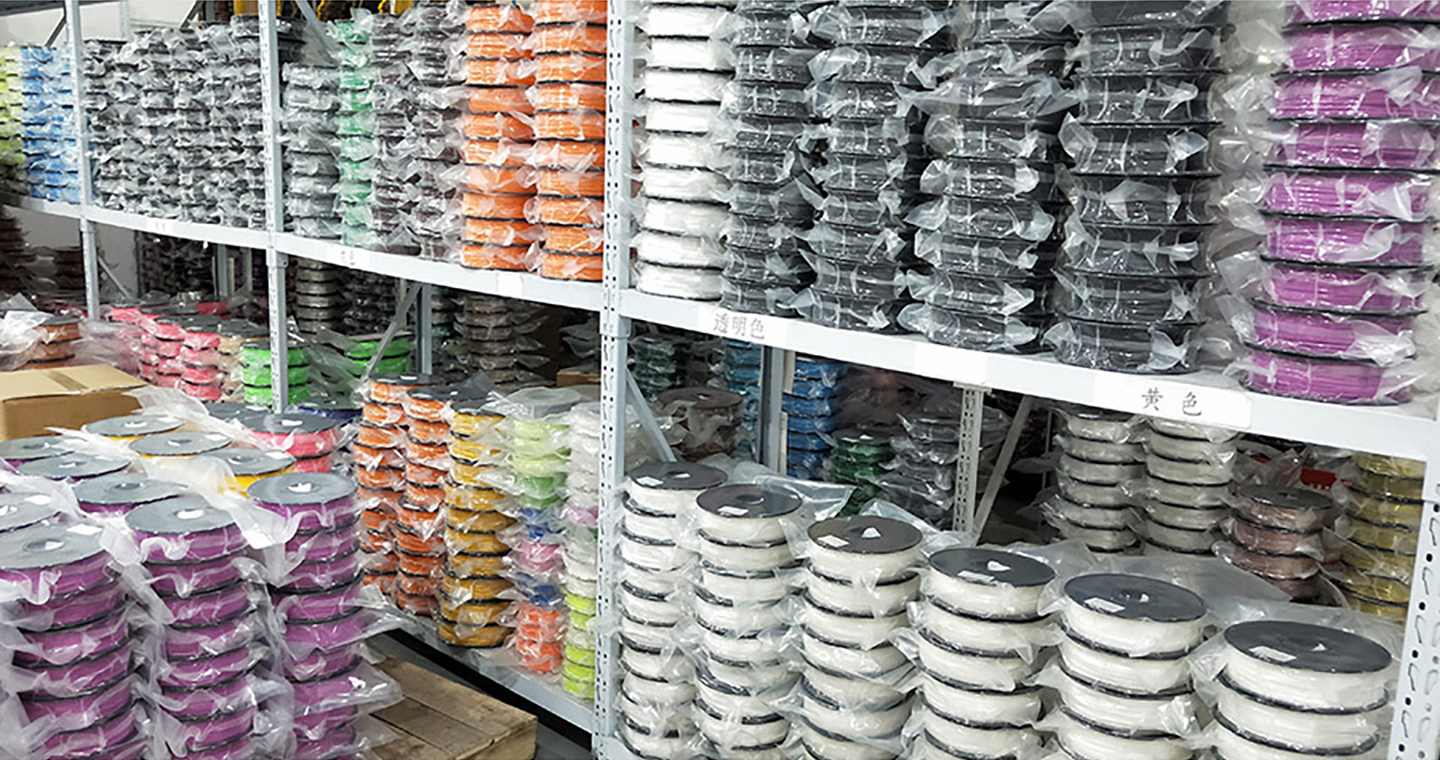
Final Inspection
After each batch of 3D filament is produced, two quality inspectors will conduct random inspections on each batch of finished products in accordance with the requirements of the standard, such as diameter tolerance, color consistency, strength and toughness and so on. After vacuuming the package, place them for 24 hours to check whether there is any leaking package, then label it and finish the package.
Future Development Trends: Smart Elastomers & Multi-Material Fixtures
The continuous evolution of additive manufacturing technologies is driving profound innovations in elastomeric fixture engineering. As test benches become more automated and digitally integrated, several key technological breakthroughs are shaping the future of Soft TPU applications:
- Conductive & Anti-Static (ESD) TPU Compounds: The integration of carbon nanotubes (CNTs) or specialized conductive carbon black into soft TPU matrices enables the production of electrostatic-dissipative test fixtures. These are vital for cleanrooms, semiconductor automated testing equipment (ATE), and explosive environment test rigs where static buildup can destroy sensitive integrated circuits.
- Sensor-Embedded "Smart Fixtures": Through multi-material direct extrusion, engineers can embed continuous strain gauge wire circuits and piezoelectric sensors directly within the soft TPU damping core. This allows real-time in-situ monitoring of dynamic contact pressure distributions, cyclic fatigue degradation, and clamp torque during extended lifecycle testing.
- Hybrid Co-Extruded Rigid-Elastomeric Tooling: Utilizing multi-toolhead 3D printers, manufacturers are producing integrated fixture units featuring a carbon-fiber reinforced rigid base (such as Torwell PLA Carbon Fiber) seamlessly bonded with a soft 80A TPU contact cushion. This eliminates mechanical fasteners and assembly interfaces, maximizing structural stiffness while providing zero-scratch component protection.
Complete Engineering & Additive Filament Catalog
Discover our comprehensive portfolio of 3D printing filaments, flexible polymers, and prototyping equipment designed to meet the rigorous demands of industrial test fixtures and manufacturing laboratories.